BACTEC MGIT 960: Introduction, Principle, Procedure, Result-Interpretation, Application, and Keynotes
BD BACTEC MGIT 960 instrument display showing the real-time status and distribution of mycobacterial culture tubes
Introduction
Table of Contents
The system consists of an incubator-reader that can hold up to 960 culture tubes (7 ml size), allowing it to process approximately 8,000 specimens annually. It is widely considered a “gold standard” for culture-based drug susceptibility testing (DST) due to its speed and high recovery rate compared to traditional solid media.
Fig. BD BACTEC MGIT 960 instrument display showing the real-time status and distribution of mycobacterial culture tubes
The BACTEC MGIT 960 is a fully automated, non-radiometric, and non-invasive system designed for the rapid growth and detection of Mycobacterium tuberculosis and other mycobacterial species from clinical specimens (excluding blood).
Principle
The BACTEC MGIT 960 operates on the principle of fluorescence quenching:
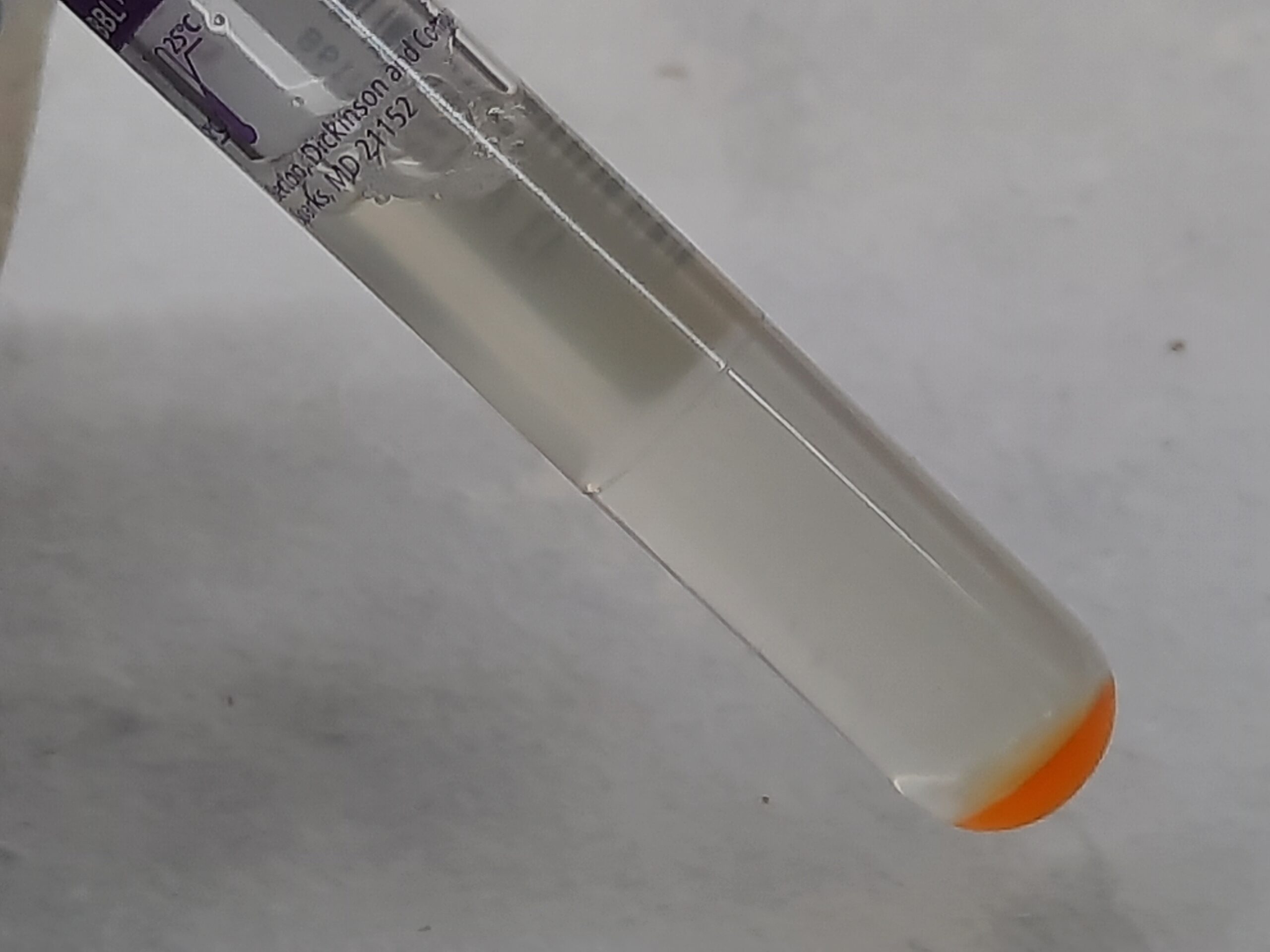
Oxygen Quenching: Each MGIT tube contains a fluorescent sensor (ruthenium pentahydrate) embedded in silicon at the bottom.
Metabolic Consumption: Initially, dissolved oxygen in the medium “quenches” (inhibits) the fluorescence of the sensor.
Detection: As mycobacteria grow and respire, they consume oxygen. As oxygen levels drop, the quenching effect diminishes, and the sensor begins to fluoresce when illuminated by UV light.
Monitoring: The instrument monitors each tube every 60 minutes for increasing fluorescence levels.
Procedure
Specimen Processing: Clinical samples (like sputum) are digested, decontaminated (e.g., using NaOH-NALC), and concentrated.
Tube Preparation: MGIT tubes are supplemented with BD BACTEC MGIT 960 Growth Supplement (for nutrition) and MGIT PANTA (an antibiotic mixture to suppress contaminating flora).
Inoculation: Approximately 0.5 ml of the processed specimen is added to the tube.
Loading: Tubes are scanned via barcode and loaded into the instrument.
Incubation: The system incubates tubes at 37°C and automatically flags them as “positive” when growth is detected.
Result Interpretation
Positive Result: The instrument flags a tube as positive once fluorescence exceeds a pre-set threshold, typically representing CFU/ml. Technicians must confirm positivity by performing a Ziehl-Neelsen (ZN) stain to check for Acid-Fast Bacilli (AFB) and subculturing to rule out contamination.
Negative Result: Tubes that show no growth after 42 days (6 weeks) are declared negative by the instrument and removed for disposal.
DST Results: For Drug Susceptibility Testing, growth in a drug-containing tube is compared to a growth control (GC).
Susceptible (S): Growth Unit (GU) of the drug tube is < 100 when the GC reaches 400.
Resistant (R): GU of the drug tube is ≥ 100.
Applications
Primary Isolation: Rapid recovery of mycobacteria from respiratory and extrapulmonary clinical specimens.
First-Line DST: Testing susceptibility to Streptomycin, Isoniazid, Rifampin, Ethambutol (SIRE), and Pyrazinamide (PZA).
Second-Line DST: Testing against drugs like Ofloxacin and Kanamycin for MDR and XDR-TB management.
Epidemiology: Integrated with the BD EpiCenter™ system for long-term tracking of patient strains and susceptibility patterns.
Keynotes
Speed: Detection time is significantly faster (typically 10–14 days) compared to Lowenstein-Jensen (LJ) solid media (21–28 days).
Contamination Risk: Liquid media are more prone to contamination than solid media, requiring rigorous decontamination protocols.
Safety: The system uses plastic tubes and non-invasive monitoring (no needle pricks required), improving laboratory safety.
Cost: High initial investment and reagent costs can be a barrier in resource-limited settings.