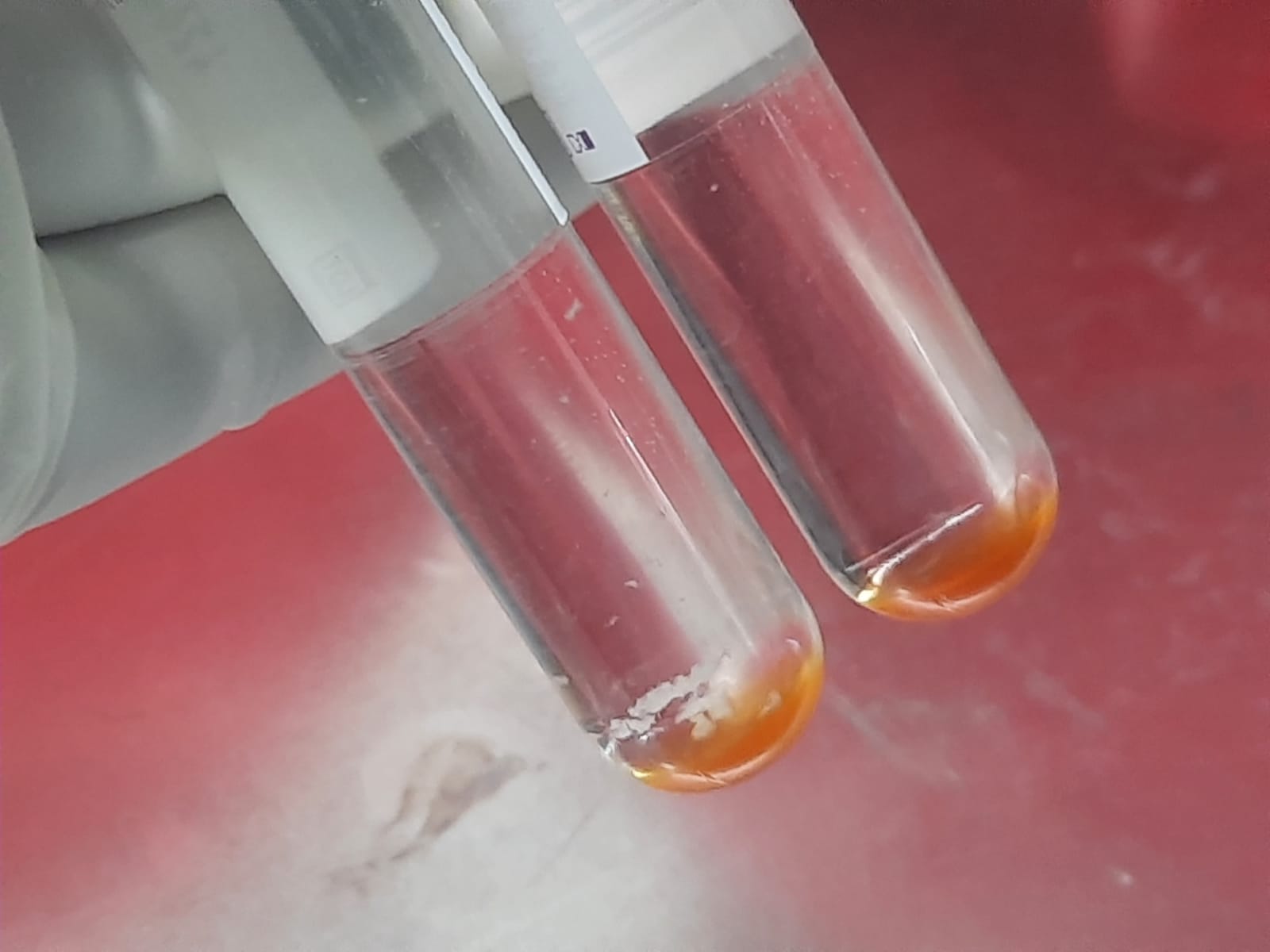
Pleural Fluid Microscopy: Introduction, Principle, Test Requirements, Procedure, Finding, Clinical Significance, and Keynotes

Collected Pleural Fluid-

Introduction Pleural fluid is the liquid collected from the pleural space between the lung and chest wall. Microscopic examination of pleural fluid plays a key role in identifying the underlying cause of pleural effusion. It helps distinguish between transudates and exudates, detect infectious organisms, malignant …

Read more

MB-Redox Medium-Introduction, Principle, Clinical Significance, Advantage, Disadvantage, and Keynotes

Introduction MB-Redox Medium (Mycobacteria-Redox Medium) is a liquid culture medium designed for the rapid growth and detection of Mycobacteria, particularly Mycobacterium tuberculosis. It incorporates redox indicators that change color based on microbial metabolic activity, providing a visual cue for bacterial growth. It is increasingly used …

Read more

Grocott’s Methenamine Silver (GMS) Staining of Mycobacteria:Introduction, Principle, Clinical Significance, Advantage, Disadvantage, and Keynotes

Introduction Grocott’s Methenamine Silver (GMS) stain is a histochemical staining method primarily used to detect fungi in tissue sections. However, it can also stain certain acid-fast organisms like Mycobacteria, especially in tissue biopsies where standard Ziehl-Neelsen or fluorescent stains may miss them. The technique enhances …

Read more

Carbol-Nachtblau Staining of Mycobacteria-Introduction, Principle, Clinical Significance, Advantage, Disadvantage, and Keynotes

Introduction Carbol-Nachtblau (Midnight Blue) staining is a modified acid-fast staining technique used for the visualization of Mycobacteria, particularly Mycobacterium tuberculosis. This method replaces the traditional counterstain (like methylene blue) with Nachtblau, producing a vivid contrast between blue background cells and bright red acid-fast bacilli (AFB), …

Read more

Immunofluorescent Detection of Mycobacteria Using Polyclonal Anti-BCG Antibody Staining: Introduction, Principle, Clinical Significance, Advantage, Disadvantage, and Keynotes

Introduction Immunofluorescent staining with polyclonal anti-BCG antibodies is a rapid and specific technique used to detect Mycobacterium species, particularly in clinical and research settings. These antibodies recognize antigenic components of Mycobacterium bovis BCG strain and cross-react with members of the M. tuberculosis complex. The method …

Read more

Presence of Numerous Pus Cells Without Detectable Microbes in Gram-Stained Sputum: Introduction, Diagnostic Implications, and Clinical Considerations

Presence of Numerous Pus Cells Without Detectable Microbes in Gram-Stained Sputum: Introduction, Diagnostic Implications, and Clinical Considerations

Introduction Gram staining is a routine diagnostic tool for respiratory infections. It reveals bacteria in sputum samples. Occasionally, Gram staining shows numerous pus cells but no microbes. This finding raises several clinical questions and concerns. Pus cells indicate an inflammatory response. They suggest a possible …

Read more

Mycobacterium leprae: Introduction, Morphology, Pathogenicity, Lab Diagnosis, Treatment, Prevention, and Keynotes

Heavy load of acid fast bacilli (AFB) of Mycobacterium leprae in modified Ziehl-Neelsen staining of slit skin smear microscopy at a magnification of 1000X

Introduction Mycobacterium leprae is the bacterium responsible for causing leprosy, also known as Hansen’s disease. It is an ancient disease that has afflicted humans for thousands of years, and it continues to be a significant public health concern in some parts of the world. M. …

Read more