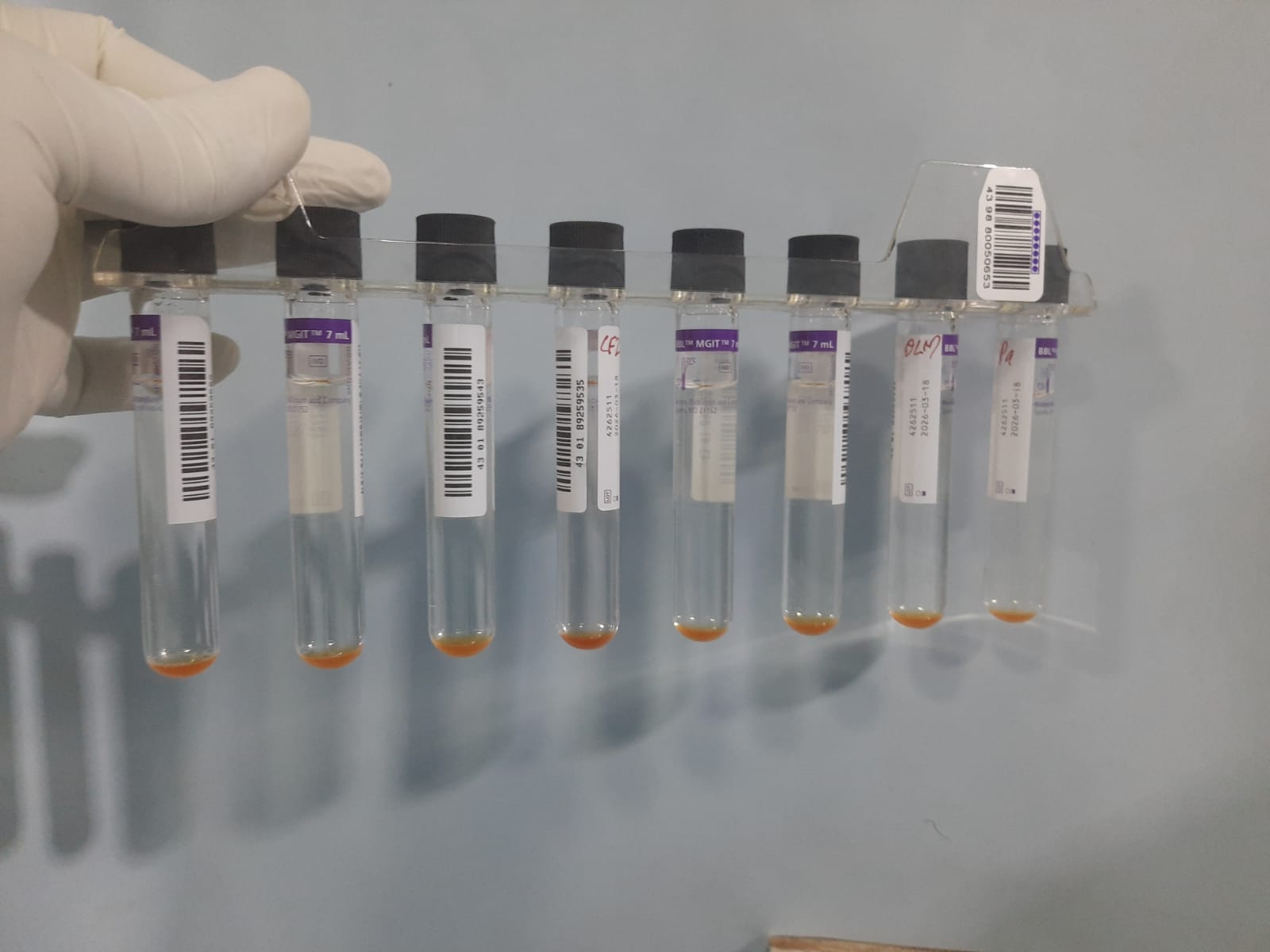
BD BACTEC™ MGIT™ 960- Principles, Workflows, and Clinical Applications
Table of Contents
The BD BACTEC™ MGIT™ 960 (Mycobacteria Growth Indicator Tube) is a fully automated, high-volume culture system designed for the rapid detection of mycobacteria and subsequent drug susceptibility testing (DST). Developed by Becton Dickinson (BD), this nonradiometric system addresses the critical clinical need for accelerated tuberculosis (TB) diagnostics.
Traditional solid culture media, such as Löwenstein-Jensen (LJ) slants, can take 4 to 8 weeks to yield visible colonies. The MGIT™ 960 continuously monitors liquid culture tubes, reducing detection time to days or weeks. Housing up to 960 tubes simultaneously, it serves as a cornerstone instrument in high-throughput microbiology and reference laboratories globally.
The system operates on a fluorometric sensor technology that detects bacterial respiration rather than visible colony formation.
Chemical Components
Biological Principle
The operational workflow from sample collection to raw machine readout involves strict technical steps:
[Sample Collection] → [Decontamination & Digestion (NALC-NaOH)] →[Reagent Addition (OADC Enrichment, particularly in case of DST case otherwsie only PANTA Antibiotic Blend)] → [Inoculation into MGIT Tube & Instrument Loading] → [Automated Hourly Photodetector Scanning] → [Machine Log: Growth Units (GU) Calculation]
Step 1: Specimen Preparation & Decontamination
Raw clinical specimens (like sputum or gastric washings) naturally contain fast-growing oral flora that will outgrow slow-growing mycobacteria. Samples must undergo decontamination and digestion, typically using the NALC-NaOH (N-acetyl-L-cysteine-sodium hydroxide) method, followed by centrifugation to concentrate the bacteria.
Step 2: Tube Enrichment & Suppression
Before adding the processed specimen, two vital reagents are pipetted into the MGIT tube:
Step 3: Inoculation and Loading
Step 4: Continuous Automated Monitoring
The MGIT™ 960 automatically interprets the fluorescence dynamics over a standard incubation period of up to 42 days (6 weeks) for diagnostic screening.
Automated Instrument Indicators
Because the oxygen sensor responds to respiration from any living microorganism, an instrument-positive flag does not guarantee the presence of Mycobacterium tuberculosis. Laboratories must execute the following confirmatory cascade immediately upon a positive alert:
| Confirmatory Test | Purpose | Action Based on Result |
| Acid-Fast Bacilli (AFB) Smear | Verifies morphological presence of mycobacteria. | If positive, confirms mycobacteria. If negative, suggests contamination or low bacterial load. |
| Blood Agar/Chocolate Agar Culture | Checks for non-mycobacterial contamination. | Growth within 24–48 hours indicates contamination; requires re-decontamination of the tube. |
| Rapid Antigen/Molecular Testing | Differentiates M. tuberculosis complex from NTMs. | Positive MPT64 antigen test or PCR confirms M. tuberculosis complex. |
Detection of Acid-Fast Bacilli (AFB)
The primary diagnostic application is isolating viable mycobacteria from clinical specimens. This includes pulmonary samples (sputum, bronchoalveolar lavage) and extrapulmonary samples (cerebrospinal fluid, tissue biopsies, pleural fluids).
Differentiation of Mycobacterial Species
While it does not identify species on its own, the harvested liquid biomass from a positive MGIT tube provides high-yield starter material for rapid immunochromatographic assays (like MPT64 antigen detection) or line probe assays to distinguish Mycobacterium tuberculosis complex (MTBC) from Non-Tuberculous Mycobacteria (NTM).
Drug Susceptibility Testing (DST)
The system is widely validated for first-line and second-line Drug Susceptibility Testing.
Introduction Klebsiella aerogenes (formerly known as Enterobacter aerogenes) is a Gram-negative, rod-shaped, motile bacterium belonging…
Introduction and Taxonomy Staphylococcus pseudintermedius is a major veterinary pathogen that serves as a primary…
Introduction 0.5 ng/µL of DNA is detectable and can yield a positive result by PCR.…
Introduction The Quick-DNA™ Fungal/Bacterial Miniprep Kit is designed for the simple and rapid extraction of…
Introduction Kocuria rosea is a Gram-positive, aerobic coccus belonging to the family Micrococcaceae. Formerly classified…
Introduction Taxonomy: Belongs to the kingdom Fungi, phylum Ascomycota, and family Herpotrichiellaceae. Synonyms: Cladophialophora bantiana…