Cladophialophora: Introduction, Pathogenicity, Lab Diagnosis, Treatment, Prevention, and Keynote
The image displays a network of pale brown, pigmented, septate hyphae producing highly branched chains of spores of Cladophialophora
Introduction
Table of Contents
Taxonomy: Belongs to the kingdom Fungi, phylum Ascomycota, and family Herpotrichiellaceae.
Synonyms: Cladophialophora bantiana was historically called Cladosporium trichoides or Xylohypha bantiana.
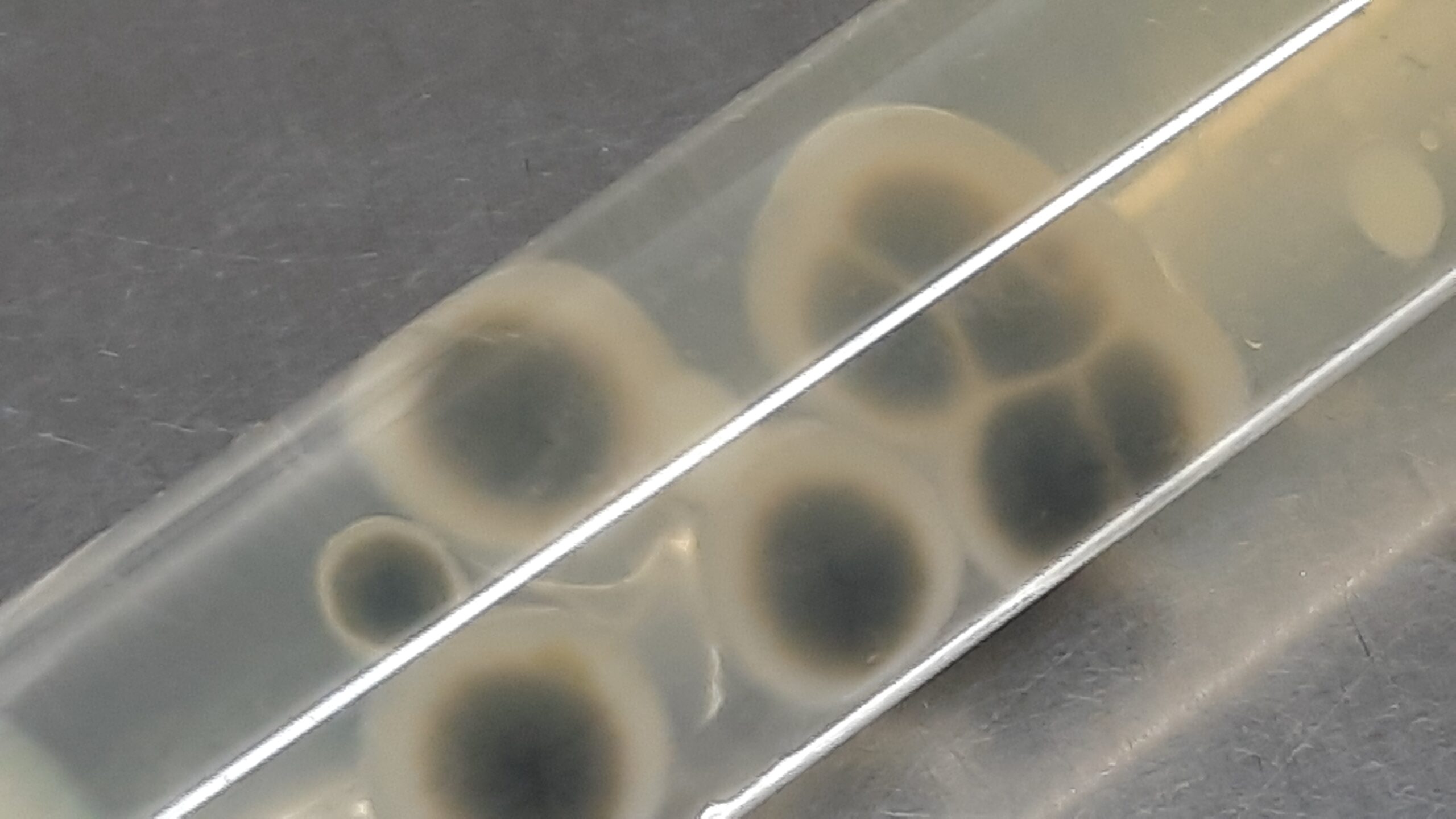
Fig. Velvety, dark olivaceous-green to grey-black colony of Cladophialophora on Sabouraud Dextrose Agar (SDA)
Characteristics: Produces melanin in its cell walls, giving colonies a characteristic olive-green to blackish color.
Major Species:
Cladophialophora bantiana: Strongly neurotropic; targets the brain.
Cladophialophora carrionii: Primarily causes localized skin and subcutaneous infections.
Pathogenicity
Virulence Factors: Melanin acts as a major shield, protecting the fungus against host oxidative bursts and enzymatic degradation within macrophages. Its high thermotolerance allows it to thrive easily at human body temperatures.
Clinical Conditions:
Cerebral Phaeohyphomycosis: Caused by C. bantiana following inhalation of spores. It leads to liquefactive brain abscesses mimicking brain tumors. It infects both immunocompromised and completely healthy individuals.
Chromoblastomycosis: Chronic skin infection caused by C. carrionii via minor trauma or wood pricks. It forms crusty, cauliflower-like verrucous plaques on the extremities.
Lab Diagnosis
Specimen Collection: Brain biopsy tissue, pus from abscesses, or skin scrapings.
Direct Microscopy:
KOH Mount: Reveals brown-pigmented, septate hyphae (in phaeohyphomycosis) or diagnostic thick-walled sclerotic bodies (also called “copper pennies” in chromoblastomycosis).
Fig. Sclerotic bodies of Cladophialophora in KOH mount of skin scraping at a magnification of 400x
Fig.Sclerotic bodies of Cladophialophora in KOH mount of clinical specimen at a magnification of 400x with 4x optical zoom
Fungal Culture:
Grown on Sabouraud Dextrose Agar (SDA).
Colonies appear velvety, olive-gray to black with a dark reverse.
Microscopic presentation displays long, sparsely branched, non-fragile chains of smooth, oval conidia. Unlike Cladosporium, they lack distinct “shield cells” or dark scars (hila).
Fig. Cladophialophora colony morphology on Sabouraud dextrose agar(SDA) Fig. Cladophialophora growth on Sabouraud dextrose agar
Molecular Testing: PCR and ITS region sequencing are used for definitive species-level identification.
Treatment
C. bantiana (Brain Abscesses): Extremely difficult to manage, yielding a 65% to 70% mortality rate. The standard of care requires aggressive surgical excision combined with prolonged antifungal therapy.
Antifungal Regimen:
Liposomal Amphotericin B paired with Voriconazole (due to its excellent blood-brain barrier penetration) or Posaconazole.
Flucytosine (5-FC) is sometimes added to this regimen.
Fluconazole and Echinocandins are ineffective.
C. carrionii (Skin): Responds well to long-term Itraconazole or Terbinafine taken for 6 to 12 months, frequently paired with cryotherapy.
Fig. LPCB mount (400x) showing Cladophialophora species- dematiaceous, septate hyphae producing long, branching, intact chains of oval conidia
Prevention
Protective Wear: Wearing shoes, gloves, and long clothing during agricultural work or handling soil and cacti prevents traumatic inoculation.
Laboratory Safety: Because C. bantiana poses an extreme risk of accidental inhalation, clinical laboratories must handle cultures under strict Biosafety Level 3 (BSL-3) conditions.
Fig. The image displays a network of pale brown, pigmented, septate hyphae producing highly branched chains of spores of Cladophialophora
Keynote
Keynote Rule of Thumb: Think of Cladophialophora bantiana as “The Neurotropic Black Mold.” It is the most common cause of fungal brain abscesses in immunocompetent hosts. Any radiological ring-enhancing brain mass that mimics a tumor but presents with dark, septate hyphae on biopsy points directly to this pathogen.