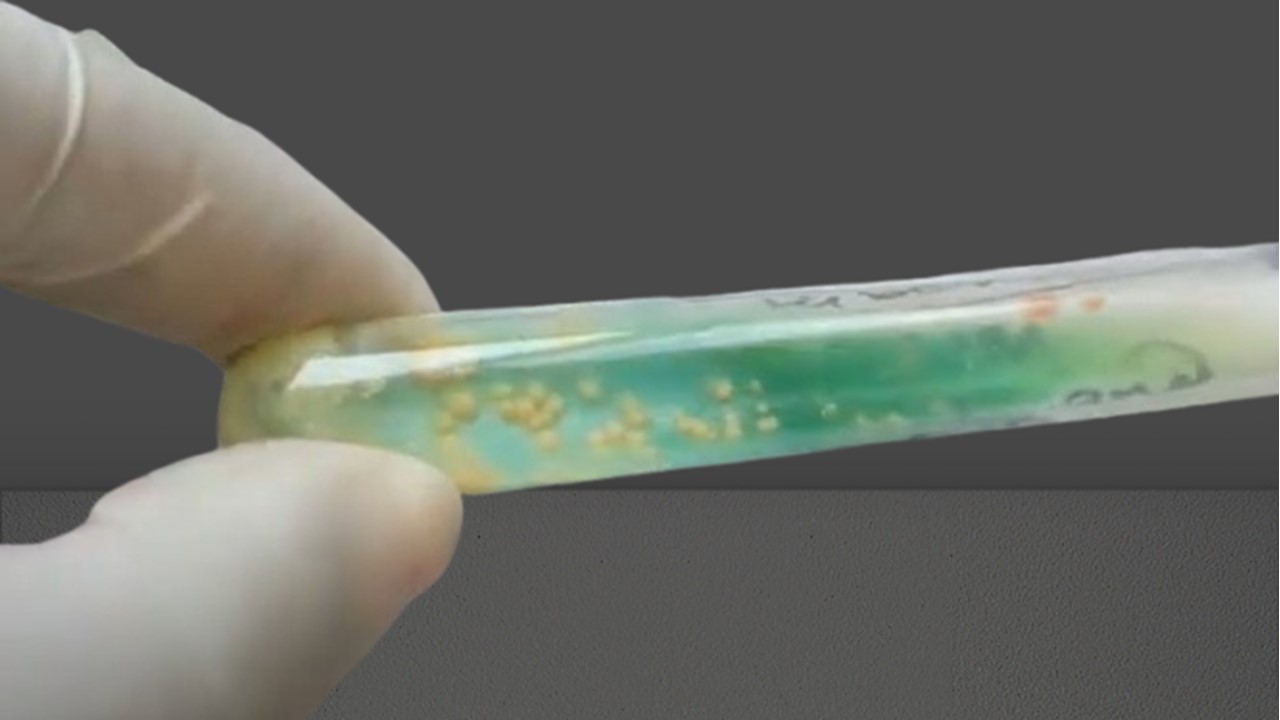
Mycobacterium fortuitum growth on modified Middlebrook 7H9 broth with PANTA supplement after 3 days of incubation
Introduction
Table of Contents
Mycobacterium fortuitum is a rapidly growing, nontuberculous mycobacterium (NTM). It is found ubiquitously in the environment, primarily associated with skin, soft tissue, and post-surgical wound infections. As an opportunistic pathogen that is known for its ability to grow within 7 days, it often causes infections after direct inoculation through trauma, surgical procedures, or contaminated water exposure.
Classification: Rapidly growing mycobacteria (RGM), belonging to Runyon Group IV.
Habitat: Commonly found in soil, water, sewage, and tap water, making it a frequent cause of nosocomial (hospital-acquired) outbreaks.
Pathogenicity: Opportunistic pathogen that causes infection in both immunocompetent and immunocompromised hosts, often after breaking the skin barrier.
Complex: M. fortuitum complex includes M. fortuitum, M. peregrinum, and several other related species.
Staining: Inconsistently stains with Gram stain; shows beaded or filamentous branching in tissues, which can be mistaken for Nocardia.
Colony Characteristics: Smooth, hemispheric, off-white or cream-colored colonies that grow rapidly (within 3–4 days) on culture media like L-J medium, blood agar, and other relevant media.
Fig. Mycobacterium fortuitum growth on modified Middlebrook 7H9 broth with PANTA supplement after 3 days of incubation
Pathogenicity
Transmission: Direct inoculation through trauma, foreign body implantation (catheters, prostheses), or contaminated medical instruments.
Clinical Spectrum:
Skin and Soft Tissue: Most common (abscesses, ulcers, cellulitis, furunculosis).
Surgical Site Infections: Common after plastic surgery (mammoplasty) or cardiac surgery (sternal wound).
Pulmonary Disease: Often related to pre-existing lung disease or gastroesophageal issues (e.g., aspiration).
Miscellaneous: Eye infections (keratitis), catheter-related sepsis, and rare disseminated disease.
Virulence Factors: Ability to form biofilms, which allows survival in water systems and resistance to standard disinfectants.
Laboratory Diagnosis
Specimen: Tissue biopsy (preferred), abscess drainage, or sputum.