All Notes

OADC Supplement: Introduction, Composition and Function, Uses, and Keynotes

Introduction

Middlebrook OADC Growth Supplement is a vital enrichment used in microbiology to support the fastidious growth of Mycobacterium species. Its name is an acronym for its primary components: Oleic Acid, Albumin, Dextrose, and Catalase.

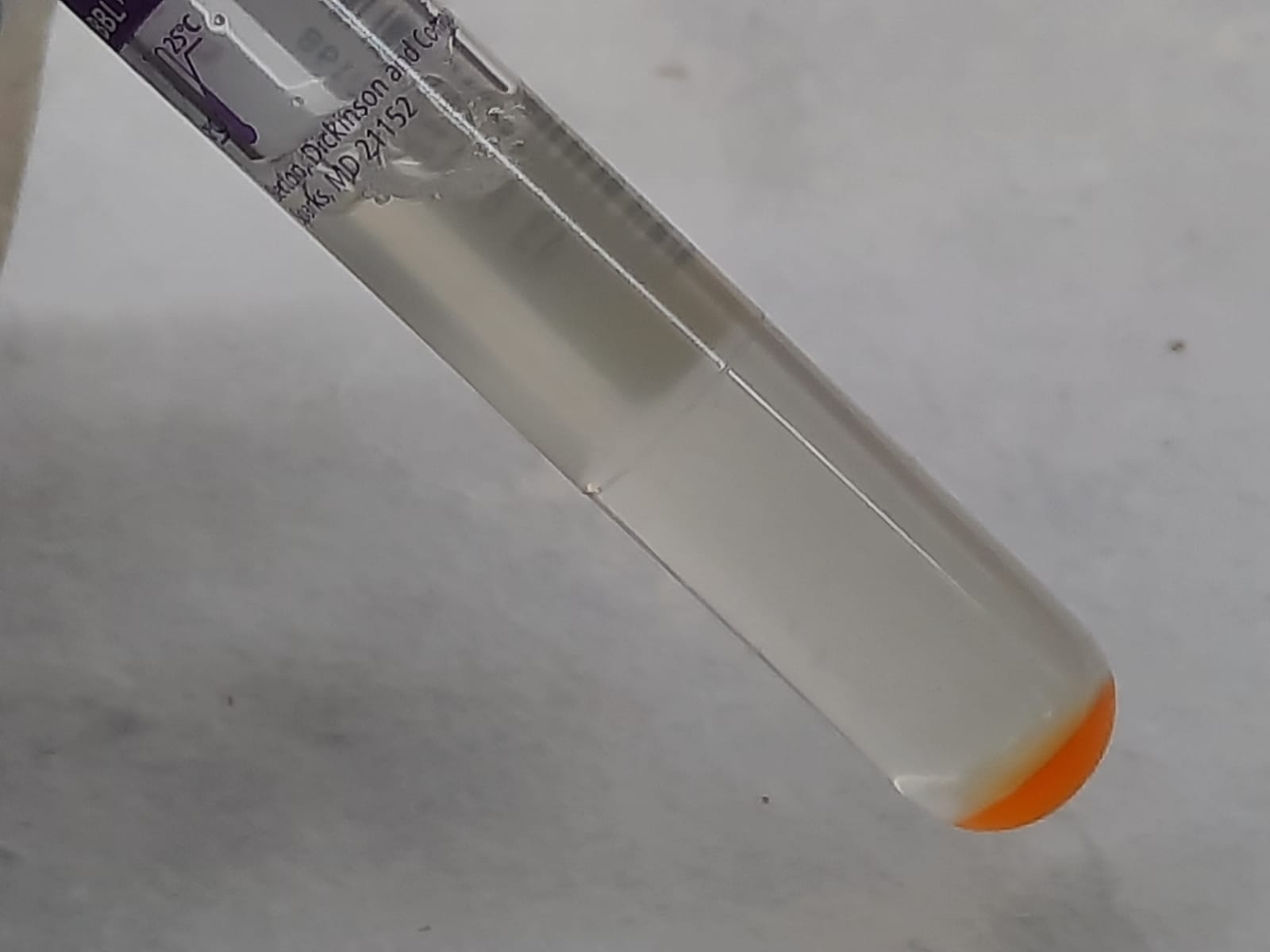
Fig. A 15 ml vial of BBL™ MGIT™ OADC enrichment supplement for the cultivation of Mycobacterium species

OADC is a sterile liquid or lyophilized supplement designed to enhance the performance of Middlebrook media, such as 7H9 broth, 7H10 agar, and 7H11 agar. It provides essential nutrients and protective agents that enable the robust cultivation of Mycobacterium tuberculosis and non-tuberculous mycobacteria (NTM) from clinical, environmental, and food samples. 

Composition and Function

The supplement typically consists of the following key ingredients (standard per 50 ml vial): 

  • Oleic Acid (0.025g): Provides long-chain fatty acids that are essential for the metabolism and growth promotion of Mycobacteria.
  • Bovine Albumin Fraction V (2.500g): Acts as a protective agent by binding to free fatty acids that can be toxic to Mycobacteria, preventing their harmful effects.
  • Dextrose (1.00g): Serves as a fermentable carbohydrate and a primary energy source for the organisms.
  • Catalase (0.002g): Destroys toxic peroxides that may be present in the medium, ensuring a safer environment for bacterial growth.
  • Sodium Chloride (0.425g): Maintains the osmotic equilibrium of the medium.

Uses

  • Isolation of Mycobacteria: Primary tool for isolating Mycobacterium spp. from clinical specimens like sputum.
  • Susceptibility Testing: Used in antimicrobial assays and biochemical tests to grow pure cultures.
  • Automated Systems: Frequently used as an enrichment in liquid culture systems like the BD BACTEC MGIT 960 to speed up detection time.

Keynotes for Laboratory Practice

  • Appearance: Due to Bovine Albumin Fraction V, the supplement may appear opaque or cloudy; this is normal and does not interfere with biological efficacy.
  • Reconstitution & Storage:
    • Store original vials at 2–8°C and protect from light.
    • Warmed to room temperature and shaken well before being aseptically added to sterile, cooled media bases.
  • Interaction with PANTA: In diagnostic systems, OADC is often mixed with PANTA (a selective antibiotic cocktail) to prevent the overgrowth of contaminating bacteria while allowing Mycobacteria to flourish.
  • Safety: For in vitro diagnostic (IVD) use only; clinical samples and contaminated materials must be sterilized by autoclaving before disposal.

Further Readings

  1. https://pmc.ncbi.nlm.nih.gov/articles/PMC2681879
  2. https://www.usbio.net/media/M3895-01/Middlebrook%207H10%20OADC/data-sheet
  3. https://www.himedialabs.com/media/TD/FD018.pdf
  4. https://eolabs.com/product/middlebrook-7h9-broth-with-oadc-40ml
  5. https://www.sigmaaldrich.com/JP/en/product/sial/m0678
  6. https://www.scientificlabs.co.uk/product/M0678-1VL
  7. https://www.labmartgh.com/shop/thermo-scientific-tm-remel-tm-oadc-enrichment-supplement-21802
  8. https://www.scientificlabs.ie/product/M0678-1VL
Medical Lab Notes

Recent Posts

SIRE Supplement: Introduction, Composition and Function, Uses, and Keynotes

Introduction The BACTEC™ MGIT™ 960 SIRE Supplement is an essential enrichment used specifically for drug susceptibility testing…

58 minutes ago

PANTA Supplement: Introduction, Composition and Function, Uses, and Keynotes

Introduction In microbiology and Tuberculosis (TB) diagnostics, PANTA is an antimicrobial supplement used to prevent the overgrowth…

24 hours ago

Acinetobacter haemolyticus-Introduction, Morphology, Pathogenicity, Lab Diagnosis, Treatment, Prevention, and Keynotes

Introduction Acinetobacter haemolyticus is an aerobic, non-fermenting bacterium found in nature and hospital environments. It belongs…

3 days ago

Nakaseomyces glabratus: Introduction, Morphology, Pathogenicity, Lab Diagnosis, Treatment, Prevention, and Keynotes

Introduction Nakaseomyces glabratus (formerly Candida glabrata) is a highly adaptable, haploid yeast that is a common commensal…

2 weeks ago

Pichia kudriavzevii-Introduction, Morphology, Pathogenicity, Lab Diagnosis, Treatment, Prevention, and Keynotes

Introduction Pichia kudriavzevii, formerly known as Candida krusei, is a unique budding yeast that holds a…

2 weeks ago

Morphological Characterization of MTBC: Identifying “Buff” Granular Growth in MGIT Liquid Culture

Visual Observation Medium: The tubes appear to be MGIT (Mycobacteriological Growth Indicator Tubes), which contain…

2 weeks ago