All Notes

Broad Range PCR Assay for Fungi-Directly on Clinical Samples: Introduction, Principle, Clinical Significance, and Keynotes

Introduction

Broad-range PCR assays for fungi are molecular diagnostic methods designed to detect a wide spectrum of fungal pathogens directly from clinical samples such as blood, BAL, sputum, CSF, tissue biopsies, and sterile body fluids.
These assays target highly conserved fungal genomic regions, primarily the Internal Transcribed Spacer (ITS) and 18S/28S rRNA genes, enabling identification of yeasts, molds, dimorphic fungi, and even rare or unculturable species.

Fig. Broad Range PCR Assay for Fungi-Directly on Clinical Samples

Broad-range fungal PCR is especially valuable in critically ill, immunocompromised, and oncology/transplant patients, where a rapid diagnosis can be lifesaving and traditional culture is slow or yields negative results.

Principle

Broad-range PCR relies on universal fungal primers that amplify conserved regions shared among diverse fungi.

1. DNA Extraction

Fungal DNA is extracted directly from various samples:

Fig. Nucleic acid (DNA) extraction room
  • BAL, sputum
  • Blood, serum/plasma
  • CSF
  • Tissue biopsies (fresh or FFPE)
  • Peritoneal, pleural, or vitreous fluids
Fig. Automated nucleic acid extraction systems for DNA and RNA isolation

2. PCR Amplification

Fig. Master mix room for molecular biology

Universal primers (e.g., ITS1/ITS4, 18S/28S rRNA) amplify fungal DNA present in the specimen.

3. Detection/Analysis

Amplified products are detected by:

Fig. PCR analysis room
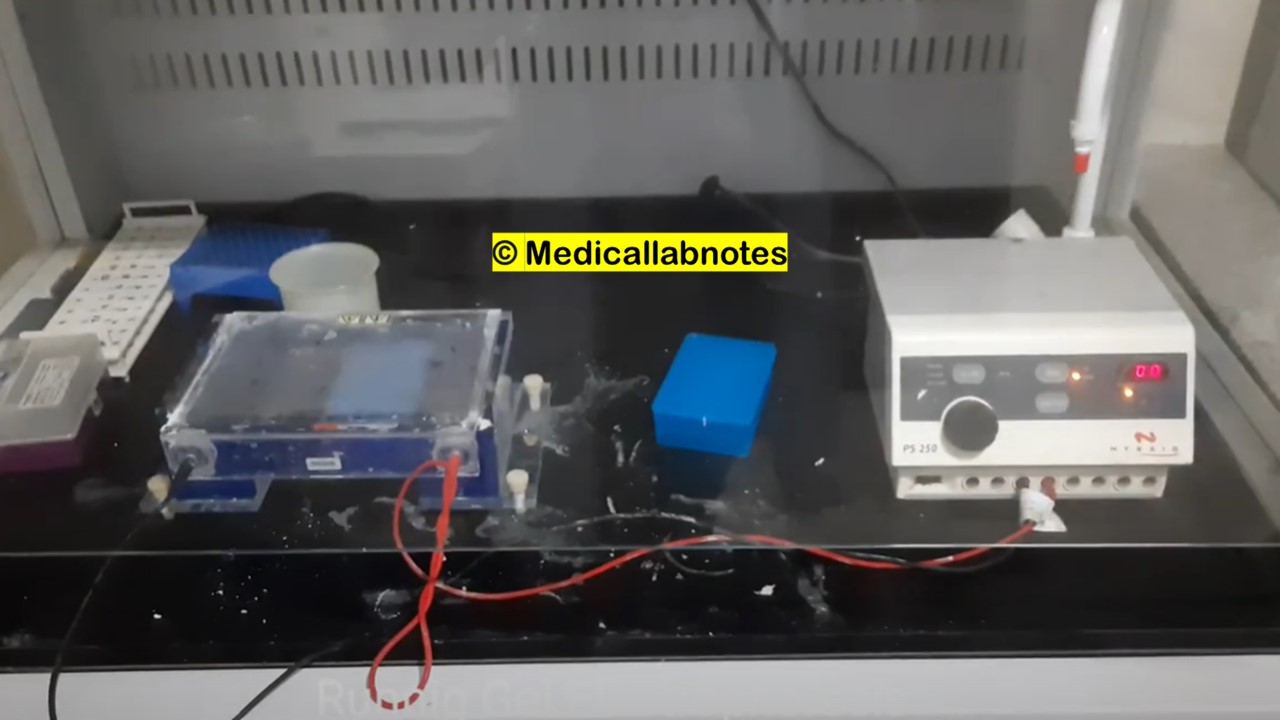
Fig. A gel electrophoresis setup- a system used to separate DNA, RNA, or proteins based on size and charge using an electric field through an agarose or polyacrylamide gel
Fig. Gel Doc Imaging System-a laboratory device used to capture, visualize, and analyze DNA, RNA, or protein bands separated on electrophoresis gels

4. Sequencing for Identification

Sanger sequencing of PCR products provides species-level identification through comparison with databases such as:

Clinical Significance

1. Rapid Diagnosis of Fungal Infections

Detects fungi within hours, much faster than culture (which may take days to weeks).

2. Detects Difficult or Unculturable Fungi

Helpful when the culture is negative due to:

  • Low fungal load
  • Prior antifungal therapy
  • Slow-growing / non-viable / fastidious fungi
  • Deep-seated or tissue-restricted infections

3. Essential for Immunocompromised Patients

Widely used in:

  • Oncology
  • Transplant recipients
  • ICU patients
  • HIV/AIDS
  • Neutropenic individuals

4. Broad Coverage of Pathogens

Identifies:

5. Useful in Sterile-Site Infections

Positive results from CSF, cardiac tissue, vitreous fluid, bone, or joint fluid indicate true infection.

6. Helps Guide Early Antifungal Therapy

Early detection supports targeted treatment and reduces mortality.

7. Resolves Mixed or Polymicrobial Infections

Sequencing reveals the presence of multiple fungi in the same specimen.

Keynotes

  • ITS region is the gold standard fungal barcode for broad-range PCR detection.
  • Direct PCR is highly sensitive, but may detect colonizers; interpret results with clinical context.
  • Requires strict contamination control (separate pre- and post-PCR areas).
  • Sequencing confirmation is essential for species identification.
  • Cannot replace culture for antifungal susceptibility testing.
  • Best used with an integrated approach, including:
  • Useful for FFPE samples, where culture is not possible.

Further Readings

  1. https://www.mdpi.com/2079-6382/13/12/1166
  2. https://pmc.ncbi.nlm.nih.gov/articles/PMC8525558/
  3. https://bmcmicrobiol.biomedcentral.com/articles/10.1186/s12866-016-0752-1
  4. https://pmc.ncbi.nlm.nih.gov/articles/PMC2845394/
  5. https://www.medrxiv.org/content/10.1101/2023.08.02.23293145.full
  6. https://pmc.ncbi.nlm.nih.gov/articles/PMC3592065/
  7. https://pmc.ncbi.nlm.nih.gov/articles/PMC5934447/
  8. https://pmc.ncbi.nlm.nih.gov/articles/PMC9863793/
  9. https://www.pharmacytimes.com/view/fungal-biomarkers-primer-for-pharmacists
Medical Lab Notes

Recent Posts

First-Line Drug Susceptibility Testing (SL-DST) for Tuberculosis: Introduction, Principle, Procedure, Result-Interpretation, and Keynotes

 Introduction First-Line Drug Susceptibility Testing (FL-DST or sometimes referred to in context as SL-DST when…

5 hours ago

Hantavirus: Introduction, Morphology, Pathogenicity, Lab Diagnosis, Treatment, Prevention, and Keynotes

Introduction Hantaviruses are a group of rodent-borne viruses that cause two main life-threatening diseases in…

6 hours ago

Second-Line Drug Susceptibility Testing (SL-DST) for Tuberculosis:Introduction, Principle, Procedure, Result-Interpretation, and Keynotes

Introduction Second-line drug susceptibility testing (SL-DST) for tuberculosis is a crucial laboratory procedure designed to…

3 days ago

Red Sore on Inner Lip: Common Oral Conditions and Common Care Options

Red Sore on Inner Lip The image shows a red, oval lesion on the inner…

3 days ago

Xpert MTB/RIF: Introduction, Principle, Procedure, Result-Interpretation, Uses, and Keynotes

Introduction The Xpert MTB/RIF assay is an automated, cartridge-based molecular test used to detect Mycobacterium tuberculosis (MTB)…

3 days ago

Bacterial Load (Decoding the CFU): Introduction, Ranges, Application, and Keynotes

Introduction of Bacterial Load (Decoding the CFU) Bacterial load, measured in Colony-Forming Units (CFU), is…

4 days ago