
Introduction
Table of Contents
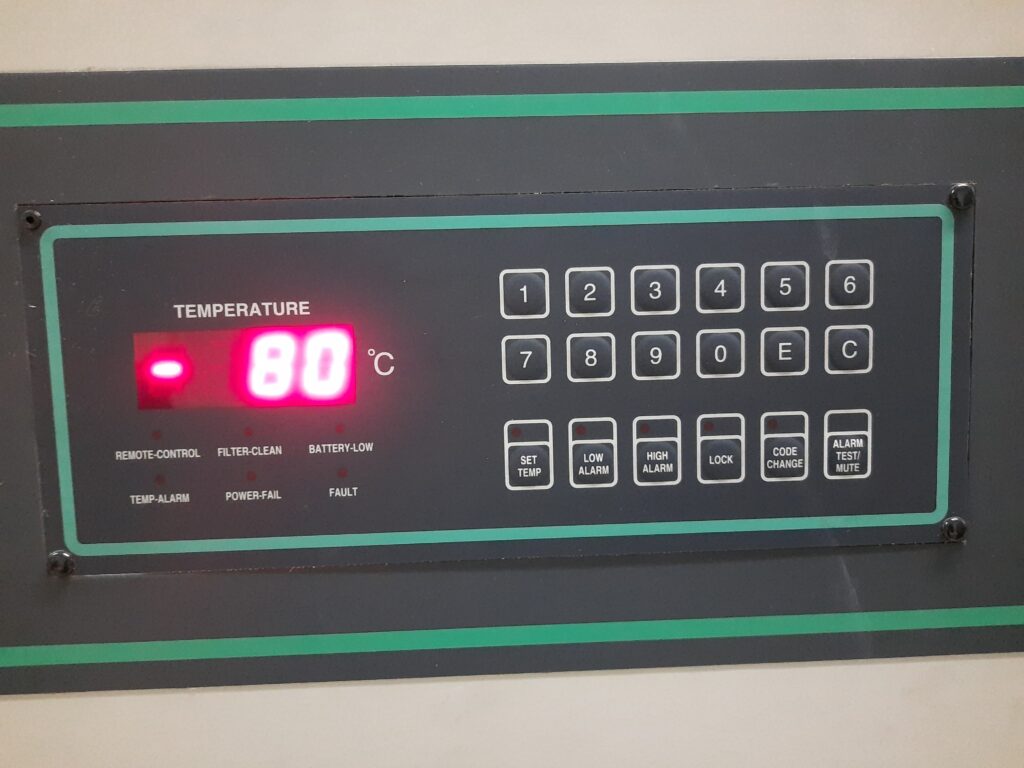
An Ultra-Low Temperature (ULT) Freezer typically operates within the temperature range of -400C to -860C to safely preserve critical biological samples over long periods.
- Purpose: Protects highly sensitive biological materials from thermal degradation.
- Standard Settings: Most laboratories set their units to a standard of -80C
- Configurations: Available in both upright (easy access) and chest (superior thermal efficiency) models.
Operating Principle
ULT freezers rely on a two-stage cascade refrigeration system to achieve extreme temperatures:
- Stage One (High-Stage): A standard compressor cycle cools a central heat exchanger down to approximately-400C.
- Stage Two (Low-Stage): A specialized low-temperature compressor cycle takes heat from the sample chamber and transfers it to the first cycle’s heat exchanger.
- Insulation: Uses high-density polyurethane foam or vacuum insulation panels to minimize heat gain from the external room environment.
Handling Procedure
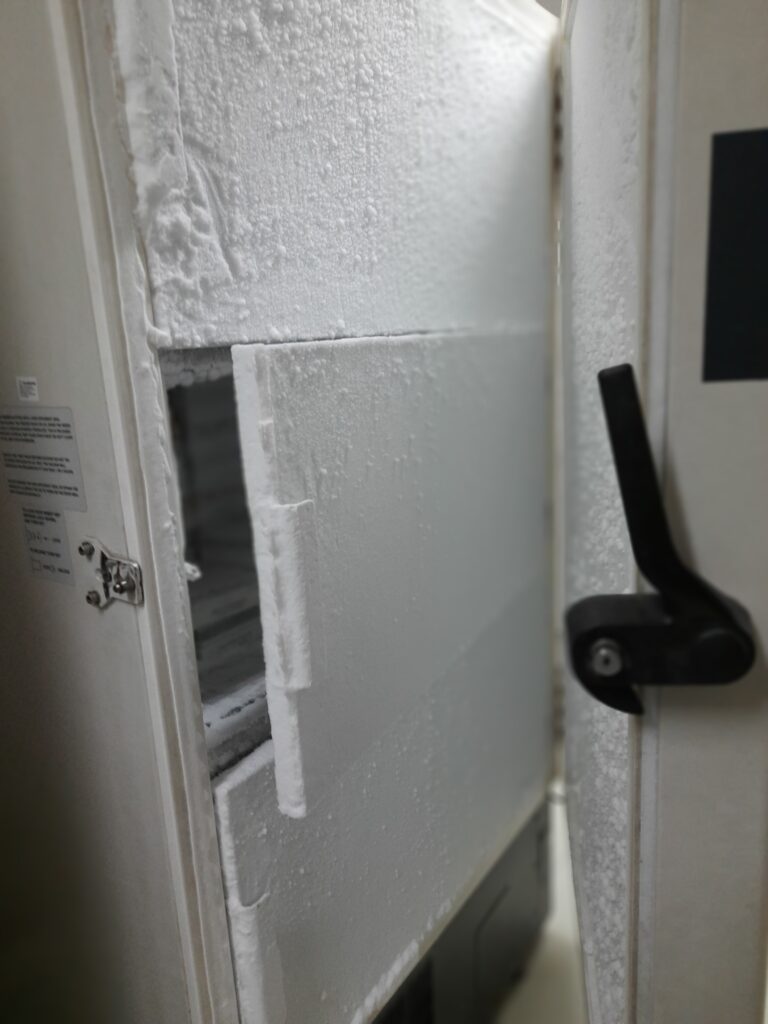
- Personal Protective Equipment (PPE): Always wear heavy insulated cryogenic gloves and safety glasses to prevent frostbite.
- Door Management: Minimize door opening times to prevent ambient moisture from entering and forming ice.
- Sample Loading: Inventory samples systematically using internal racks and boxes to reduce search time.
- Maintenance: Regularly scrape away internal frost buildup and clean the condenser filter every two to three months.
- Vacuum Equalization: Wait a few minutes before reopening a recently closed door to let the vacuum relief valve normalize internal pressure.
Applications
- Molecular Biology: Long-term storage of DNA, RNA, oligonucleotides, and extracted proteins.
- Clinical Medicine: Preservation of viral and bacterial samples, blood plasma, and tissue biopsies.
- Vaccine Storage: Distribution holding for temperature-sensitive mRNA vaccines and biologics.
- Industrial Testing: Material stress testing and preservation of specialized chemical compounds.
Keynotes
- Ambient Conditions: Keep the freezer in a well-ventilated, air-conditioned room (<250 C) to prevent compressor burnout.
- Backup Power: Connect the unit directly to an emergency generator circuit to survive power grid failures.
- Backup CO2/LN2 Systems: Install liquid carbon dioxide or liquid nitrogen backup injection kits for automated emergency cooling.
- Clearance: Maintain at least 15 to 20 cm of open space around the sides and back for proper heat dissipation.
Further Readings
https://www.testronixinstruments.com/blog/ultra-low-deep-freezer-diagram-working-principle-and-uses
https://www.drawellanalytical.com/what-are-ultra-low-temperature-freezers
https://www.360medical.ca/blogs/news/ultra-low-freezer-safety-dos-and-donts-for-your-lab
https://www.igenels.com/category/microbiology-lab-instruments
https://www.nwrinc.com/industry-insights/common-challenges-in-ult-refrigeration-for-blood-plasma
https://blog.cmecorp.com/cold-storage-guide-for-healthcare-and-life-sciences
https://www.thermofisher.com/search/browse/featured/us/en/80013384