Aspergillus terreus: Introduction, Morphology, Pathogenicity, Lab Diagnosis, Treatment, Prevention, and Keynotes

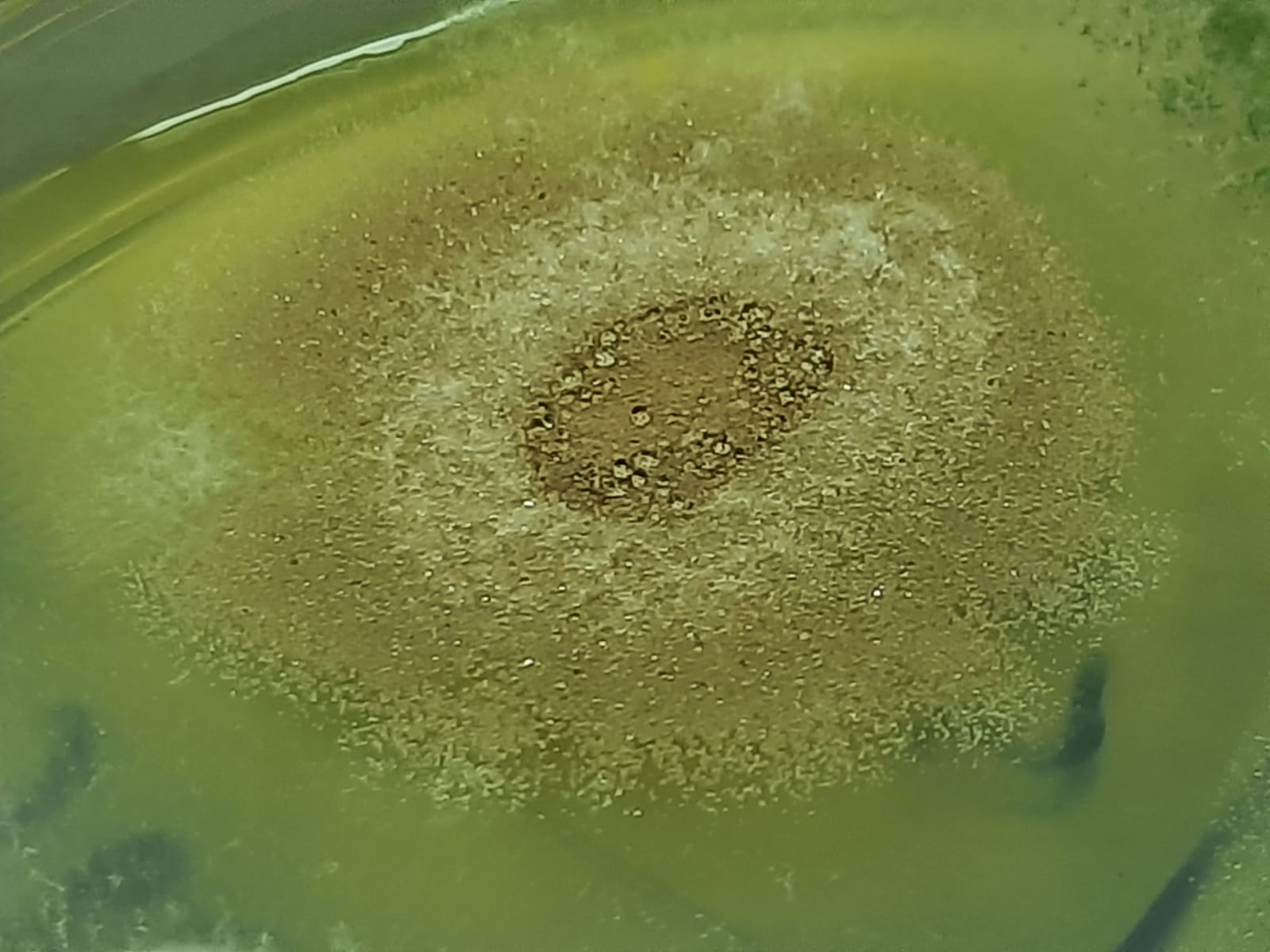
Colony morphology of Aspergillus terreus on Corn Meal Agar (CMA) showing a characteristic cinnamon-brown to sandy-beige pigmentation with a velvety, granular texture and a light-colored peripheral growth zone

Introduction & Taxonomy Aspergillus terreus is a filamentous fungus increasingly recognized as a significant emerging opportunistic pathogen. It is uniquely distinguished from other common species by its intrinsic resistance to amphotericin B, its characteristic cinnamon-brown colony color, and the production of specialized spores called aleurioconidia. …

Read more

Scopulariopsis: Introduction, Morphology, Pathogenicity, Lab Diagnosis, Treatment, Prevention, and Keynotes

Chains of single-celled conidia and conidiophores(annellides) of Scopulariopsis in LPCB Tease mount of culture microscopy

Introduction Scopulariopsis is a genus of filamentous fungi belonging to the class Ascomycota. It is a widespread and diverse group of fungi found in various environmental niches. Scopulariopsis species (they) are commonly present in soil, decaying organic matter, and indoor environments. The name “Scopulariopsis” is …

Read more

Trichoderma: Introduction, Morphology, Pathogenicity, Lab Diagnosis, Treatment, Prevention, and Keynotes

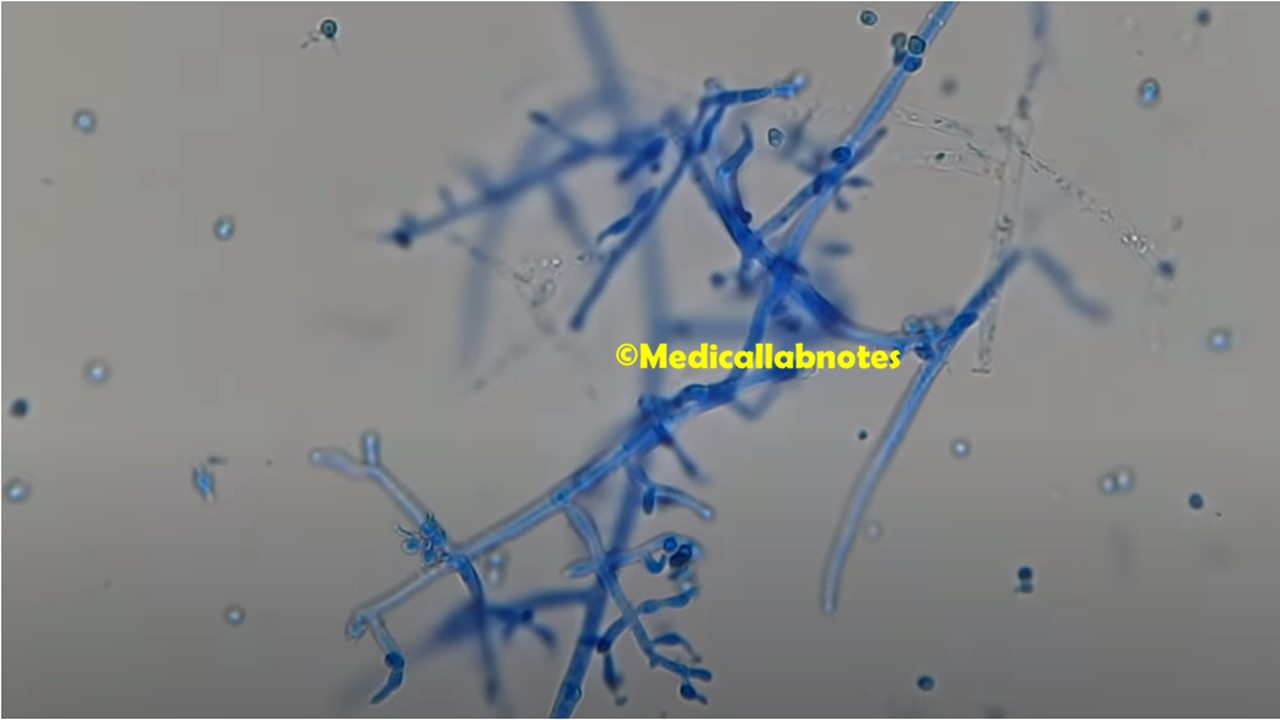
Conidia, phialides and conidiophores of Trichoderma in LPCB tease mount of culture microscopy

Introduction Trichoderma is a genus of fungi that plays a crucial role in agriculture, biotechnology, and environmental management. It is part of the phylum Ascomycota and is known for its diverse species that have the ability to interact with plants, other fungi, and soil microorganisms. …

Read more