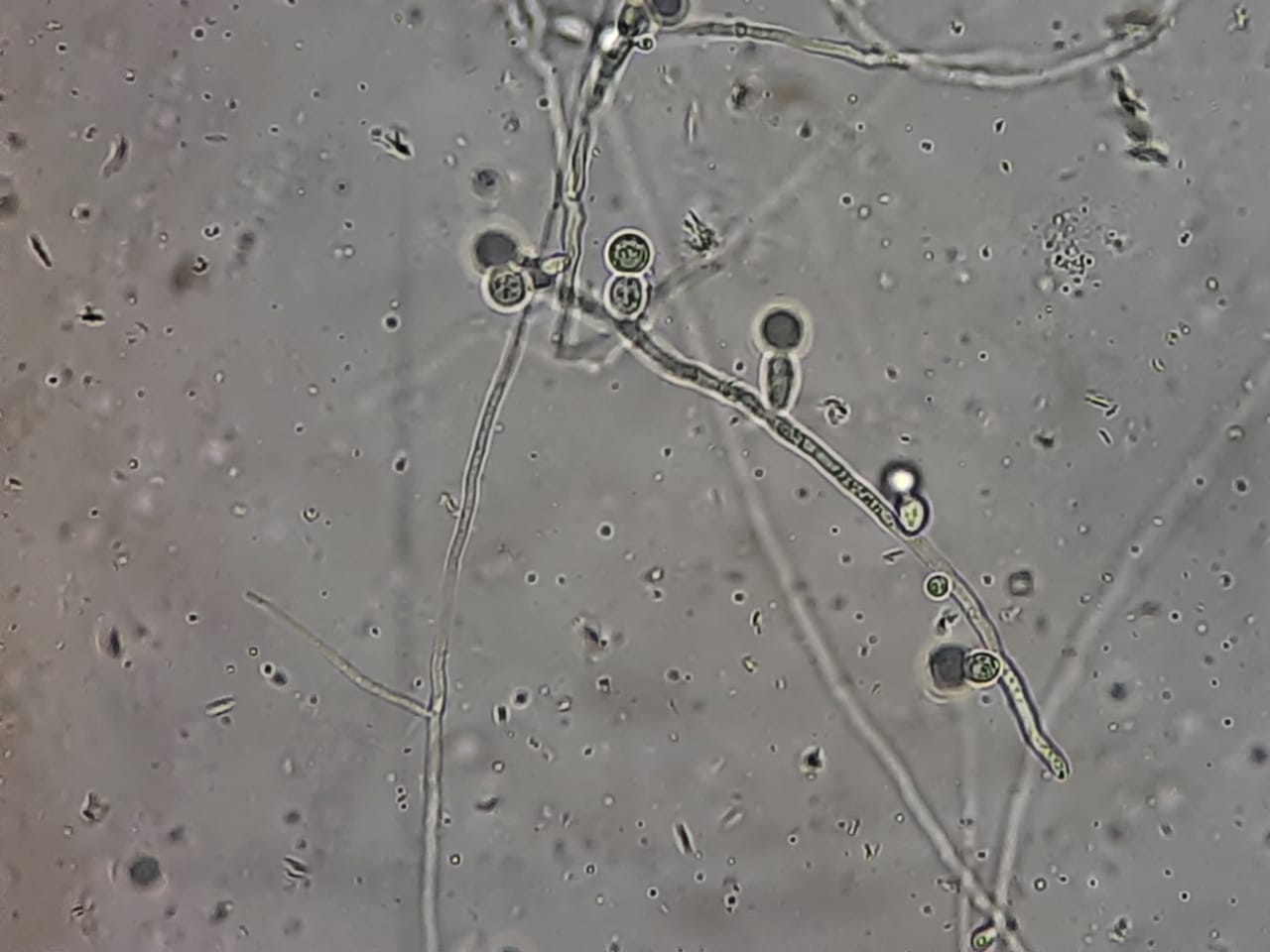
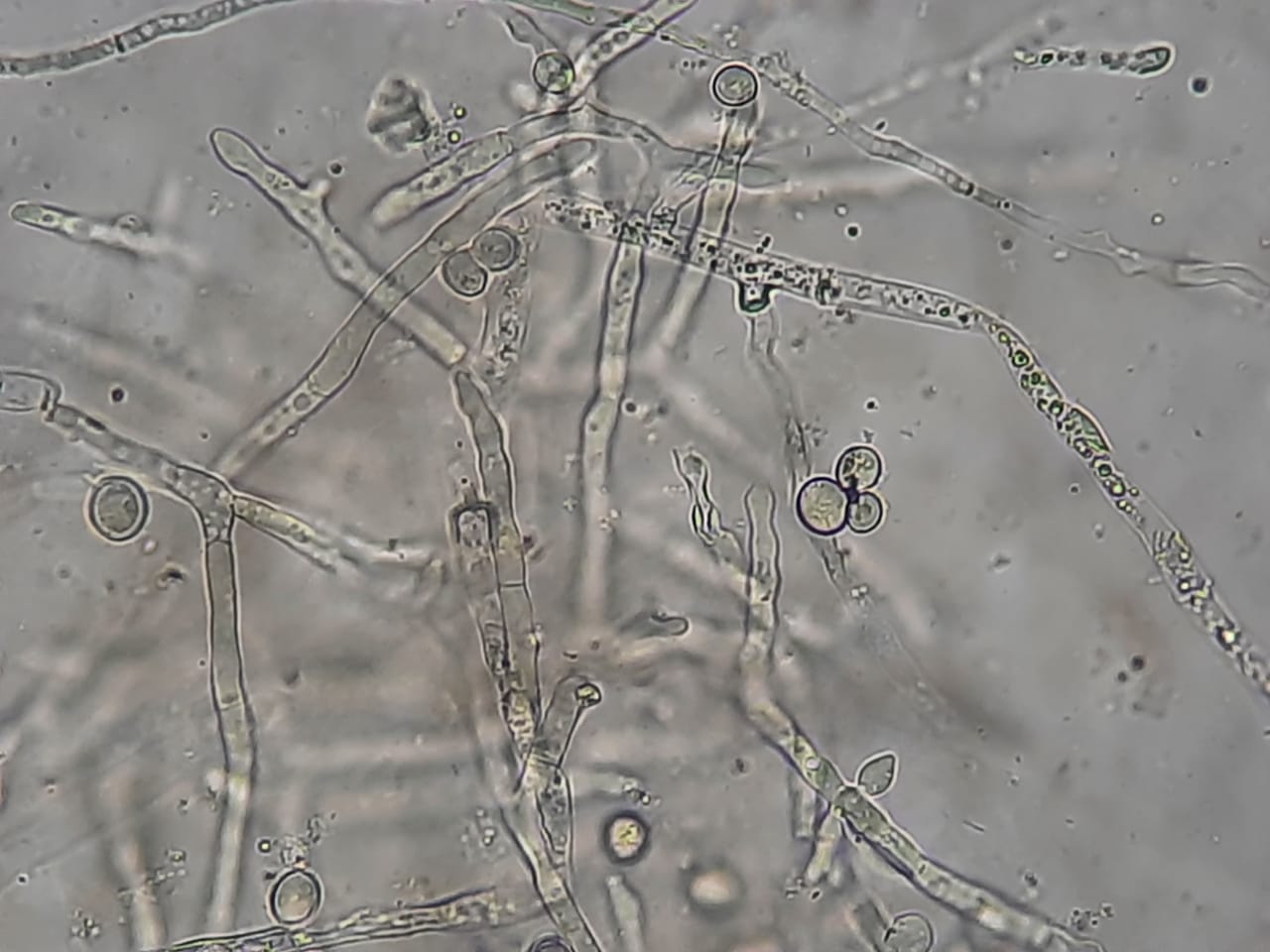
Fungal Elements in KOH Mount of Bile Microscopy-Introduction, Fungal Elements Observed in Bile KOH Mount, Applications, and Keynotes

Bile sample before centrifugation for KOH mount and fungal culture

Introduction KOH Mount of Bile is a direct microscopic examination technique used to detect fungal elements in bile fluid collected during ERCP, biliary drainage, cholecystectomy, or liver procedures.Because bile contains mucus, epithelial debris, fats, and pigments, a 10–20% Potassium Hydroxide (KOH) solution is used to …

Read more

Fungal Elements in KOH Mount of Sputum Microscopy-Introduction, Fungal Elements Observed in Sputum KOH Mount, Applications, and Keynotes

Fungal Elements in KOH Mount of Sputum Microscopy at a magnification of 1600X

Introduction KOH mount of sputum is a rapid, direct microscopic technique used to detect fungal elements in the respiratory tract. A 10–20% Potassium Hydroxide (KOH) solution digests mucus, epithelial cells, and debris in sputum, while preserving the chitin-rich fungal cell walls, making them appear clear, …

Read more

Fungal Elements in KOH Mount of BAL (Bronchoalveolar Lavage) Microscopy- Introduction, Fungal Elements Observed in BAL KOH Mount, Applications, and Keynotes

Fungal Elements in wet mount of culture of BAL specimen

Introduction KOH mount (Potassium Hydroxide preparation) is a rapid, simple, and cost-effective microscopic technique used to detect fungal elements directly in clinical specimens.When applied to Bronchoalveolar Lavage (BAL) samples, it is an essential diagnostic tool for identifying pulmonary fungal infections, especially in the ICU, oncology, …

Read more

Aspergillus-Antigen Testing:Introduction, Principle, Clinical Significance, and Keynotes

Aspergillus-Antigen Testing-Introduction, Principle, Clinical Significance, and Keynotes

Introduction Aspergillus species, particularly Aspergillus fumigatus, are major causes of invasive aspergillosis (IA), especially in immunocompromised patients, such as those with hematological malignancies, transplant recipients, or those with prolonged neutropenia. Diagnosis of IA is often challenging because clinical symptoms and radiological findings are nonspecific. Aspergillus …

Read more

Aspergillus niger Vs Aspergillus fumigatus-Introduction, Differences, Keynotes, and Related Footage

Aspergillus niger and Aspergillus fumigatus growth on Sabouraud dextrose agar (SDA) after 7 days of incubation

Introduction Key Differences: Aspergillus niger vs Aspergillus fumigatus Feature Aspergillus niger Aspergillus fumigatus Colony color (SDA) Black, powdery colonies Blue-green to gray-green colonies Growth rate Rapid, abundant sporulation Moderate, compact colonies Conidial heads Large, radiate, globose Columnar, compact Conidia Rough, black, spherical Smooth to rough, …

Read more

Criteria and Decision Framework for Differentiating True Infection from Colonization or Contamination by Aspergillus niger in Cancer Patients

Aspergillus niger growth on SDA

Evaluate the Clinical Context Sample Collection & Repeatability Microscopy & Direct Detection Quantitative Culture & Sterility of Site Serological & Molecular Evidence Radiological Correlation Practical Interpretation Framework Finding Likely Contaminant Possible Colonizer Likely Pathogen Single isolate from 1 sample ✅ ✅ ❌ Repeated isolation from …

Read more

Aspergillus fumigatus: Introduction, Morphology, Pathogenicity, Lab Diagnosis, Treatment, Prevention, and Keynotes
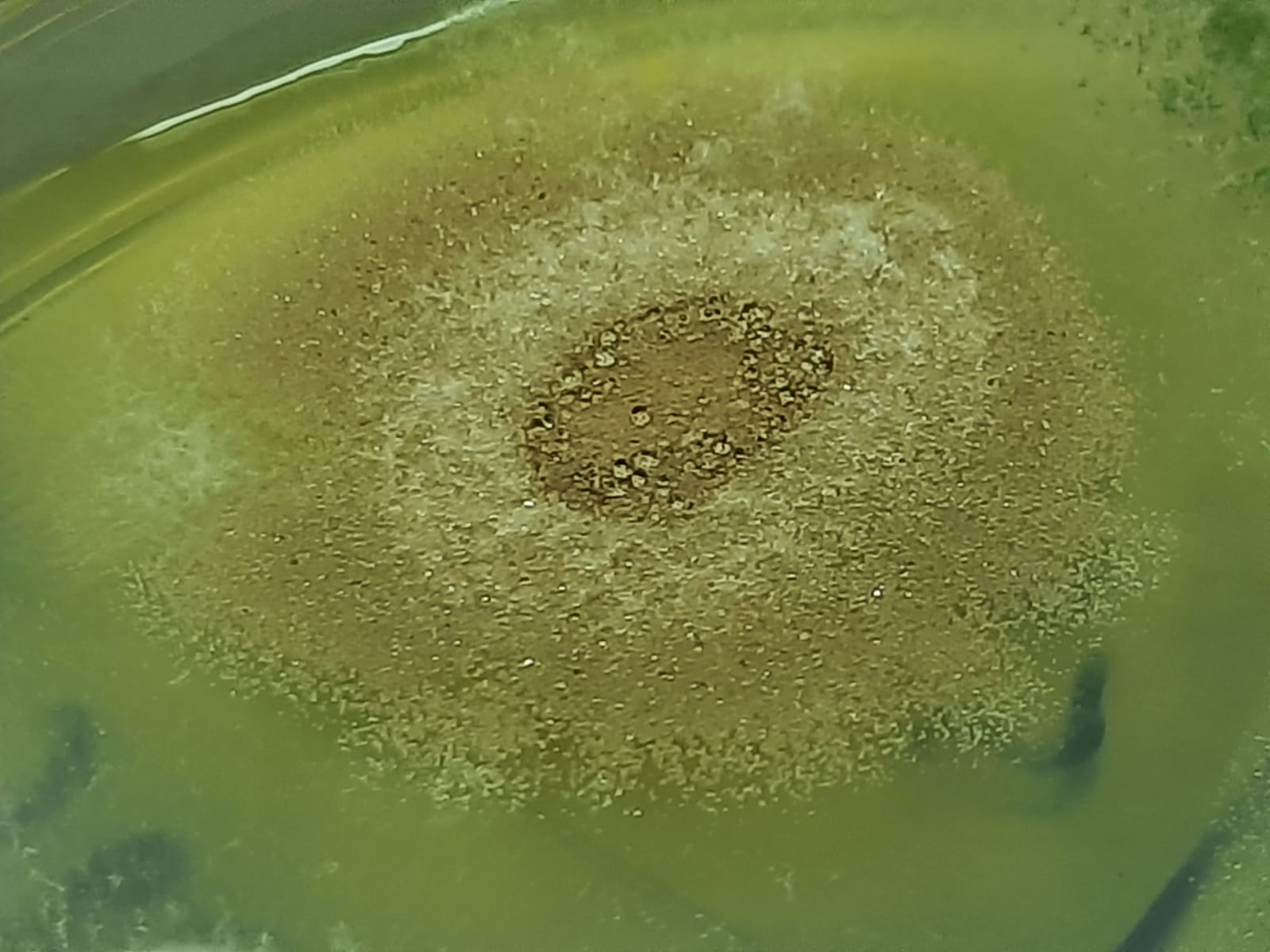
Aspergillus fumigatus colony morphology on Czapek-Dox agar plate

Introduction Aspergillus fumigatus is a filamentous fungus and one of the most common and clinically relevant species in the Aspergillus genus. It is widely distributed in the environment and can be found in soil, compost, decaying vegetation, and indoor environments. It is known for its …

Read more

Aspergillus flavus: Introduction, Morphology, Pathogenicity, Lab Diagnosis, Treatment, Prevention, and Keynotes

Aspergillus flavus colony morphology on Czapek Dox Agar plate

Introduction Aspergillus flavus is a filamentous fungus belonging to the Aspergillus genus, which comprises a wide variety of mold species. This particular species is commonly found in the environment and is known for its economic and medical significance. It is commonly associated with food and …

Read more