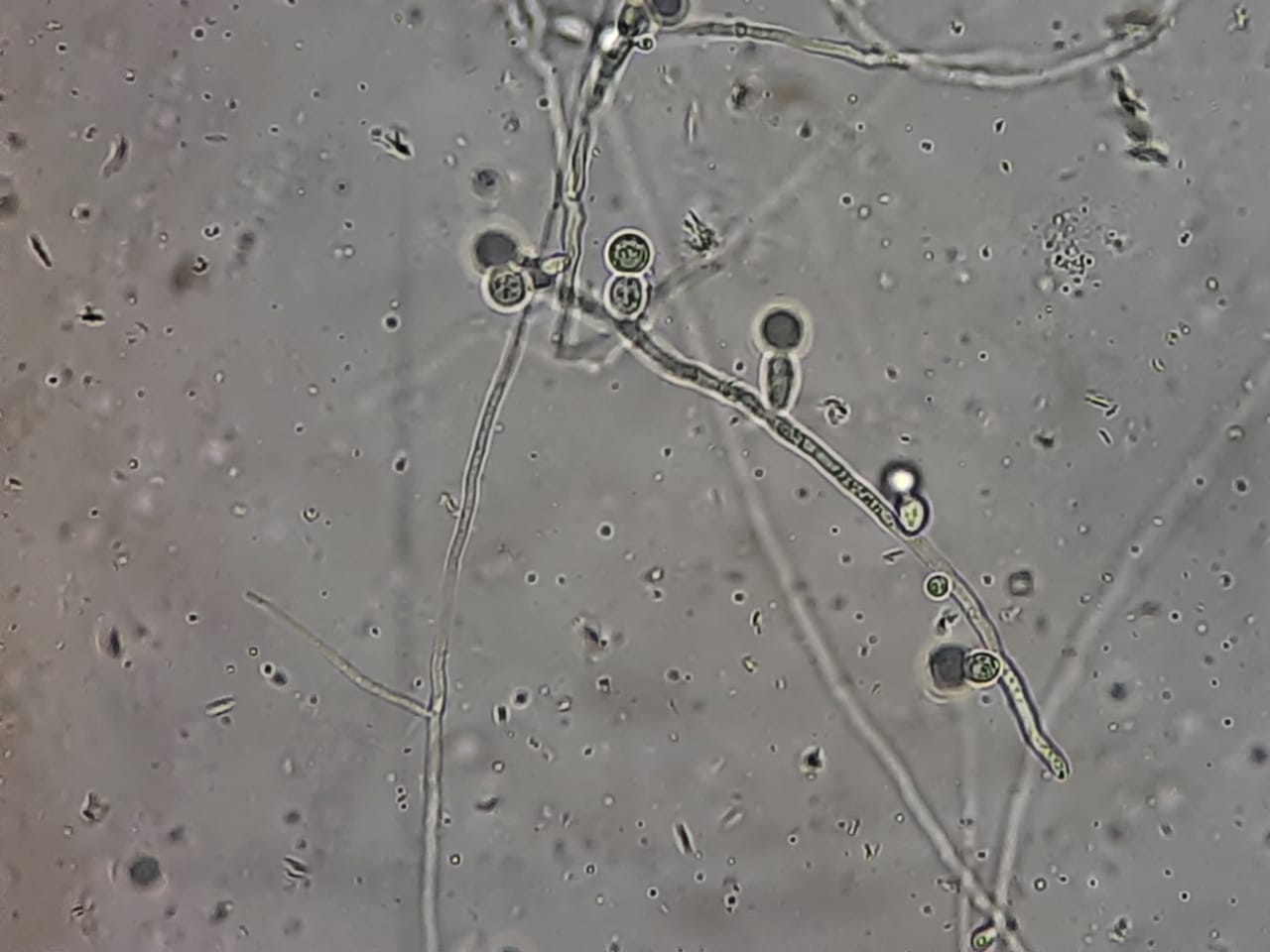
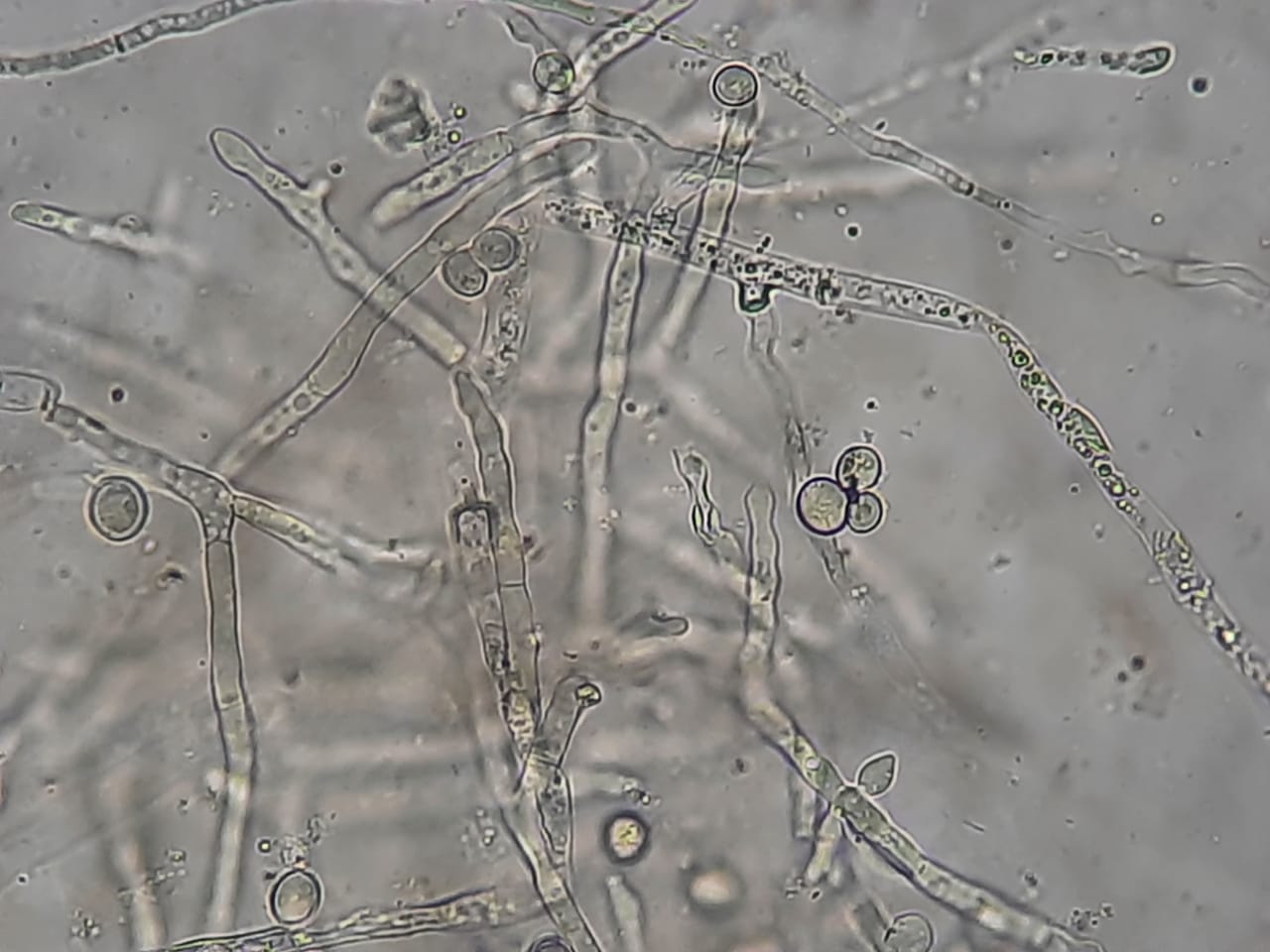
Fungal Elements in KOH Mount of Pleural Fluid Microscopy-Introduction, Possible Fungi Observed in Pleural Fluid KOH Mount, Applications, and Keynotes

Fungal Elements in KOH Mount of Pleural Fluid Microscopy-Introduction, Possible Fungi Observed in Pleural Fluid KOH Mount, Applications, and Keynotes

Introduction KOH Mount of Pleural Fluid is a rapid, direct microscopic test used to detect fungal elements in suspected pleural infections. A 10–20% Potassium Hydroxide (KOH) solution clears cellular debris, fibrin, and protein content in pleural fluid while preserving chitin-rich fungal structures such as hyphae, …

Read more

Fungal Elements in KOH Mount of Bile Microscopy-Introduction, Fungal Elements Observed in Bile KOH Mount, Applications, and Keynotes

Bile sample before centrifugation for KOH mount and fungal culture

Introduction KOH Mount of Bile is a direct microscopic examination technique used to detect fungal elements in bile fluid collected during ERCP, biliary drainage, cholecystectomy, or liver procedures.Because bile contains mucus, epithelial debris, fats, and pigments, a 10–20% Potassium Hydroxide (KOH) solution is used to …

Read more

Fungal Elements in KOH Mount of Sputum Microscopy-Introduction, Fungal Elements Observed in Sputum KOH Mount, Applications, and Keynotes

Fungal Elements in KOH Mount of Sputum Microscopy at a magnification of 1600X

Introduction KOH mount of sputum is a rapid, direct microscopic technique used to detect fungal elements in the respiratory tract. A 10–20% Potassium Hydroxide (KOH) solution digests mucus, epithelial cells, and debris in sputum, while preserving the chitin-rich fungal cell walls, making them appear clear, …

Read more

Fungal Elements in KOH Mount of BAL (Bronchoalveolar Lavage) Microscopy- Introduction, Fungal Elements Observed in BAL KOH Mount, Applications, and Keynotes

Fungal Elements in wet mount of culture of BAL specimen

Introduction KOH mount (Potassium Hydroxide preparation) is a rapid, simple, and cost-effective microscopic technique used to detect fungal elements directly in clinical specimens.When applied to Bronchoalveolar Lavage (BAL) samples, it is an essential diagnostic tool for identifying pulmonary fungal infections, especially in the ICU, oncology, …

Read more

Blood Culture–Positive Molds: Introduction, Common molds, Comparison, and Keynotes

Blood Culture–Positive Molds

Introduction Blood cultures are the cornerstone for diagnosing fungemia, but while yeasts (Candida spp.) are frequently detected, molds are rarely recovered in blood culture systems. This is because most molds (Aspergillus, Mucorales) cause tissue-invasive disease without sustained fungemia. However, certain molds such as Fusarium spp. …

Read more

Aspergillus niger Vs Aspergillus fumigatus-Introduction, Differences, Keynotes, and Related Footage

Aspergillus niger and Aspergillus fumigatus growth on Sabouraud dextrose agar (SDA) after 7 days of incubation

Introduction Key Differences: Aspergillus niger vs Aspergillus fumigatus Feature Aspergillus niger Aspergillus fumigatus Colony color (SDA) Black, powdery colonies Blue-green to gray-green colonies Growth rate Rapid, abundant sporulation Moderate, compact colonies Conidial heads Large, radiate, globose Columnar, compact Conidia Rough, black, spherical Smooth to rough, …

Read more

Comparative Microscopy of Common Clinical Fungi-Introduction, Table, and Appearance at Different Magnifications

Aspergillus in LPCB tease mount of culture

Introduction Microscopy remains one of the cornerstones of clinical mycology, providing a rapid and inexpensive method for the direct detection and preliminary identification of fungi. Comparative microscopy is particularly valuable in distinguishing the morphological features of common clinical fungi, many of which exhibit overlapping clinical …

Read more

Criteria and Decision Framework for Differentiating True Infection from Colonization or Contamination by Aspergillus niger in Cancer Patients

Aspergillus niger growth on SDA

Evaluate the Clinical Context Sample Collection & Repeatability Microscopy & Direct Detection Quantitative Culture & Sterility of Site Serological & Molecular Evidence Radiological Correlation Practical Interpretation Framework Finding Likely Contaminant Possible Colonizer Likely Pathogen Single isolate from 1 sample ✅ ✅ ❌ Repeated isolation from …

Read more