Fungal Elements in KOH Mount of Bile Microscopy-Introduction, Fungal Elements Observed in Bile KOH Mount, Applications, and Keynotes

Bile sample before centrifugation for KOH mount and fungal culture

Introduction KOH Mount of Bile is a direct microscopic examination technique used to detect fungal elements in bile fluid collected during ERCP, biliary drainage, cholecystectomy, or liver procedures.Because bile contains mucus, epithelial debris, fats, and pigments, a 10–20% Potassium Hydroxide (KOH) solution is used to …
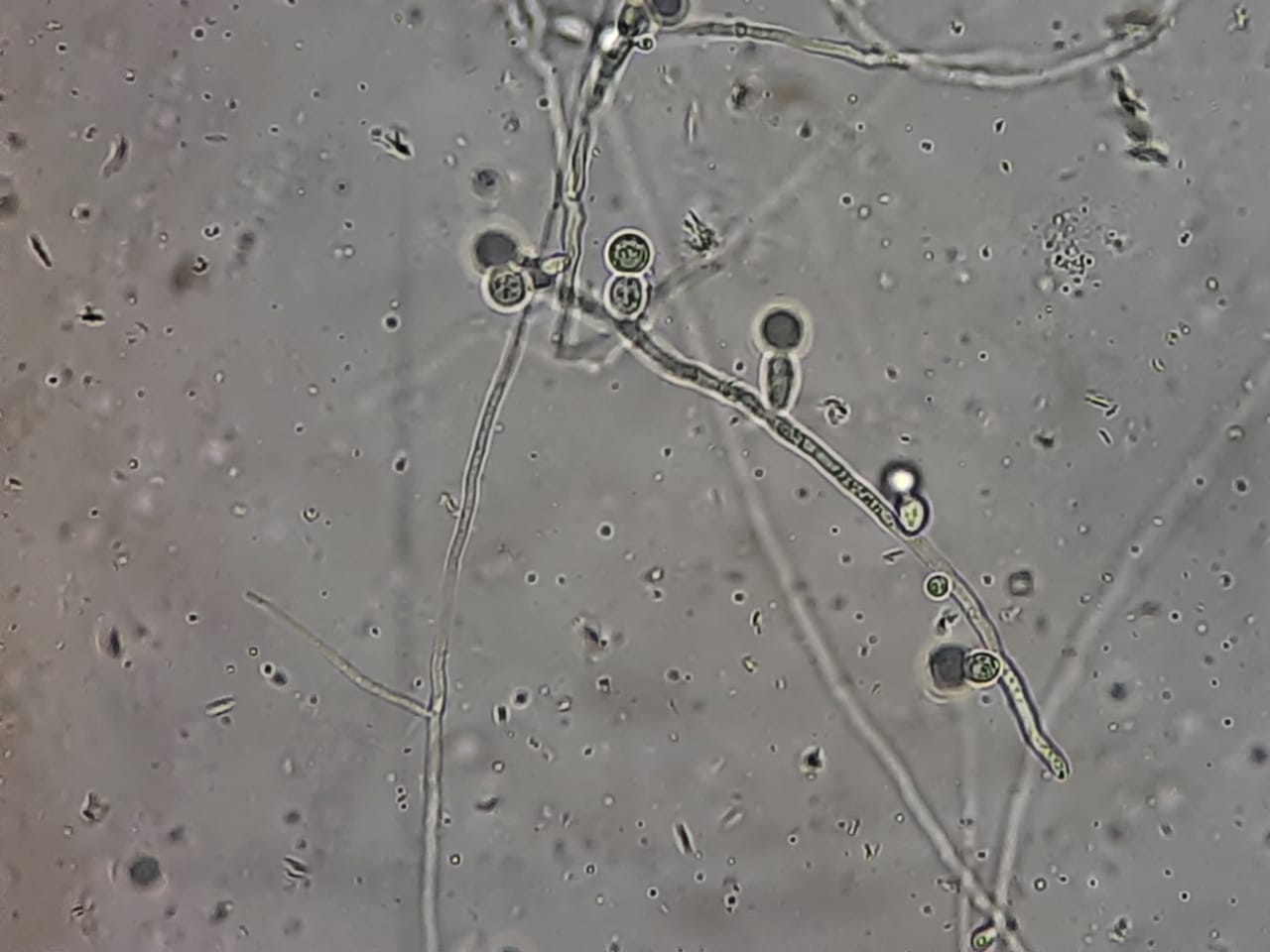
Read more

Fungal Elements in KOH Mount of Sputum Microscopy-Introduction, Fungal Elements Observed in Sputum KOH Mount, Applications, and Keynotes

Fungal Elements in KOH Mount of Sputum Microscopy at a magnification of 1600X

Introduction KOH mount of sputum is a rapid, direct microscopic technique used to detect fungal elements in the respiratory tract. A 10–20% Potassium Hydroxide (KOH) solution digests mucus, epithelial cells, and debris in sputum, while preserving the chitin-rich fungal cell walls, making them appear clear, …

Read more

Blood Culture–Positive Molds: Introduction, Common molds, Comparison, and Keynotes

Blood Culture–Positive Molds

Introduction Blood cultures are the cornerstone for diagnosing fungemia, but while yeasts (Candida spp.) are frequently detected, molds are rarely recovered in blood culture systems. This is because most molds (Aspergillus, Mucorales) cause tissue-invasive disease without sustained fungemia. However, certain molds such as Fusarium spp. …

Read more