Fungal Elements in KOH Mount of Bile Microscopy-Introduction, Fungal Elements Observed in Bile KOH Mount, Applications, and Keynotes

Bile sample before centrifugation for KOH mount and fungal culture

Introduction KOH Mount of Bile is a direct microscopic examination technique used to detect fungal elements in bile fluid collected during ERCP, biliary drainage, cholecystectomy, or liver procedures.Because bile contains mucus, epithelial debris, fats, and pigments, a 10–20% Potassium Hydroxide (KOH) solution is used to …
Read more

Fungal Elements in KOH Mount of Sputum Microscopy-Introduction, Fungal Elements Observed in Sputum KOH Mount, Applications, and Keynotes

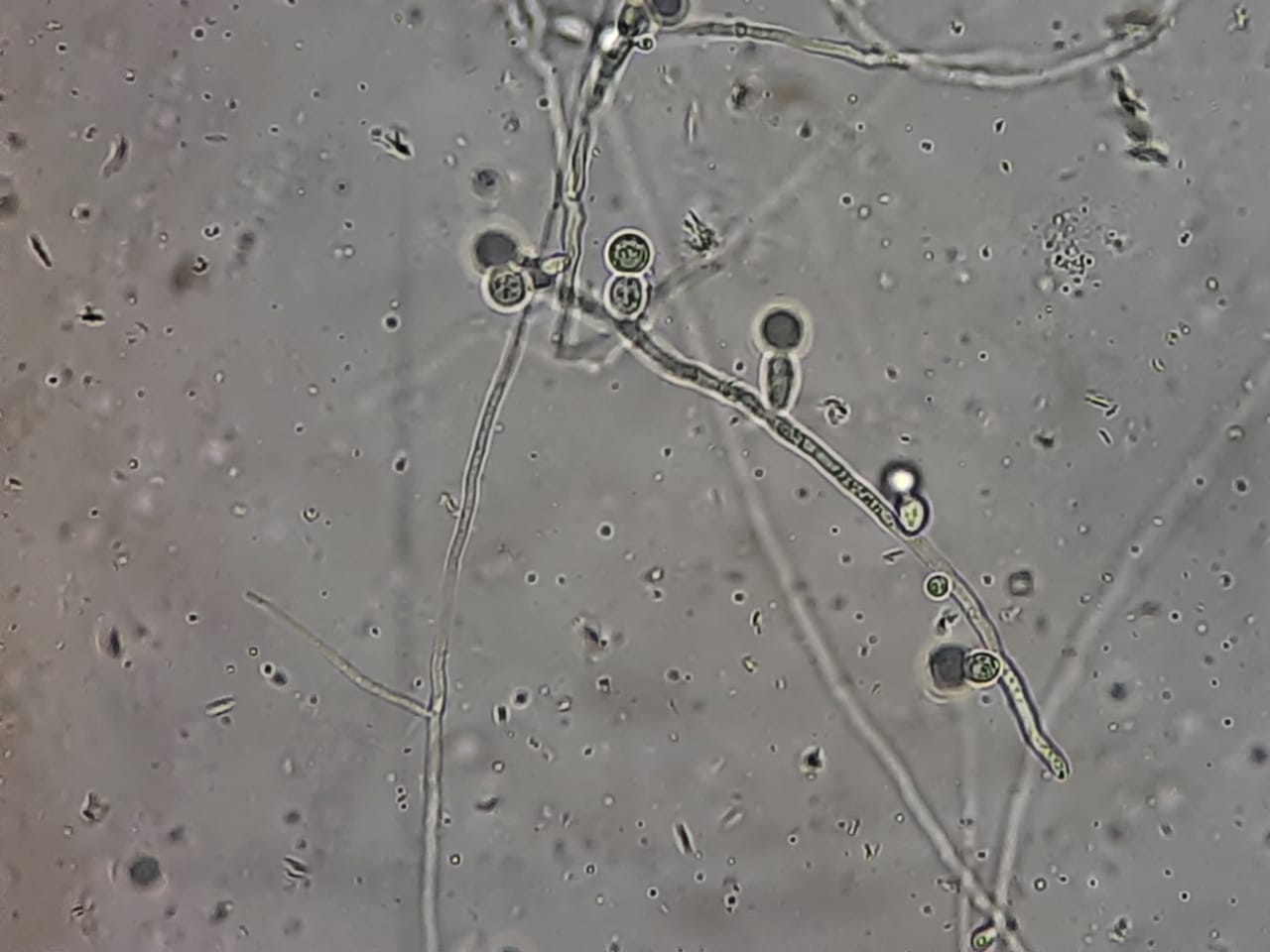
Fungal Elements in KOH Mount of Sputum Microscopy at a magnification of 1600X

Introduction KOH mount of sputum is a rapid, direct microscopic technique used to detect fungal elements in the respiratory tract. A 10–20% Potassium Hydroxide (KOH) solution digests mucus, epithelial cells, and debris in sputum, while preserving the chitin-rich fungal cell walls, making them appear clear, …

Read more

Fungal Elements in KOH Mount of Urine Microscopy: Introduction, Fungal Elements Observed in Urine KOH Mount, Applications, and Keynotes

Fungal elements in KOH Mount of Urine Microscopy- Introduction, Fungal Elements Observed in Urine KOH Mount, Applications, and Keynotes

Introduction Potassium Hydroxide (KOH) mount is a simple, rapid, and cost-effective microscopic technique used to detect fungal elements in various clinical specimens, including urine samples. When fungal infection of the urinary tract (funguria) is suspected—especially in immunocompromised, diabetic, or catheterized patients—KOH mount helps visualize yeast …

Read more

Blood Culture–Positive Molds: Introduction, Common molds, Comparison, and Keynotes

Blood Culture–Positive Molds

Introduction Blood cultures are the cornerstone for diagnosing fungemia, but while yeasts (Candida spp.) are frequently detected, molds are rarely recovered in blood culture systems. This is because most molds (Aspergillus, Mucorales) cause tissue-invasive disease without sustained fungemia. However, certain molds such as Fusarium spp. …

Read more

Fungal Identification by PCR-Sequencing (Sanger): Introduction, Principle, Clinical Significance, and Keynotes

Pure culture of Candida

Introduction Accurate identification of fungi is critical for clinical, environmental, and epidemiological purposes. Traditional culture and morphology-based methods are time-consuming and may misidentify cryptic or closely related species. PCR amplification followed by Sanger sequencing of conserved genetic loci (e.g., ITS, 18S rRNA, 28S rRNA, β-tubulin, …

Read more

Fungal Blood Culture-Mold: Introduction, Principle, Clinical Significance, and Keynotes

Fungal Blood Culture Bottle showing fungal growth

Introduction Molds such as Aspergillus, Fusarium, Scedosporium, and members of the Mucorales are important causes of invasive fungal infections, particularly in immunocompromised patients (oncology, transplant, hematology, ICU). Unlike yeasts (Candida, Cryptococcus), which are more frequently recovered from blood cultures, molds are rarely detected in routine …

Read more

Mold Identification by MALDI-TOF (BRUKER)-Introduction, Principle, Clinical Significance, and Keynotes

Introduction Accurate and timely identification of molds is essential for clinical microbiology, especially in cases of invasive fungal infections caused by Aspergillus, Fusarium, Scedosporium, Mucorales, and other filamentous fungi. Traditional methods based on morphology and phenotypic characteristics are slow, require expertise, and may misidentify cryptic …

Read more

Molds-Broth Microdilution Testing (CLSI)-Introduction, Principle, Clinical Significance, and Keynotes

Introduction Invasive mold infections such as those caused by Aspergillus, Fusarium, Scedosporium, and Mucorales present significant clinical challenges, especially in immunocompromised hosts. Mortality rates are high, and empirical antifungal therapy often fails due to intrinsic or acquired resistance. Standardized antifungal susceptibility testing (AFST) is therefore …

Read more