Fungal Elements in KOH Mount of BAL (Bronchoalveolar Lavage) Microscopy- Introduction, Fungal Elements Observed in BAL KOH Mount, Applications, and Keynotes

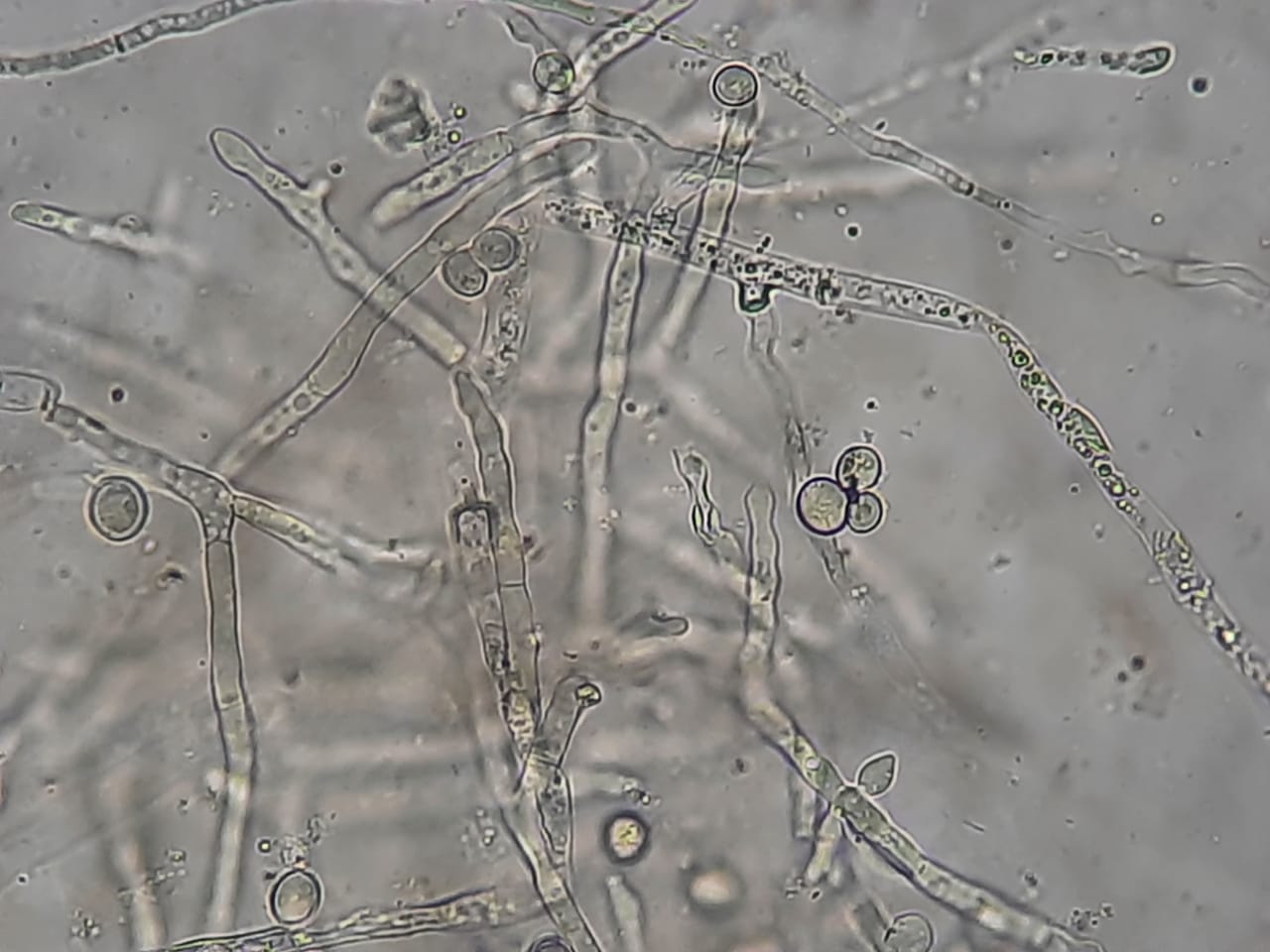
Fungal Elements in wet mount of culture of BAL specimen

Introduction KOH mount (Potassium Hydroxide preparation) is a rapid, simple, and cost-effective microscopic technique used to detect fungal elements directly in clinical specimens.When applied to Bronchoalveolar Lavage (BAL) samples, it is an essential diagnostic tool for identifying pulmonary fungal infections, especially in the ICU, oncology, …

Read more

Fungal Elements in KOH Mount of Urine Microscopy: Introduction, Fungal Elements Observed in Urine KOH Mount, Applications, and Keynotes

Fungal elements in KOH Mount of Urine Microscopy- Introduction, Fungal Elements Observed in Urine KOH Mount, Applications, and Keynotes

Introduction Potassium Hydroxide (KOH) mount is a simple, rapid, and cost-effective microscopic technique used to detect fungal elements in various clinical specimens, including urine samples. When fungal infection of the urinary tract (funguria) is suspected—especially in immunocompromised, diabetic, or catheterized patients—KOH mount helps visualize yeast …

Read more

Aspergillus-Antigen Testing:Introduction, Principle, Clinical Significance, and Keynotes

Aspergillus-Antigen Testing-Introduction, Principle, Clinical Significance, and Keynotes

Introduction Aspergillus species, particularly Aspergillus fumigatus, are major causes of invasive aspergillosis (IA), especially in immunocompromised patients, such as those with hematological malignancies, transplant recipients, or those with prolonged neutropenia. Diagnosis of IA is often challenging because clinical symptoms and radiological findings are nonspecific. Aspergillus …

Read more

Blood Culture–Positive Yeasts: Introduction, Common molds, Comparison, and Keynotes

Gram-positive budding yeast-like cells, oval to elongated, arranged singly, in pairs, and in short pseudohyphae-like forms in Gram staining of culture microscopy at a magnification of 4000X

Introduction Unlike molds, yeasts are the most commonly recovered fungi in blood cultures. Candidemia is among the leading causes of bloodstream infections in immunocompromised and critically ill patients. Yeasts such as Candida, Cryptococcus, and Trichosporon are responsible for significant morbidity and mortality. Blood culture positivity …

Read more

Blood Culture–Positive Molds: Introduction, Common molds, Comparison, and Keynotes

Blood Culture–Positive Molds

Introduction Blood cultures are the cornerstone for diagnosing fungemia, but while yeasts (Candida spp.) are frequently detected, molds are rarely recovered in blood culture systems. This is because most molds (Aspergillus, Mucorales) cause tissue-invasive disease without sustained fungemia. However, certain molds such as Fusarium spp. …

Read more

Yeasts-Colorimetric Antifungal Susceptibility Testing: Introduction, Principle, Clinical Significance, and Keynotes

Yeasts-Colorimetric Antifungal Susceptibility Testing-Introduction, Principle, Clinical Significance, and Keynotes

Introduction Yeasts, especially Candida and Cryptococcus species, are frequent causes of opportunistic infections in immunocompromised patients. Determining their antifungal susceptibility is crucial for guiding effective therapy. While broth microdilution methods (CLSI/EUCAST) serve as reference standards, they are labor-intensive and time-consuming. Colorimetric antifungal susceptibility testing systems …

Read more

Fungal Culture of Clinical Samples: Introduction, Principle, Clinical Significance, and Keynotes

Body fluid and sputum for culture

Introduction Fungal culture is the gold standard method for the detection and identification of pathogenic fungi in clinical microbiology. It is essential for diagnosing superficial, subcutaneous, and systemic mycoses. Clinical specimens such as blood, sputum, bronchoalveolar lavage (BAL), urine, cerebrospinal fluid (CSF), skin scrapings, nail …

Read more

Yeast Identification by Auxacolor System-Introduction, Principle, Clinical Significance, and Keynotes

Introduction The Auxacolor System is a commercially available biochemical-based yeast identification method widely used in clinical microbiology laboratories. It provides a simple, standardized approach to identifying medically important yeasts, including Candida, Cryptococcus, Trichosporon, and others. Unlike molecular tools or MALDI-TOF MS, Auxacolor is inexpensive, does …

Read more