Blood Culture–Positive Yeasts: Introduction, Common molds, Comparison, and Keynotes

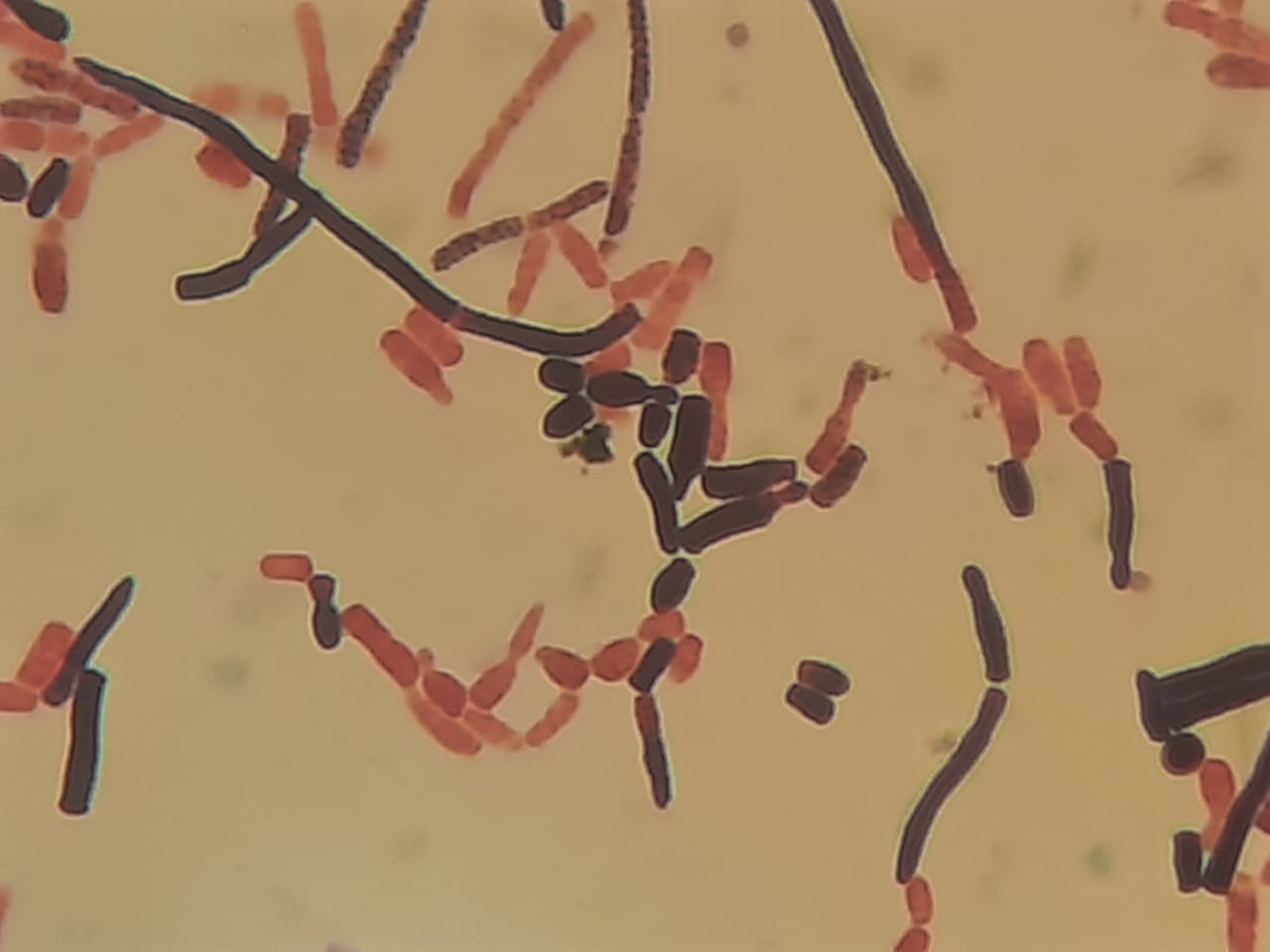
Gram-positive budding yeast-like cells, oval to elongated, arranged singly, in pairs, and in short pseudohyphae-like forms in Gram staining of culture microscopy at a magnification of 4000X

Introduction Unlike molds, yeasts are the most commonly recovered fungi in blood cultures. Candidemia is among the leading causes of bloodstream infections in immunocompromised and critically ill patients. Yeasts such as Candida, Cryptococcus, and Trichosporon are responsible for significant morbidity and mortality. Blood culture positivity …
Read more

Malassezia: Introduction, Morphology, Pathogenicity, Lab Diagnosis, Treatment, Prevention, and Keynotes

Gram-positive to variable yeast cells and short hyphae of Malassezia in Gram staining of culture

Introduction Malassezia is a genus of yeast-like fungi that belongs to the class Malasseziomycetes. These fungi are part of the normal skin microbiota of humans and other animals, commonly found on the skin surfaces, particularly in sebum-rich areas such as the scalp, face, chest, and …

Read more

Lactophenol Cotton Blue (LPCB) Stain: Introduction, Principle, Test Requirements, Procedure, Result-Interpretation, Uses of LPCB Stain, Keynotes, and LPCB Stained Footages

Lactophenol Cotton Blue (LPCB) Stain: Introduction, Principle, Test Requirements, Procedure, Result-Interpretation, Uses of LPCB Stain, Keynotes and LPCB Stained Footages

Introduction of Lactophenol Cotton Blue (LPCB) Stain LPCB stands for lactophenol cotton blue and Lactophenol Cotton Blue (LPCB) Stain is a combination of fixative, staining, and clearing agent. LPCB stain uses both as a mounting fluid and a stain and it is used for staining …

Read more