Contamination in L-J Media: Introduction, Common Contaminant, Identification clues, Minimization tricks, and Keynotes 

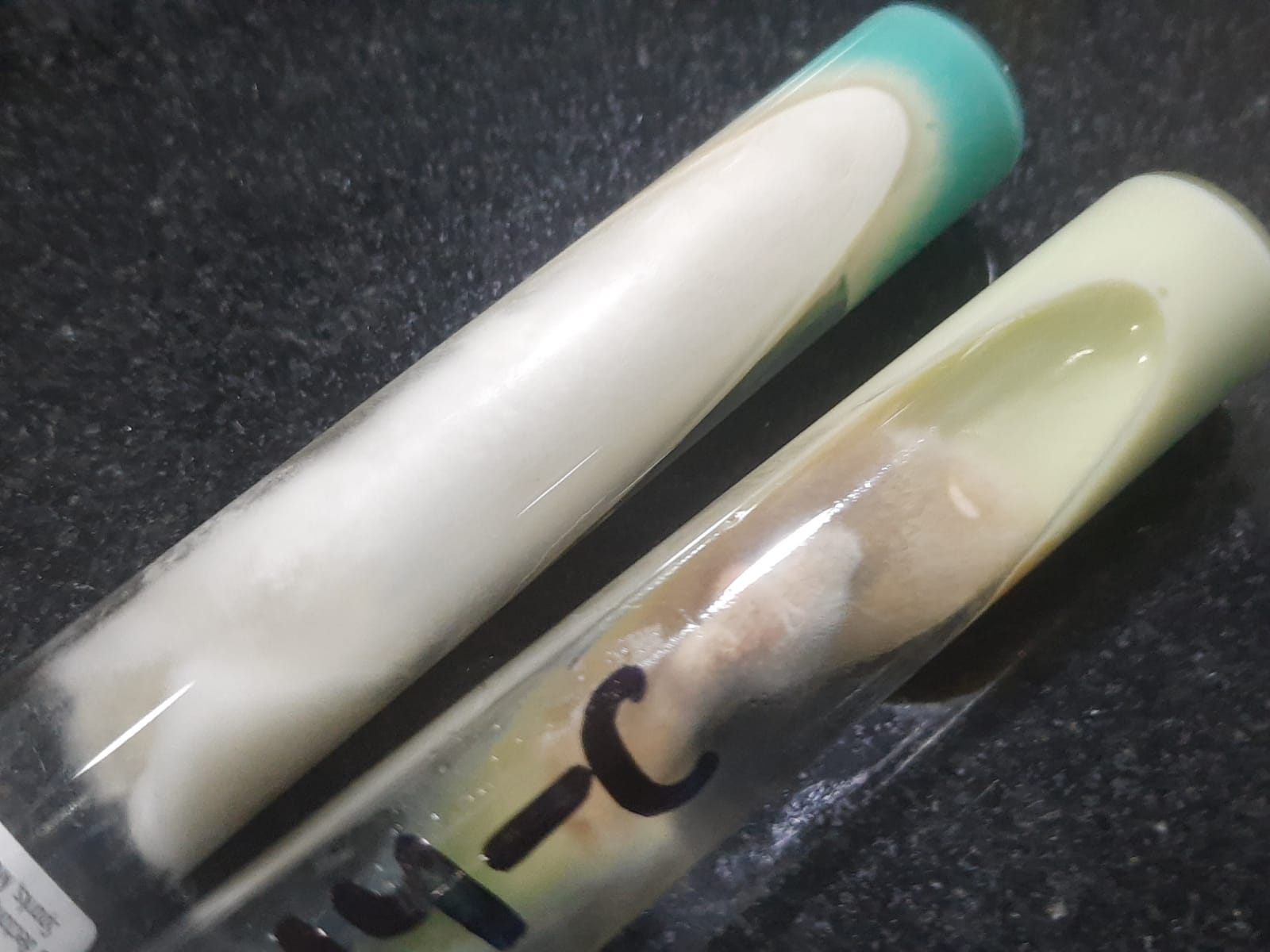
Advanced Fungal Contamination and Decolorization of L-J Medium: Fungal Overgrowth-The slants show dense, white, "cotton-like" mycelial growth. This morphology is a classic indicator of contamination by environmental molds, such as Aspergillus or Penicillium. Media Alteration- There is a total loss of the characteristic malachite green color. The medium has turned pale yellow or colorless, suggesting a significant shift in pH or the enzymatic degradation of the selective agent by the contaminants. Diagnostic Interpretation-The rapid growth of these organisms has completely masked any potential slow-growing Mycobacterium tuberculosis. These cultures are invalid and must be recorded as contaminated.

Introduction Lowenstein-Jensen (L-J) medium is the gold standard for the cultivation of Mycobacterium tuberculosis. However, because it is an egg-based, non-selective (or semi-selective) medium that requires long incubation periods, it is highly susceptible to contamination. L-J medium is rich in nutrients (eggs, glycerol, potato flour), …

Read more

Aspergillus terreus: Introduction, Morphology, Pathogenicity, Lab Diagnosis, Treatment, Prevention, and Keynotes

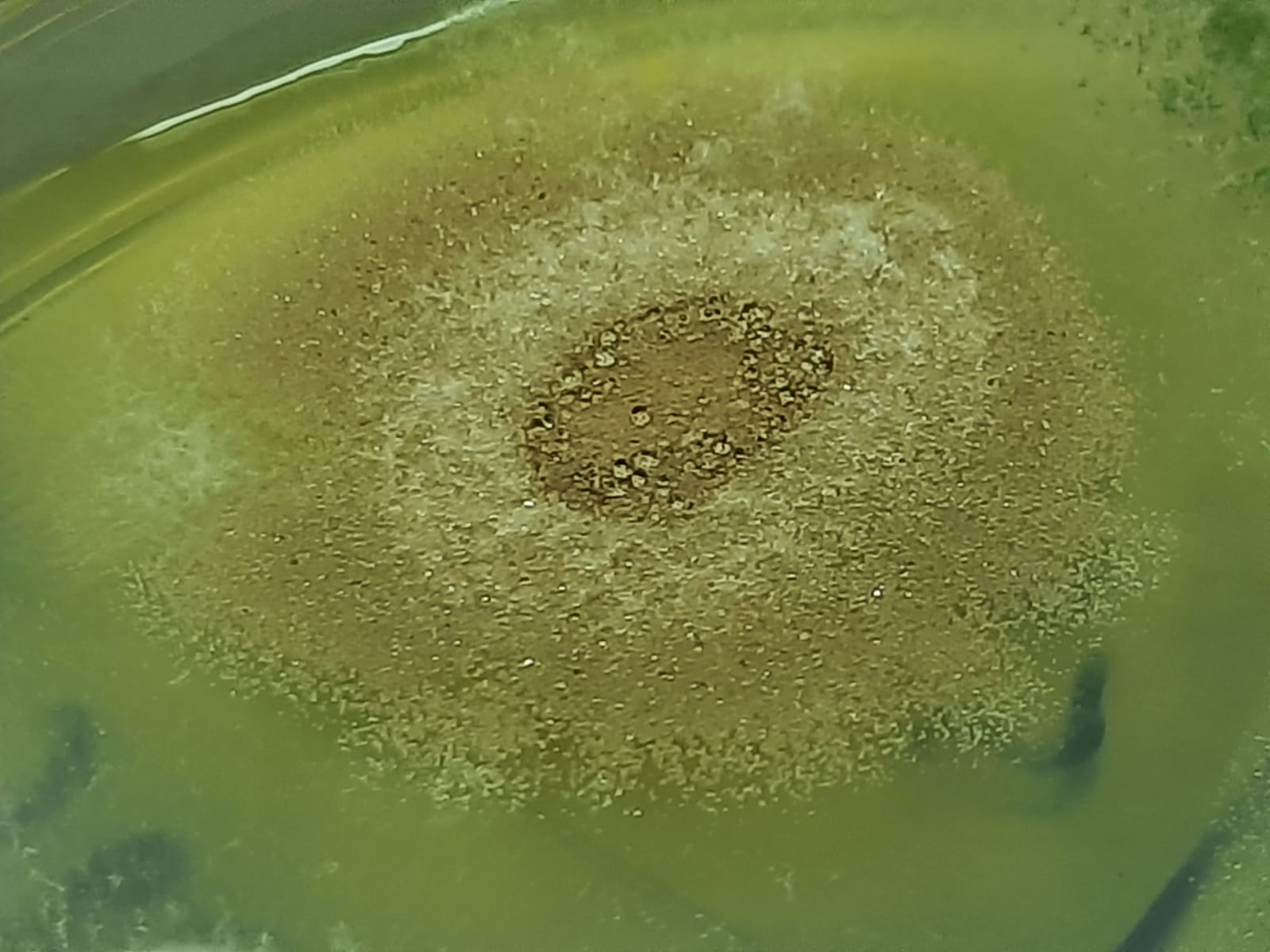
Colony morphology of Aspergillus terreus on Corn Meal Agar (CMA) showing a characteristic cinnamon-brown to sandy-beige pigmentation with a velvety, granular texture and a light-colored peripheral growth zone

Introduction & Taxonomy Aspergillus terreus is a filamentous fungus increasingly recognized as a significant emerging opportunistic pathogen. It is uniquely distinguished from other common species by its intrinsic resistance to amphotericin B, its characteristic cinnamon-brown colony color, and the production of specialized spores called aleurioconidia. …

Read more

Fungal Elements in KOH Mount of Sputum Microscopy-Introduction, Fungal Elements Observed in Sputum KOH Mount, Applications, and Keynotes

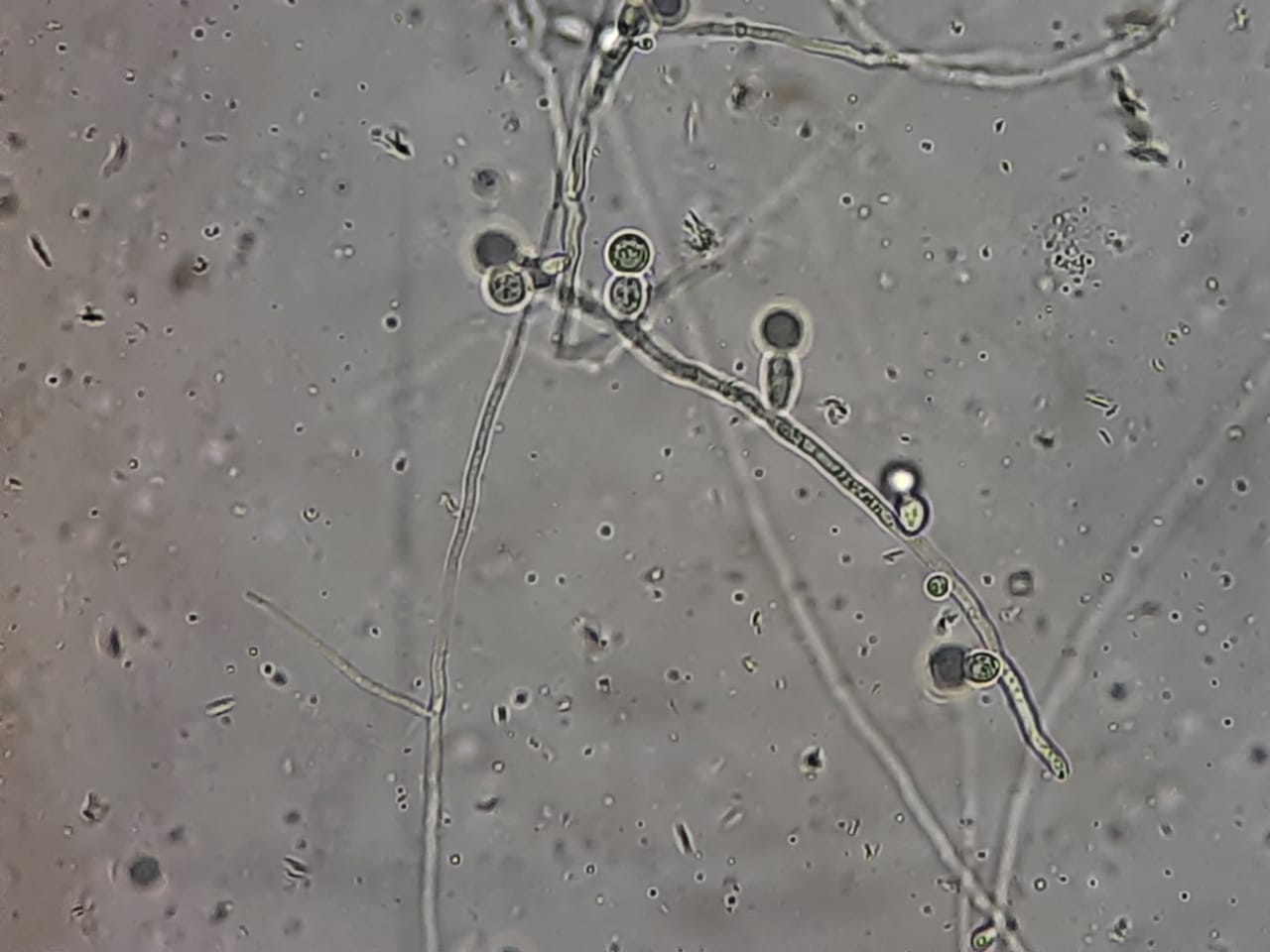
Fungal Elements in KOH Mount of Sputum Microscopy at a magnification of 1600X

Introduction KOH mount of sputum is a rapid, direct microscopic technique used to detect fungal elements in the respiratory tract. A 10–20% Potassium Hydroxide (KOH) solution digests mucus, epithelial cells, and debris in sputum, while preserving the chitin-rich fungal cell walls, making them appear clear, …

Read more

Fungal Elements in KOH Mount of Urine Microscopy: Introduction, Fungal Elements Observed in Urine KOH Mount, Applications, and Keynotes

Fungal elements in KOH Mount of Urine Microscopy- Introduction, Fungal Elements Observed in Urine KOH Mount, Applications, and Keynotes

Introduction Potassium Hydroxide (KOH) mount is a simple, rapid, and cost-effective microscopic technique used to detect fungal elements in various clinical specimens, including urine samples. When fungal infection of the urinary tract (funguria) is suspected—especially in immunocompromised, diabetic, or catheterized patients—KOH mount helps visualize yeast …

Read more

Aspergillus-Antigen Testing:Introduction, Principle, Clinical Significance, and Keynotes

Aspergillus-Antigen Testing-Introduction, Principle, Clinical Significance, and Keynotes

Introduction Aspergillus species, particularly Aspergillus fumigatus, are major causes of invasive aspergillosis (IA), especially in immunocompromised patients, such as those with hematological malignancies, transplant recipients, or those with prolonged neutropenia. Diagnosis of IA is often challenging because clinical symptoms and radiological findings are nonspecific. Aspergillus …

Read more

Blood Culture–Positive Molds: Introduction, Common molds, Comparison, and Keynotes

Blood Culture–Positive Molds

Introduction Blood cultures are the cornerstone for diagnosing fungemia, but while yeasts (Candida spp.) are frequently detected, molds are rarely recovered in blood culture systems. This is because most molds (Aspergillus, Mucorales) cause tissue-invasive disease without sustained fungemia. However, certain molds such as Fusarium spp. …

Read more

Fungal Identification by PCR-Sequencing (Sanger): Introduction, Principle, Clinical Significance, and Keynotes

Pure culture of Candida

Introduction Accurate identification of fungi is critical for clinical, environmental, and epidemiological purposes. Traditional culture and morphology-based methods are time-consuming and may misidentify cryptic or closely related species. PCR amplification followed by Sanger sequencing of conserved genetic loci (e.g., ITS, 18S rRNA, 28S rRNA, β-tubulin, …

Read more

Fungal Culture of Clinical Samples: Introduction, Principle, Clinical Significance, and Keynotes

Body fluid and sputum for culture

Introduction Fungal culture is the gold standard method for the detection and identification of pathogenic fungi in clinical microbiology. It is essential for diagnosing superficial, subcutaneous, and systemic mycoses. Clinical specimens such as blood, sputum, bronchoalveolar lavage (BAL), urine, cerebrospinal fluid (CSF), skin scrapings, nail …

Read more