
Introduction
Table of Contents
Lowenstein-Jensen (L-J) medium is the gold standard for the cultivation of Mycobacterium tuberculosis. However, because it is an egg-based, non-selective (or semi-selective) medium that requires long incubation periods, it is highly susceptible to contamination.
L-J medium is rich in nutrients (eggs, glycerol, potato flour), making it an ideal “buffet” for not just Mycobacteria, but also rapidly growing bacteria and fungi. Since M. tuberculosis has a generation time of 18–24 hours, any faster-growing organism will outpace it, often liquefying the medium or masking the growth of the pathogen.
Common Contaminants
Contaminants are generally categorized by their source and growth speed:
- Gram-Positive Cocci: Most commonly Staphylococcus aureus and Enterococcus species, often introduced during specimen collection.
- Gram-Negative Bacilli: Members of the Enterobacteriaceae family (like E. coli) or Pseudomonas. These are notorious for being proteolytic.
- Bacillus Species: Environmental spore-formers that are highly resistant to decontamination.
- Fungi/Molds: Aspergillus and Penicillium are common laboratory air contaminants.
- Yeasts: Often Candida species from the patient’s oral flora.

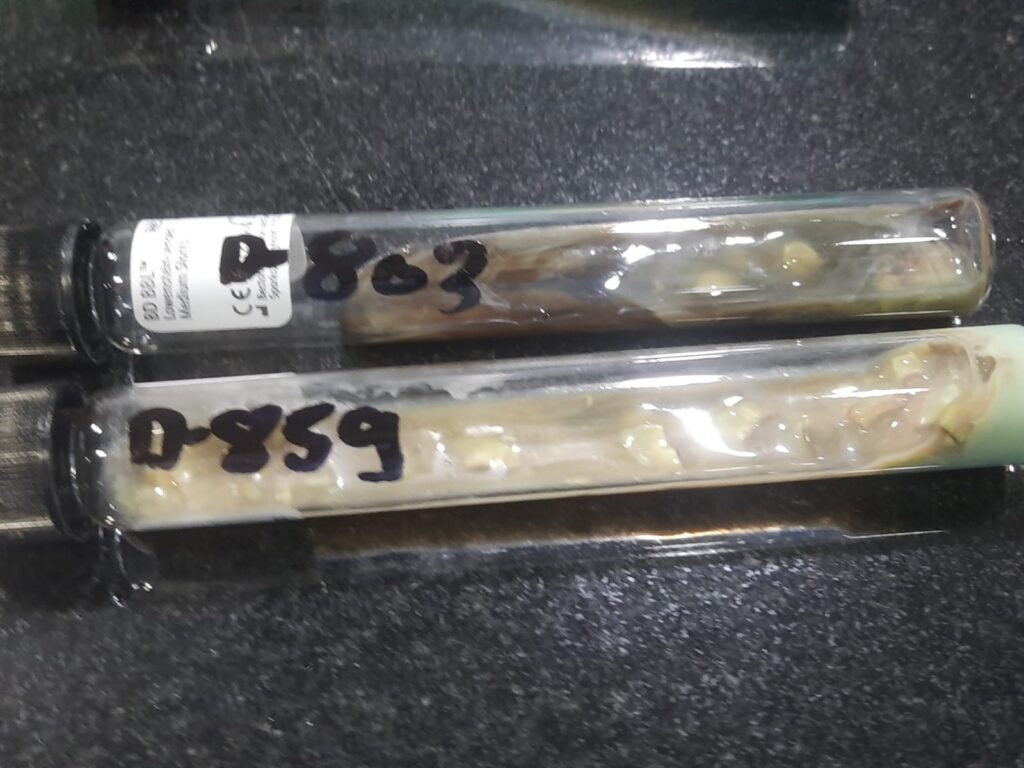
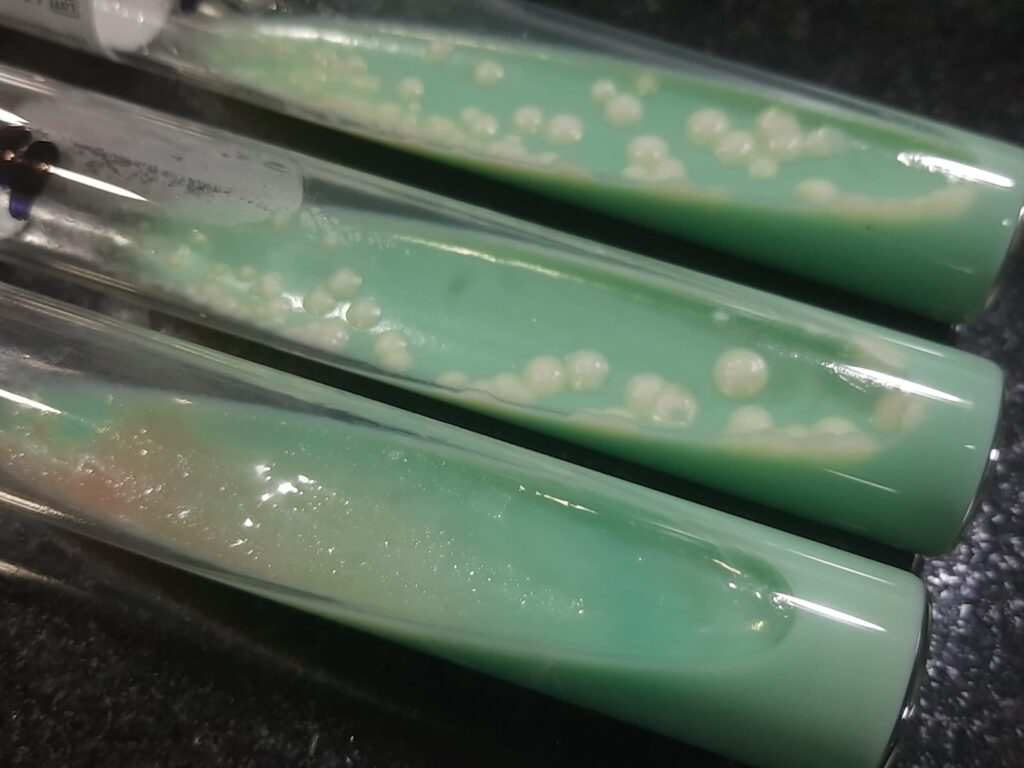
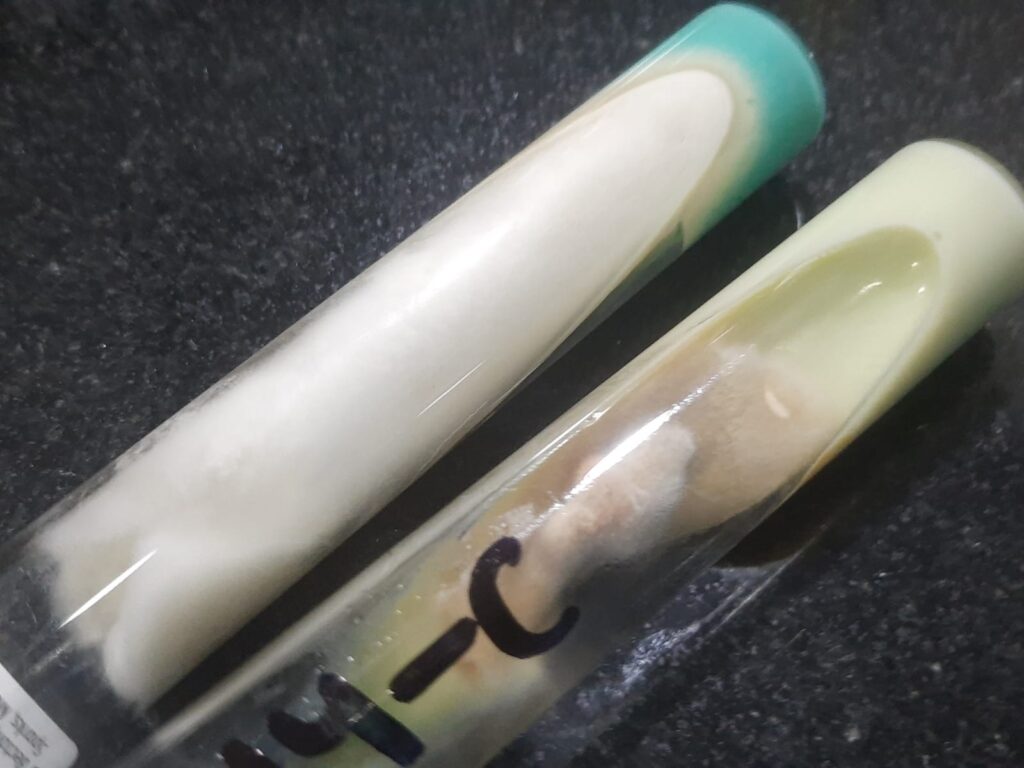
Identification Clues for Contamination in L-J Media
Detecting contamination early is vital to prevent the loss of a clinical sample.
| Feature | Contamination Sign |
| Growth Speed | Growth appearing within 24–72 hours (Mycobacteria usually take 2–8 weeks). |
| Medium Color | The malachite green may fade, or the medium may turn yellow/colorless. |
| Consistency | Liquefaction or “slumping” of the slant (caused by proteolytic enzymes from bacteria like Pseudomonas or Bacillus). |
| Morphology | Slimy, spreading, or fuzzy colonies. TB should be “buff, rough, and tough.” |
| Odor | Putrid or “sock-like” smells (Mycobacteria are generally odorless or slightly earthy). |
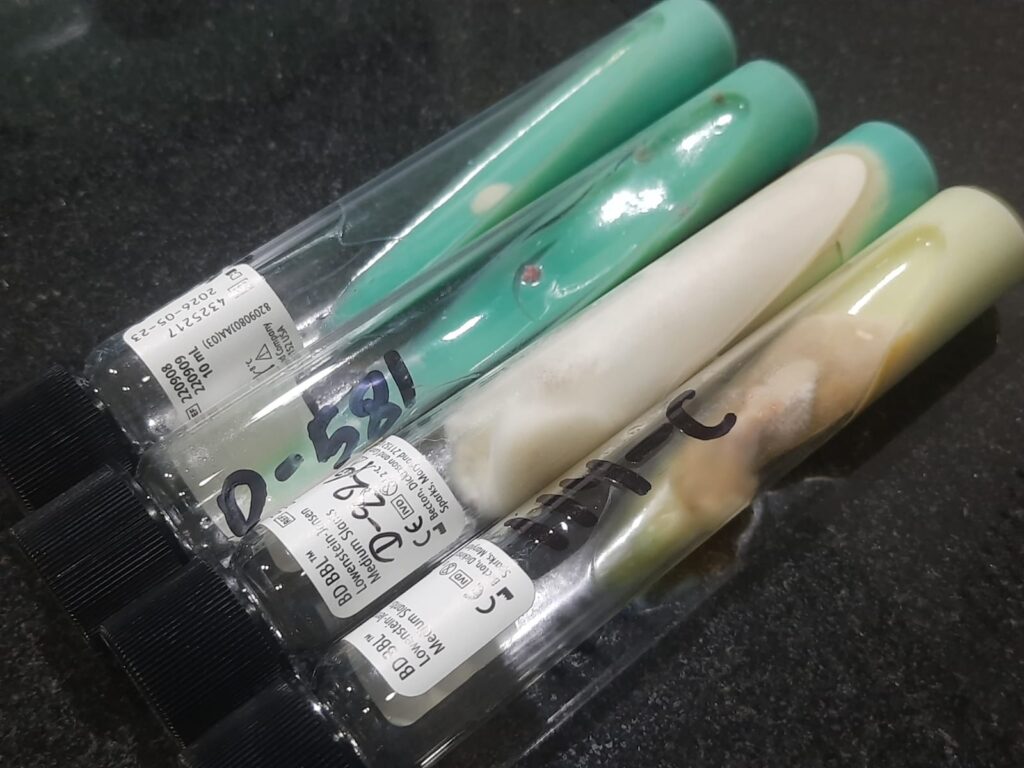
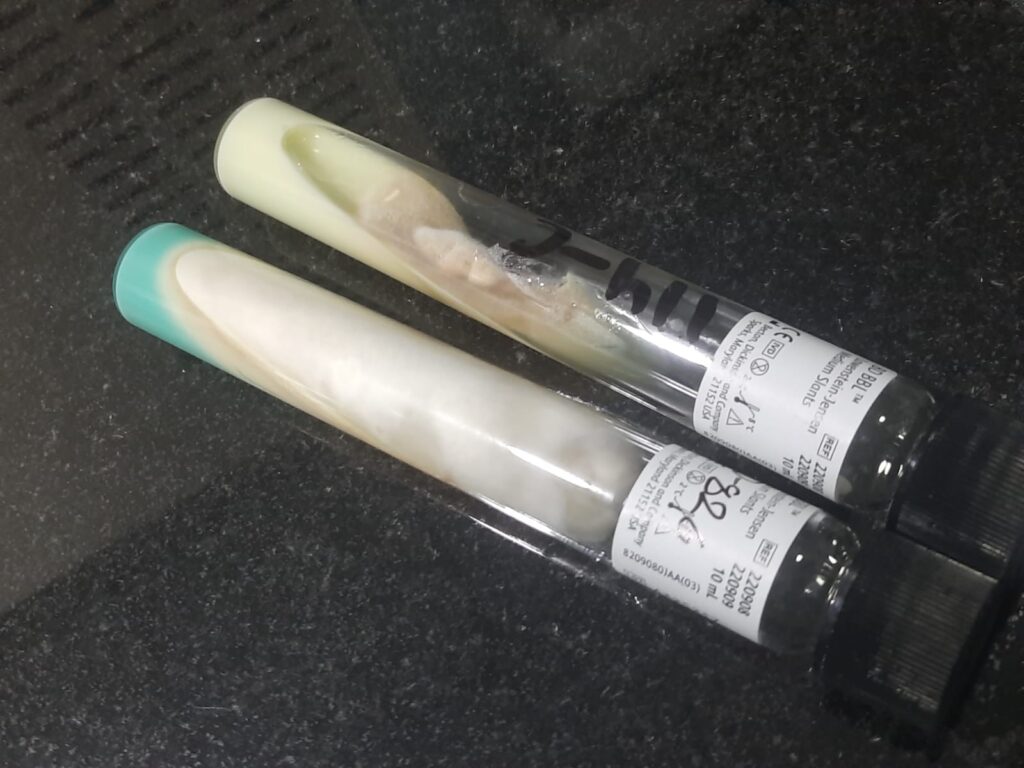
Minimization Tricks for Contamination in L-J Media
To keep your cultures “clean,” focus on the pre-analytical and analytical phases:
- Effective Decontamination: Use the NALC-NaOH (N-acetyl-L-cysteine-sodium hydroxide) method strictly. The NaOH acts as a selective agent to kill non-mycobacterial flora.
- Centrifugation Speed: Ensure high speeds ($3000 \times g$ or more) to sediment Mycobacteria effectively after decontamination, reducing the time they spend in contact with harsh chemicals.
- Quality of Egg Base: Use fresh, antibiotic-free eggs. Residual antibiotics in eggs can inhibit even the Mycobacteria you want to grow.
- Incubation Angle: For the first 24 hours, keep slants horizontal to maximize surface area, but ensure the caps are tight to prevent environmental entry.
- Strict Aseptic Technique: Use biological safety cabinets (Class II) and avoid creating aerosols during inoculation.
Keynotes on Contamination in L-J Media
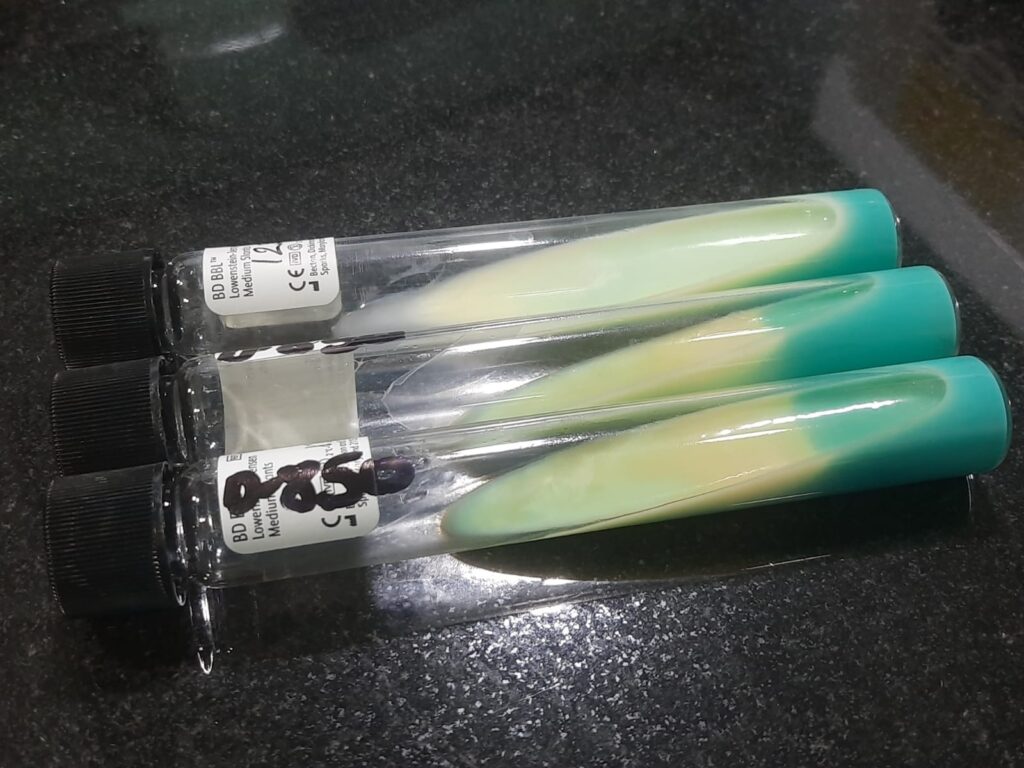
- Malachite Green: This is the pH indicator and selective agent in L-J media. If the medium is too green, it’s too acidic; if it’s too pale, it’s too alkaline (which may inhibit TB).
- Slant Integrity: If more than 5% of your batch shows contamination, the decontamination process or the media preparation batch should be investigated.
- The “Double Media” Rule: Always inoculate at least two slants per specimen—one L-J and one selective L-J (containing extra antibiotics like Gruft modification) to increase the “recovery” chance.
Further Readings
- https://www.researchgate.net/publication/340123894
- https://www.youtube.com/watch?v=0L-OinGSLsU
- https://pmc.ncbi.nlm.nih.gov/articles/PMC4097697/
- https://pmc.ncbi.nlm.nih.gov/articles/PMC5045330/
- https://www.researchgate.net/post/How_can_I_reduce_contamination_in_Lowenstein-Jensen_LJ_media_during_TB_culture
- https://doaj.org/article/009e031400c045e59e040b4031fb5da5
- https://en.wikipedia.org/wiki/L%C3%B6wenstein%E2%80%93Jensen_medium
- https://www.nature.com/articles/s41598-019-43662-0
- https://documents.thermofisher.com/TFS-Assets/LSG/manuals/IFU8500.pdf
- https://hardydiagnostics.com/media/assets/product/documents/LJMedia5NaCl.pdf
- https://www.sciencedirect.com/science/article/pii/S2590097820300185
- https://journals.asm.org/doi/10.1128/jcm.00749-14