Mycobacteria Growth Indicator Tube (MGIT) Culture Outcomes: Introduction, Identification, Causes of Contamination, and Keynotes

Mycobacteria Growth Indicator Tube (MGIT)-Positive

Introduction The Mycobacteria Growth Indicator Tube (MGIT) system is a high-throughput, automated method optimized for the rapid isolation and detection of Mycobacterium tuberculosis complex and non-tuberculous mycobacteria (NTM).  [Initial Stage]     Oxygen is high —–> Quenches sensor —–> NO FLUORESCENCE [Bacterial Growth]  Oxygen consumed —-> Frees …

Read more

Contamination in L-J Media: Introduction, Common Contaminant, Identification clues, Minimization tricks, and Keynotes 

Advanced Fungal Contamination and Decolorization of L-J Medium: Fungal Overgrowth-The slants show dense, white, "cotton-like" mycelial growth. This morphology is a classic indicator of contamination by environmental molds, such as Aspergillus or Penicillium. Media Alteration- There is a total loss of the characteristic malachite green color. The medium has turned pale yellow or colorless, suggesting a significant shift in pH or the enzymatic degradation of the selective agent by the contaminants. Diagnostic Interpretation-The rapid growth of these organisms has completely masked any potential slow-growing Mycobacterium tuberculosis. These cultures are invalid and must be recorded as contaminated.

Introduction Lowenstein-Jensen (L-J) medium is the gold standard for the cultivation of Mycobacterium tuberculosis. However, because it is an egg-based, non-selective (or semi-selective) medium that requires long incubation periods, it is highly susceptible to contamination. L-J medium is rich in nutrients (eggs, glycerol, potato flour), …

Read more

Middlebrook 7H9 Broth: Introduction, Composition, Principle, Procedure, Result-Interpretation, Uses, and Keynotes

The BBL MGIT tube, showing Modified Middlebrook 7H9 Broth paired with an oxygen-sensitive fluorescent sensor for rapid diagnostic results

Introduction Middlebrook 7H9 broth is a liquid growth medium first described in 1958 by Middlebrook and Cohn for the specialized cultivation of Mycobacterium species. It is widely used in clinical and research settings for rapid growth, biochemical testing, and preparing inocula for drug susceptibility testing …

Read more

BACTEC MGIT 960: Introduction, Principle, Procedure, Result-Interpretation, Application, and Keynotes

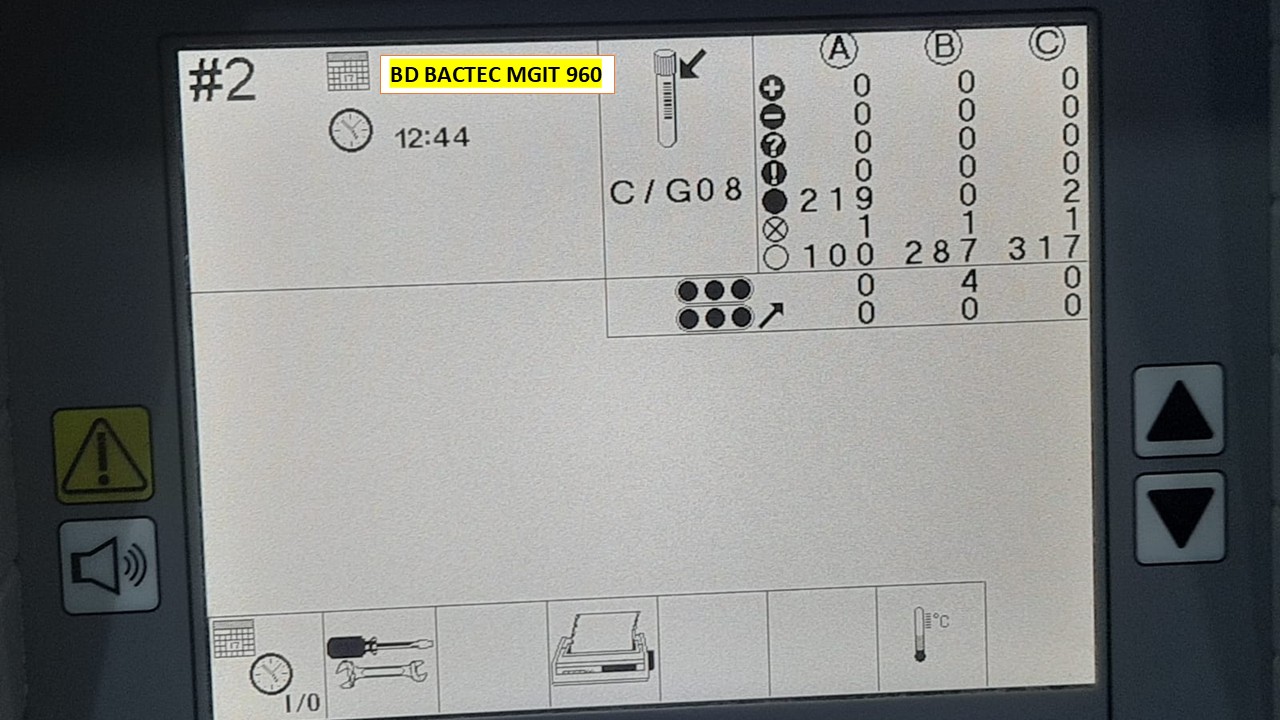
BD BACTEC MGIT 960 instrument display showing the real-time status and distribution of mycobacterial culture tubes

Introduction The system consists of an incubator-reader that can hold up to 960 culture tubes (7 ml size), allowing it to process approximately 8,000 specimens annually. It is widely considered a “gold standard” for culture-based drug susceptibility testing (DST) due to its speed and high recovery rate …

Read more

PANTA Supplement: Introduction, Composition and Function, Uses, and Keynotes

Vials of MGIT PANTA antibiotic supplement and MGIT Growth Supplement for suppressing contamination and enriching Mycobacterium tuberculosis

Introduction In microbiology and Tuberculosis (TB) diagnostics, PANTA is an antimicrobial supplement used to prevent the overgrowth of contaminating microorganisms in liquid culture media. It is primarily used with the BD BACTEC MGIT 960 system.  PANTA is a selective antibiotic cocktail designed for the primary isolation of mycobacteria from …

Read more