Contamination in L-J Media: Introduction, Common Contaminant, Identification clues, Minimization tricks, and Keynotes 

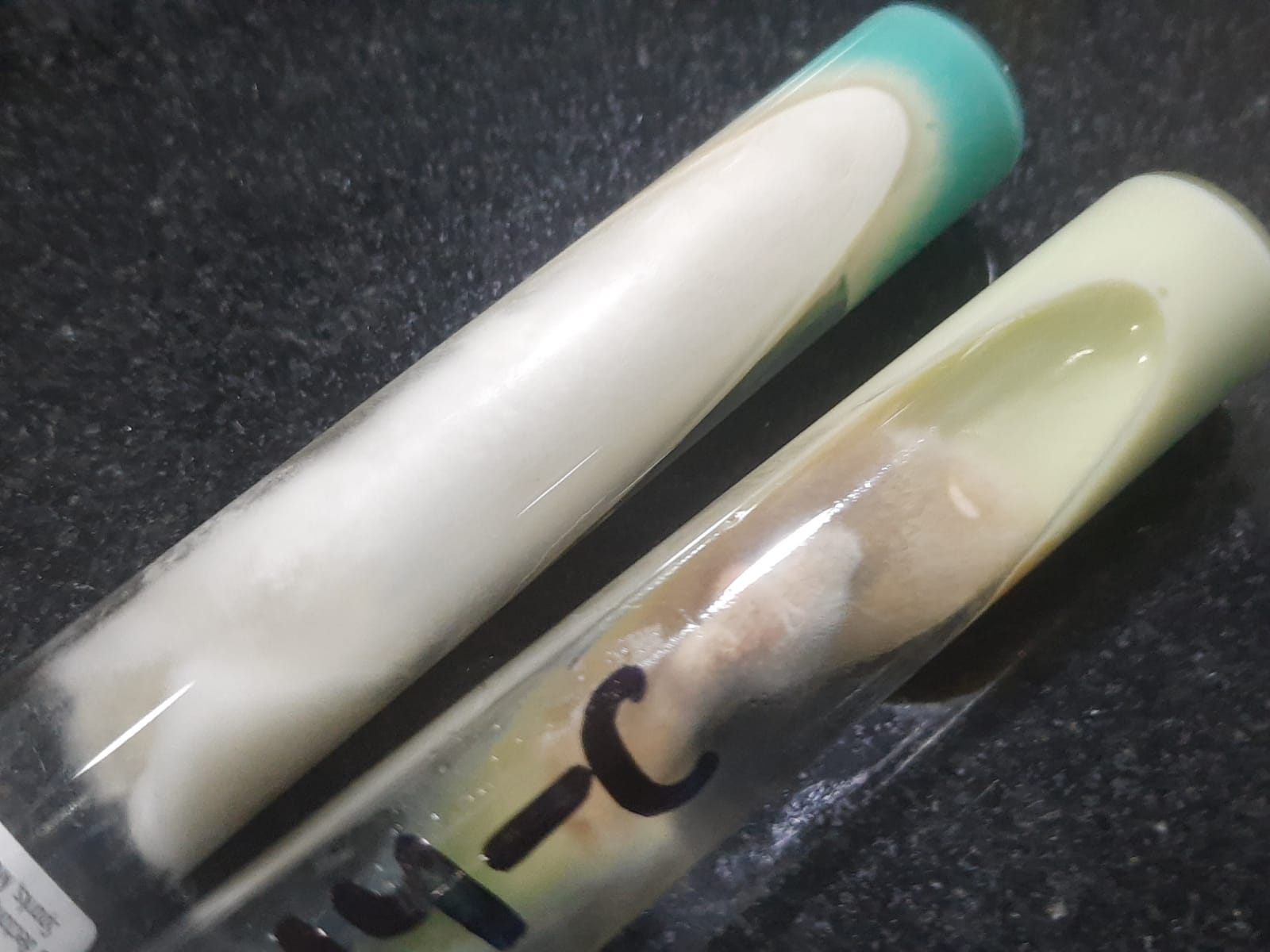
Advanced Fungal Contamination and Decolorization of L-J Medium: Fungal Overgrowth-The slants show dense, white, "cotton-like" mycelial growth. This morphology is a classic indicator of contamination by environmental molds, such as Aspergillus or Penicillium. Media Alteration- There is a total loss of the characteristic malachite green color. The medium has turned pale yellow or colorless, suggesting a significant shift in pH or the enzymatic degradation of the selective agent by the contaminants. Diagnostic Interpretation-The rapid growth of these organisms has completely masked any potential slow-growing Mycobacterium tuberculosis. These cultures are invalid and must be recorded as contaminated.

Introduction Lowenstein-Jensen (L-J) medium is the gold standard for the cultivation of Mycobacterium tuberculosis. However, because it is an egg-based, non-selective (or semi-selective) medium that requires long incubation periods, it is highly susceptible to contamination. L-J medium is rich in nutrients (eggs, glycerol, potato flour), …

Read more

BACTEC MGIT 960: Introduction, Principle, Procedure, Result-Interpretation, Application, and Keynotes

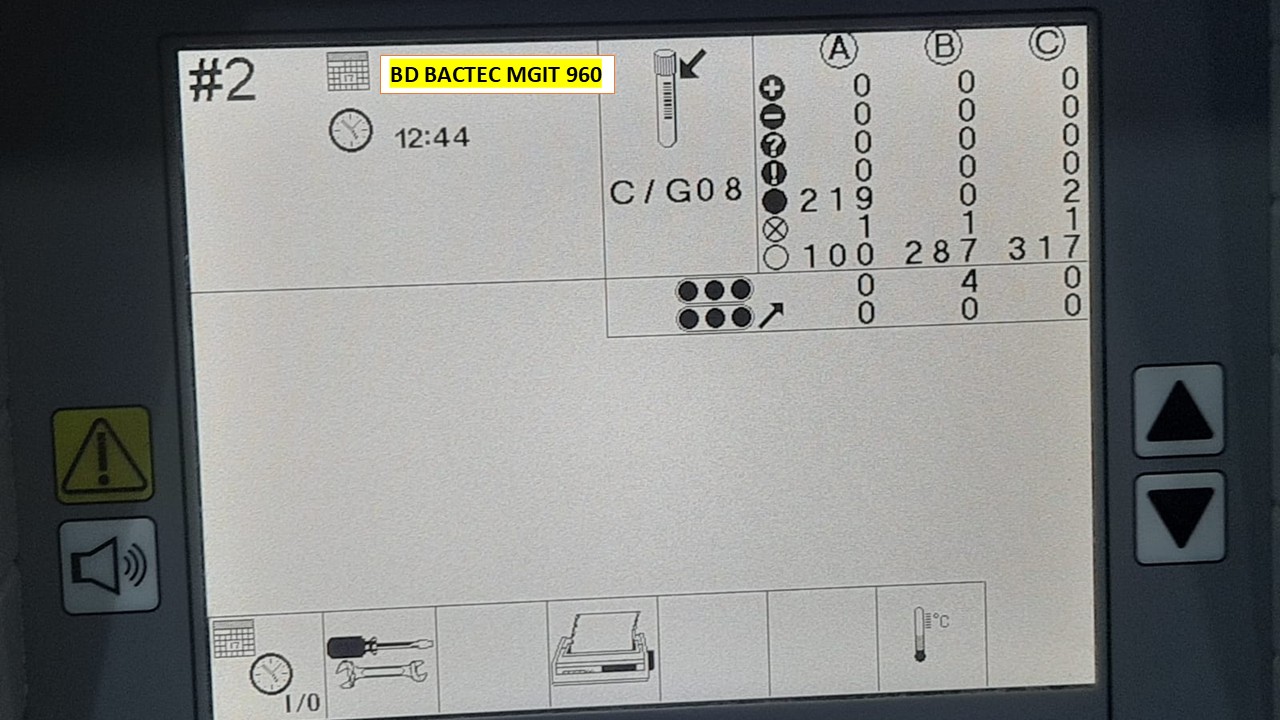
BD BACTEC MGIT 960 instrument display showing the real-time status and distribution of mycobacterial culture tubes

Introduction The system consists of an incubator-reader that can hold up to 960 culture tubes (7 ml size), allowing it to process approximately 8,000 specimens annually. It is widely considered a “gold standard” for culture-based drug susceptibility testing (DST) due to its speed and high recovery rate …

Read more