Contamination in L-J Media: Introduction, Common Contaminant, Identification clues, Minimization tricks, and Keynotes 
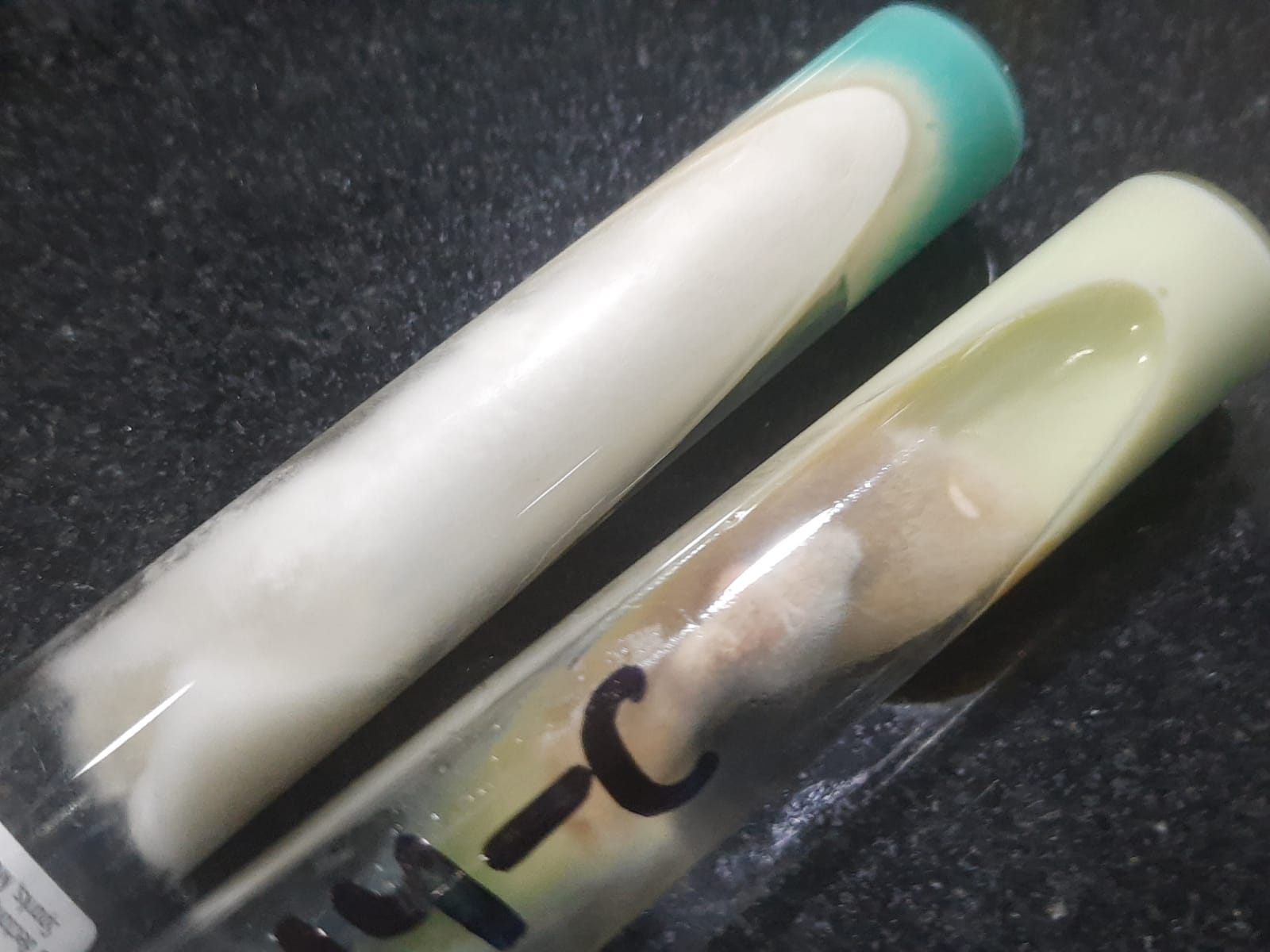
Advanced Fungal Contamination and Decolorization of L-J Medium: Fungal Overgrowth-The slants show dense, white, "cotton-like" mycelial growth. This morphology is a classic indicator of contamination by environmental molds, such as Aspergillus or Penicillium. Media Alteration- There is a total loss of the characteristic malachite green color. The medium has turned pale yellow or colorless, suggesting a significant shift in pH or the enzymatic degradation of the selective agent by the contaminants. Diagnostic Interpretation-The rapid growth of these organisms has completely masked any potential slow-growing Mycobacterium tuberculosis. These cultures are invalid and must be recorded as contaminated.

Introduction Lowenstein-Jensen (L-J) medium is the gold standard for the cultivation of Mycobacterium tuberculosis. However, because it is an egg-based, non-selective (or semi-selective) medium that requires long incubation periods, it is highly susceptible to contamination. L-J medium is rich in nutrients (eggs, glycerol, potato flour), …

Read more

Lowenstein-Jensen (LJ) Medium: Introduction, Principle Composition, Preparation, Procedure, Result- Interpretation, Limitation, and Keynotes

Lowenstein-Jensen (LJ) Medium: Introduction, Principle Composition, Preparation, Procedure, Result- Interpretation, Limitation, and Keynotes

Introduction of Lowenstein-Jensen (LJ) Medium Lowenstein-Jensen (LJ) Medium is named after the surnames of  Austrian pathologist Ernst Lowenstein (1878–1950) and the Danish chemist Kai Arne Jensen (1908–1992). The etiological agent of tuberculosis is Mycobacterium tuberculosis. It requires aerobic conditions and a protein-enriched medium for culture. The short …

Read more