Fungal Elements in KOH Mount of Pleural Fluid Microscopy-Introduction, Possible Fungi Observed in Pleural Fluid KOH Mount, Applications, and Keynotes

Fungal Elements in KOH Mount of Pleural Fluid Microscopy-Introduction, Possible Fungi Observed in Pleural Fluid KOH Mount, Applications, and Keynotes

Introduction KOH Mount of Pleural Fluid is a rapid, direct microscopic test used to detect fungal elements in suspected pleural infections. A 10–20% Potassium Hydroxide (KOH) solution clears cellular debris, fibrin, and protein content in pleural fluid while preserving chitin-rich fungal structures such as hyphae, …
Read more

Fungal Elements in KOH Mount of Sputum Microscopy-Introduction, Fungal Elements Observed in Sputum KOH Mount, Applications, and Keynotes

Fungal Elements in KOH Mount of Sputum Microscopy at a magnification of 1600X

Introduction KOH mount of sputum is a rapid, direct microscopic technique used to detect fungal elements in the respiratory tract. A 10–20% Potassium Hydroxide (KOH) solution digests mucus, epithelial cells, and debris in sputum, while preserving the chitin-rich fungal cell walls, making them appear clear, …

Read more

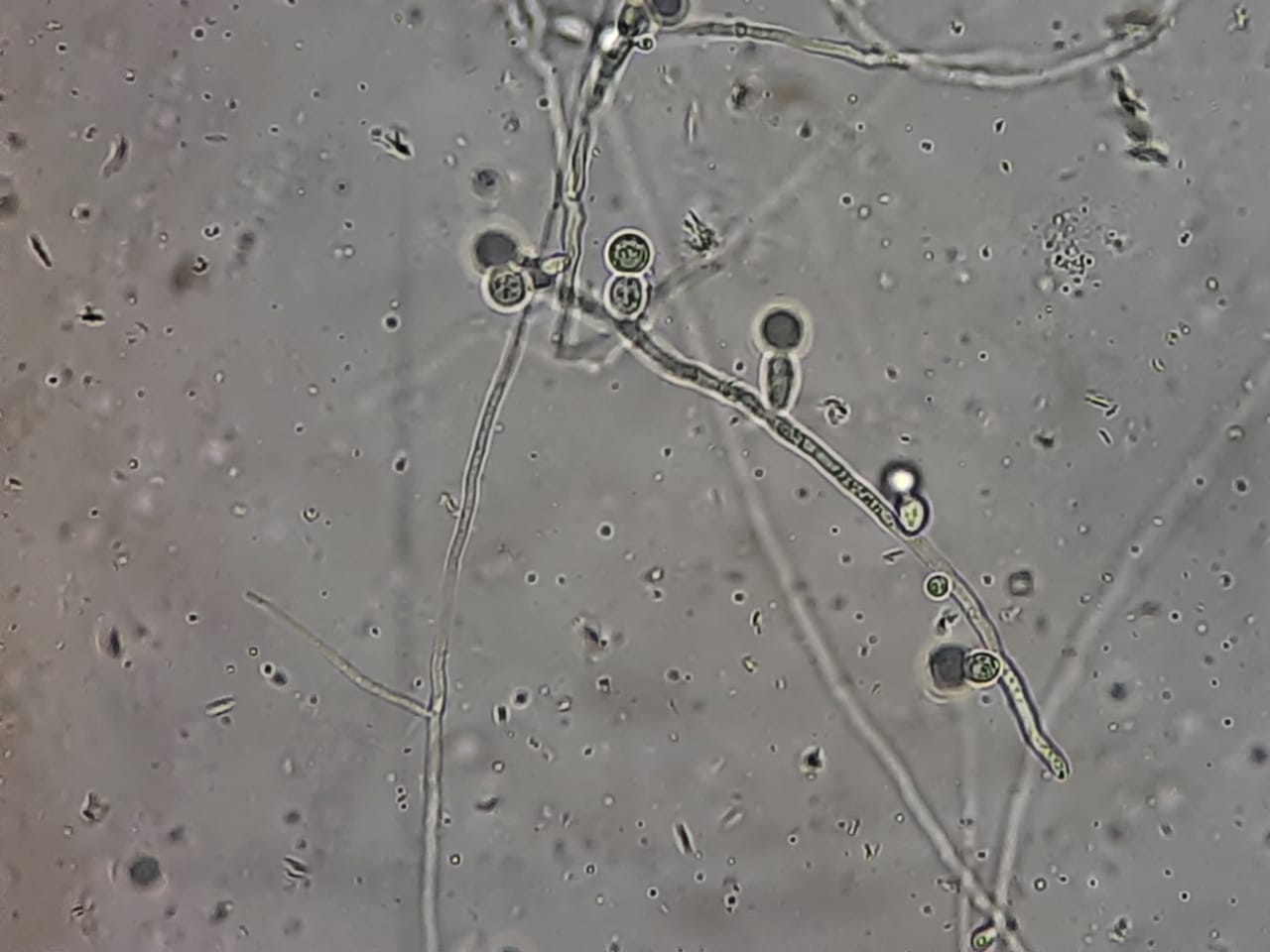
Penicillium vs Paecilomyces: Introduction, Detailed Comparison, Pathogenicity, Lab Diagnosis, Treatment, Prevention, and Keynotes

Penicillium typical structure in LPCB preparation

Introduction of Penicillium vs Paecilomyces Penicillium is a ubiquitous, saprophytic mold found in soil, air, and decaying organic matter. Known for producing the first antibiotic, penicillin, it is typically non-pathogenic but occasionally causes opportunistic infections in immunocompromised hosts. Paecilomyces (especially P. lilacinus and P. variotii) …

Read more

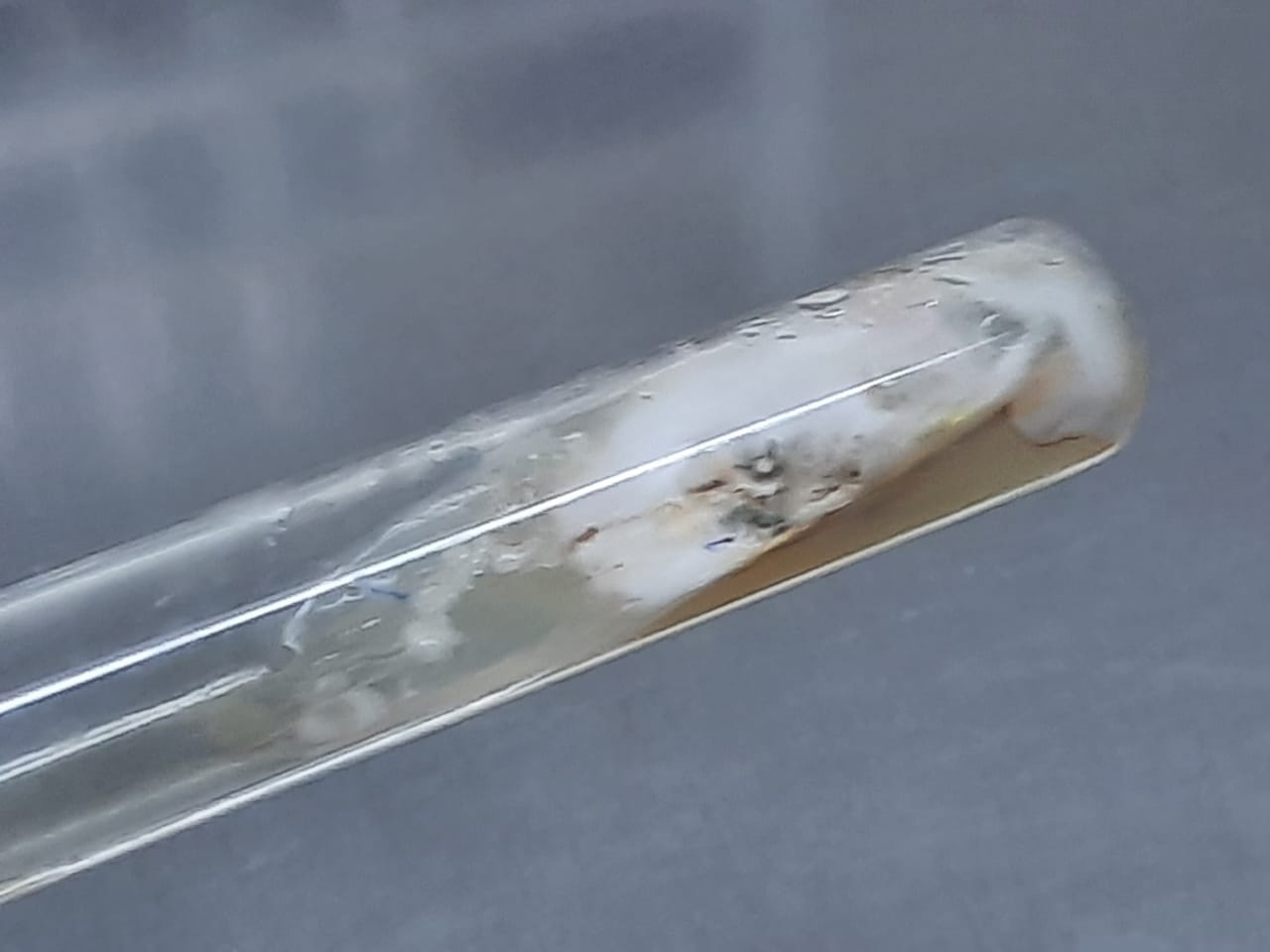
Yeasts vs Molds: Detailed Comparison, Mixed Growth Isolation, Approach to Mixed Growth Handling, and Mixed Growth Interpretation

Yeast and mold mixed growth on SDA

Yeasts vs Molds: Detailed Comparison Feature Yeasts Molds Definition Unicellular fungi Multicellular filamentous fungi Structure Oval/round, single cells Hyphae form mycelium; septate or aseptate Reproduction Asexual (budding or fission); some sexual forms Asexual (spores like conidia/sporangia); sexual spores Hyphae Absent, but pseudohyphae may be present …

Read more

Slide Culture Technique for Fungi- Introduction, Requirement, Procedure, Uses, Disadvantage, and Keynotes

Slide Culture Technique for Fungi- Introduction, Requirement, Procedure, Uses, Disadvantage, and Keynotes

Introduction The Slide Culture Technique for fungi allows detailed observation of fungal structures. It provides a clear view of spores and hyphae. This method uses a small block of agar on a slide. The technique is beneficial for identifying molds. You place a coverslip on …

Read more