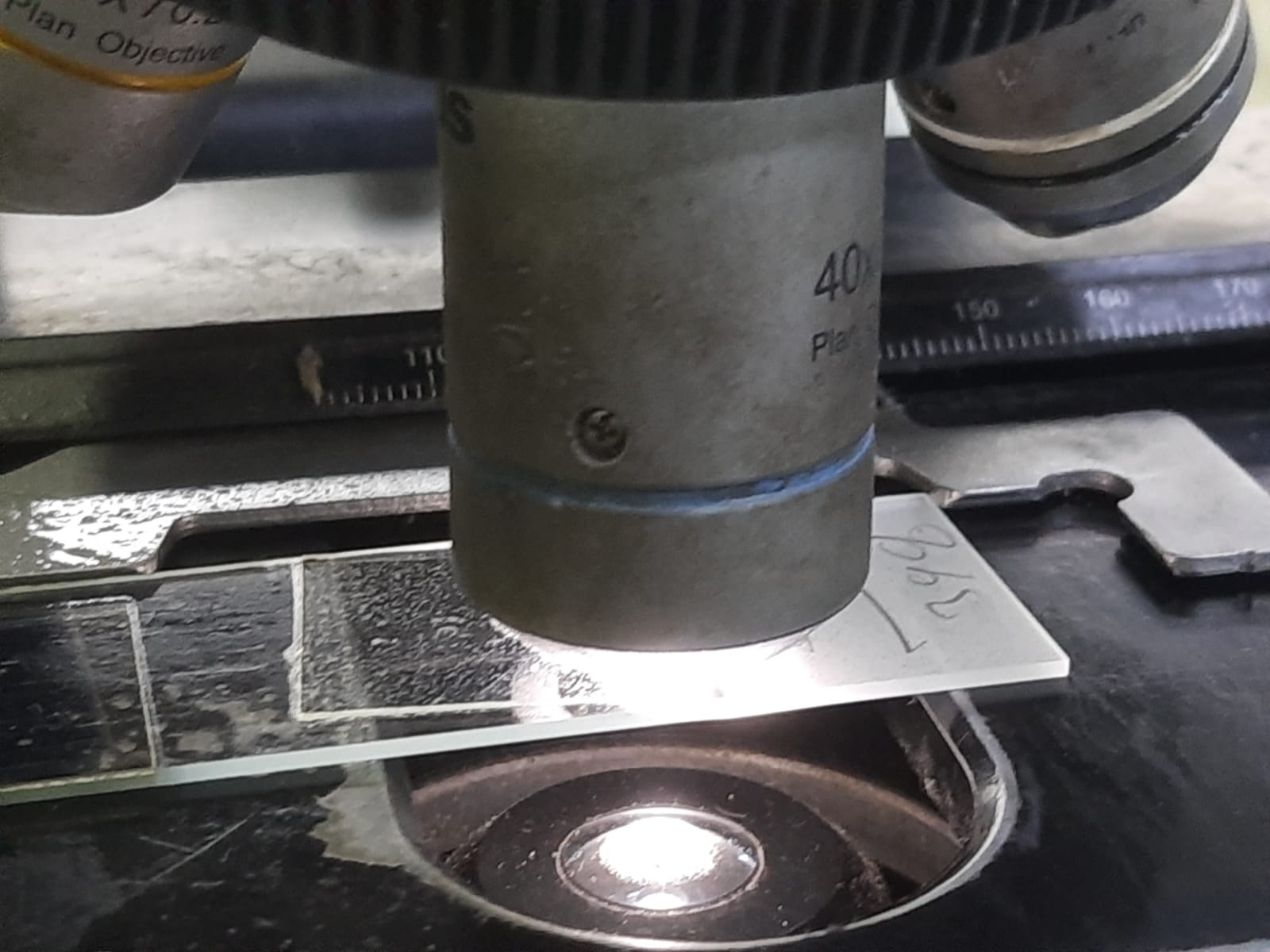
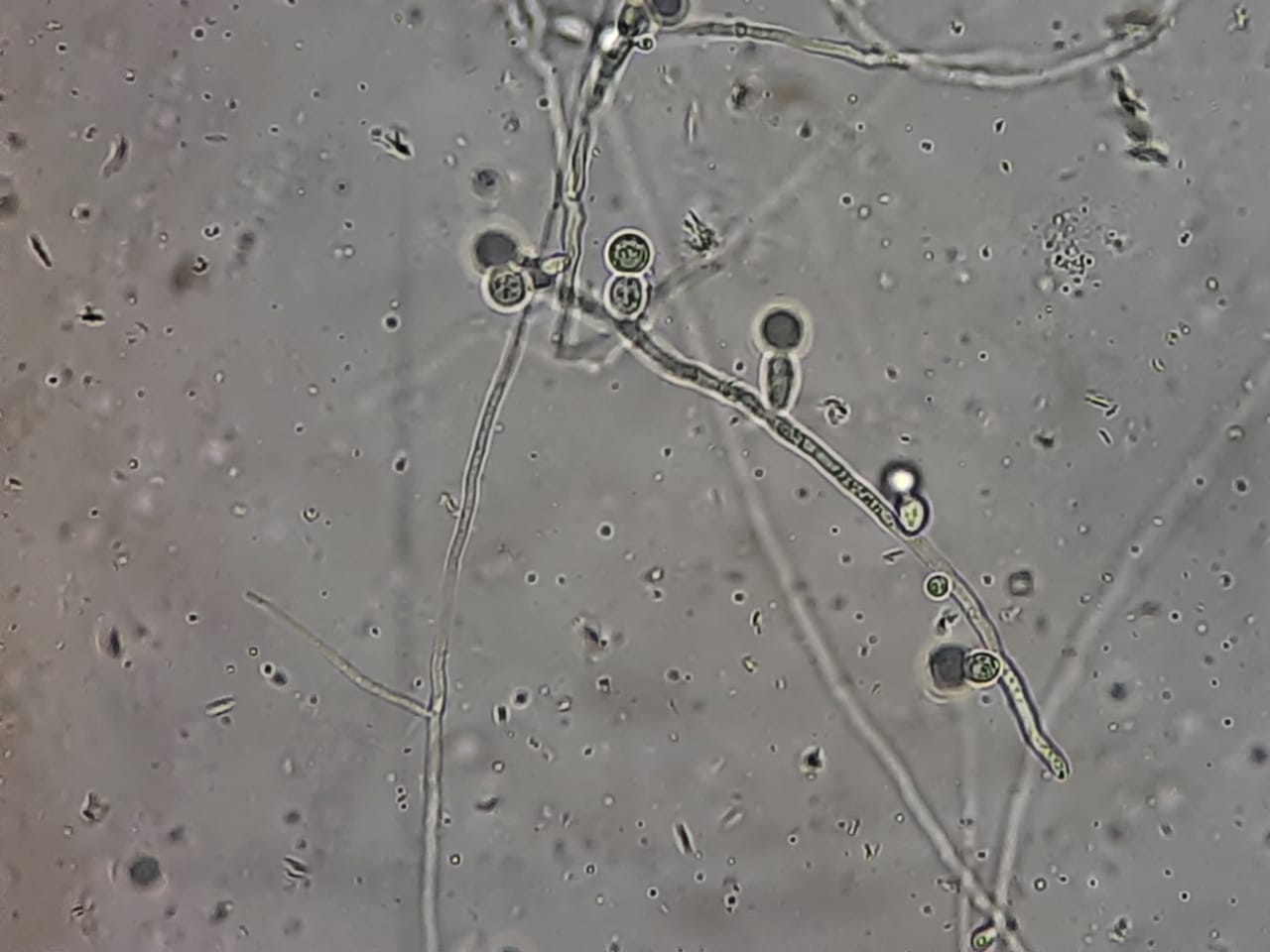
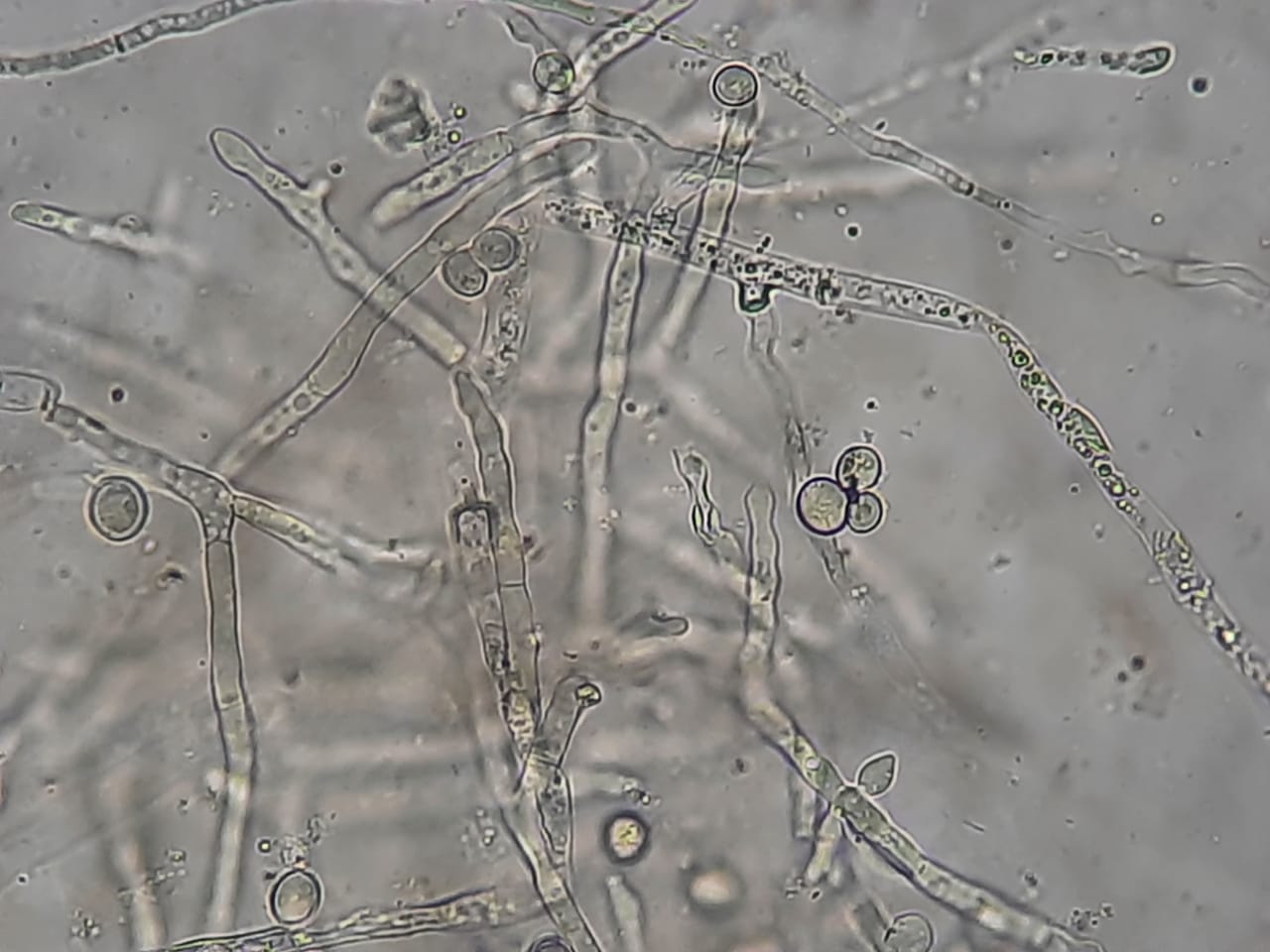
Fungal Elements in KOH Mount of Bile Microscopy-Introduction, Fungal Elements Observed in Bile KOH Mount, Applications, and Keynotes

Bile sample before centrifugation for KOH mount and fungal culture

Introduction KOH Mount of Bile is a direct microscopic examination technique used to detect fungal elements in bile fluid collected during ERCP, biliary drainage, cholecystectomy, or liver procedures.Because bile contains mucus, epithelial debris, fats, and pigments, a 10–20% Potassium Hydroxide (KOH) solution is used to …
Read more

Fungal Elements in KOH Mount of Sputum Microscopy-Introduction, Fungal Elements Observed in Sputum KOH Mount, Applications, and Keynotes

Fungal Elements in KOH Mount of Sputum Microscopy at a magnification of 1600X

Introduction KOH mount of sputum is a rapid, direct microscopic technique used to detect fungal elements in the respiratory tract. A 10–20% Potassium Hydroxide (KOH) solution digests mucus, epithelial cells, and debris in sputum, while preserving the chitin-rich fungal cell walls, making them appear clear, …

Read more

Fungal Elements in KOH Mount of BAL (Bronchoalveolar Lavage) Microscopy- Introduction, Fungal Elements Observed in BAL KOH Mount, Applications, and Keynotes

Fungal Elements in wet mount of culture of BAL specimen

Introduction KOH mount (Potassium Hydroxide preparation) is a rapid, simple, and cost-effective microscopic technique used to detect fungal elements directly in clinical specimens.When applied to Bronchoalveolar Lavage (BAL) samples, it is an essential diagnostic tool for identifying pulmonary fungal infections, especially in the ICU, oncology, …

Read more

Fungal Elements in KOH Mount of Urine Microscopy: Introduction, Fungal Elements Observed in Urine KOH Mount, Applications, and Keynotes

Fungal elements in KOH Mount of Urine Microscopy- Introduction, Fungal Elements Observed in Urine KOH Mount, Applications, and Keynotes

Introduction Potassium Hydroxide (KOH) mount is a simple, rapid, and cost-effective microscopic technique used to detect fungal elements in various clinical specimens, including urine samples. When fungal infection of the urinary tract (funguria) is suspected—especially in immunocompromised, diabetic, or catheterized patients—KOH mount helps visualize yeast …

Read more

Comparative Microscopy of Candida Species: Introduction, Table, and Keynotes

Chlamydospores of Candida albicans found in direct clinical sample(sputum) KOH mount Microscopy (Mag.1600X)

Introduction The genus Candida comprises a diverse group of opportunistic yeasts frequently isolated from human clinical specimens. Among them, Candida albicans remains the most common cause of infections; however, non-albicans Candida species, such as C. tropicalis, C. glabrata, and C. krusei, are increasingly recognized as important pathogens in immunocompromised patients, …

Read more

Comparative Microscopy of Common Clinical Fungi-Introduction, Table, and Appearance at Different Magnifications

Aspergillus in LPCB tease mount of culture

Introduction Microscopy remains one of the cornerstones of clinical mycology, providing a rapid and inexpensive method for the direct detection and preliminary identification of fungi. Comparative microscopy is particularly valuable in distinguishing the morphological features of common clinical fungi, many of which exhibit overlapping clinical …

Read more

Funguria-Introduction, Common fungi, Clinical Feature, Lab Diagnosis, Treatment, and Prevention

Urine sample for fungal culture and KOH mount

Introduction Funguria refers to the presence of fungi in the urine, either due to colonization, contamination, or true urinary tract infection (UTI). It is increasingly reported in hospitalized or catheterized patients, particularly those with immunosuppression, antibiotic overuse, or diabetes. Most cases are asymptomatic, but it …

Read more

Yeasts and Molds: Introduction, Differences, and Yeasts and Molds Footage

Yeasts and Molds: Introduction, Differences, and Yeasts and Molds Footages

Introduction of Yeasts and Molds Yeasts are small round or oval in shape, eukaryotic, single-celled microbes classified as members of the fungus kingdom. The first yeast emerged hundreds of millions of years ago, and at least 1,500 species are presently recognized. They are estimated to …

Read more