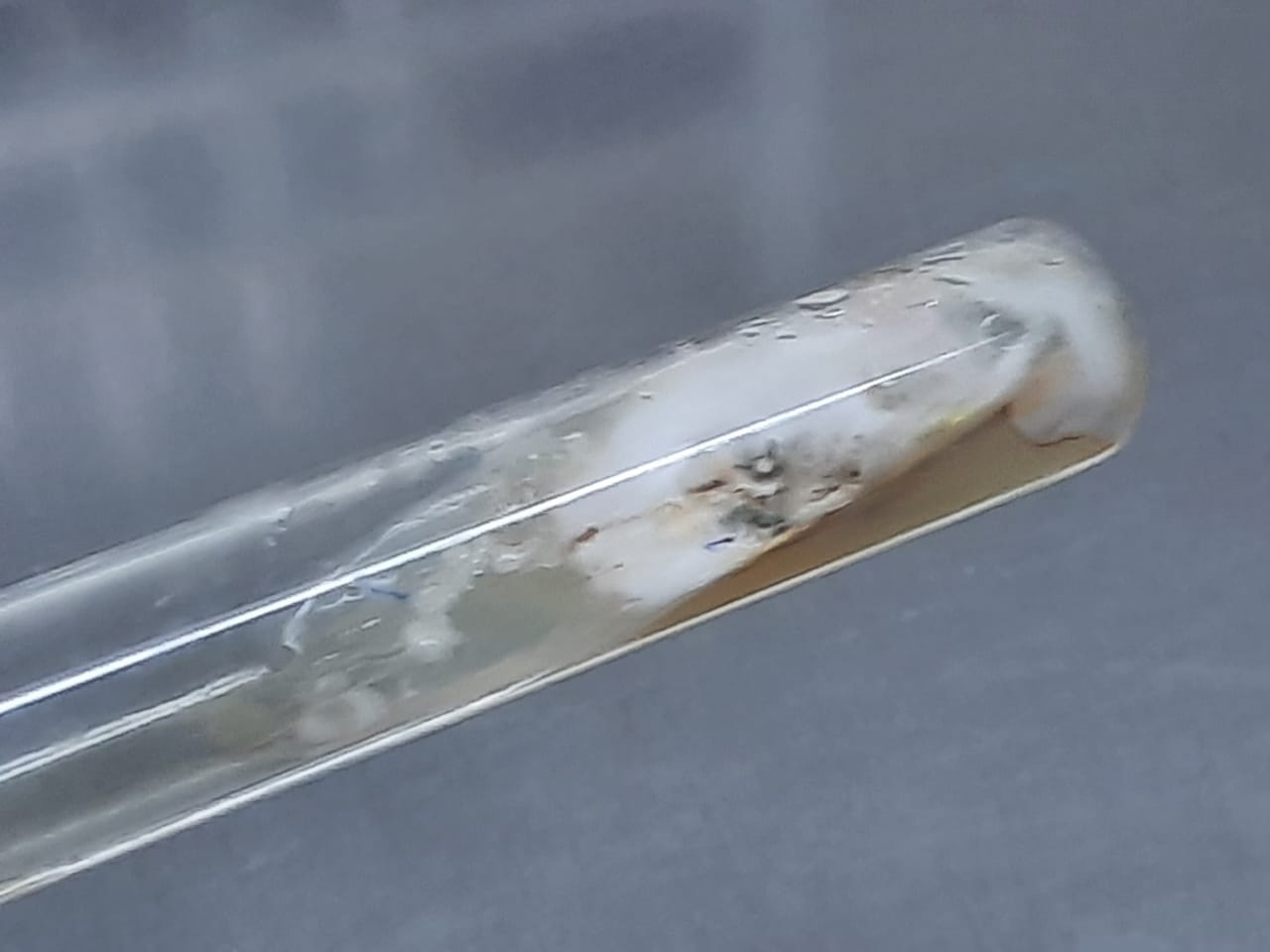
Fungal Elements in KOH Mount of Pleural Fluid Microscopy-Introduction, Possible Fungi Observed in Pleural Fluid KOH Mount, Applications, and Keynotes

Fungal Elements in KOH Mount of Pleural Fluid Microscopy-Introduction, Possible Fungi Observed in Pleural Fluid KOH Mount, Applications, and Keynotes

Introduction KOH Mount of Pleural Fluid is a rapid, direct microscopic test used to detect fungal elements in suspected pleural infections. A 10–20% Potassium Hydroxide (KOH) solution clears cellular debris, fibrin, and protein content in pleural fluid while preserving chitin-rich fungal structures such as hyphae, …

Read more

Yeast Identification by Chromogenic Media: Introduction, Principle, Clinical Significance, and Keynotes

Yeast Identification by Chromogenic Media (HiMedia)

Introduction of Yeast Identification by Chromogenic Media (HiMedia) Opportunistic yeasts, especially Candida species, are frequent causes of infections ranging from superficial candidiasis to life-threatening systemic disease. Conventional identification based on culture and biochemical tests can be time-consuming and may not reliably distinguish closely related species. …

Read more

Penicillium vs Paecilomyces: Introduction, Detailed Comparison, Pathogenicity, Lab Diagnosis, Treatment, Prevention, and Keynotes

Penicillium typical structure in LPCB preparation

Introduction of Penicillium vs Paecilomyces Penicillium is a ubiquitous, saprophytic mold found in soil, air, and decaying organic matter. Known for producing the first antibiotic, penicillin, it is typically non-pathogenic but occasionally causes opportunistic infections in immunocompromised hosts. Paecilomyces (especially P. lilacinus and P. variotii) …

Read more

Yeasts vs Molds: Detailed Comparison, Mixed Growth Isolation, Approach to Mixed Growth Handling, and Mixed Growth Interpretation

Yeast and mold mixed growth on SDA

Yeasts vs Molds: Detailed Comparison Feature Yeasts Molds Definition Unicellular fungi Multicellular filamentous fungi Structure Oval/round, single cells Hyphae form mycelium; septate or aseptate Reproduction Asexual (budding or fission); some sexual forms Asexual (spores like conidia/sporangia); sexual spores Hyphae Absent, but pseudohyphae may be present …

Read more

Fungal Identification by NGS: Introduction, Principle, Test Methods, Test Procedure, Result-Interpretation, Clinical Significance, and Keynotes

PCR products of fungal DNA from pure culture after amplification with primers

Introduction Fungal identification by NGS (Next-Generation Sequencing) uses advanced DNA sequencing. Moreover, it rapidly detects diverse fungal species. It enhances diagnostic accuracy. Additionally, it supports personalized treatment decisions. Principle NGS sequences fungal DNA directly. Consequently, it generates millions of short DNA reads. Then, bioinformatics tools …

Read more

Fungal Identification-Introduction, Conventional Method and MALDI TOF Method, Application, and Keynotes

Conidia, phialides(sterigmata), metullae, and conidiophore of Penicillum in LPCB preparation of culture microscopic examination

Introduction Fungal identification plays a vital role in diagnosing infections. Mycologists use various methods to identify fungal species. Firstly, conventional techniques rely on morphology and culture characteristics. Additionally, molecular assays enhance detection accuracy. Researchers now employ advanced tools to expedite fungal identification. Moreover, timely identification …

Read more

Next-Generation Sequencing (NGS) in Clinical Mycology-Introduction, Application, and Keynote

Next-Generation Sequencing (NGS) in Clinical Mycology-Introduction, Application, and Keynote

Introduction Next-generation sequencing (NGS) in Clinical Mycology is revolutionizing the diagnosis, typing, and antifungal resistance profiling of fungal pathogens. Application Here’s an overview of its applications: Candida spp.: Aspergillus spp.: CYP51A: Azole resistance due to mutations in ergosterol synthesis. Advantages of NGS in Clinical Mycology …

Read more