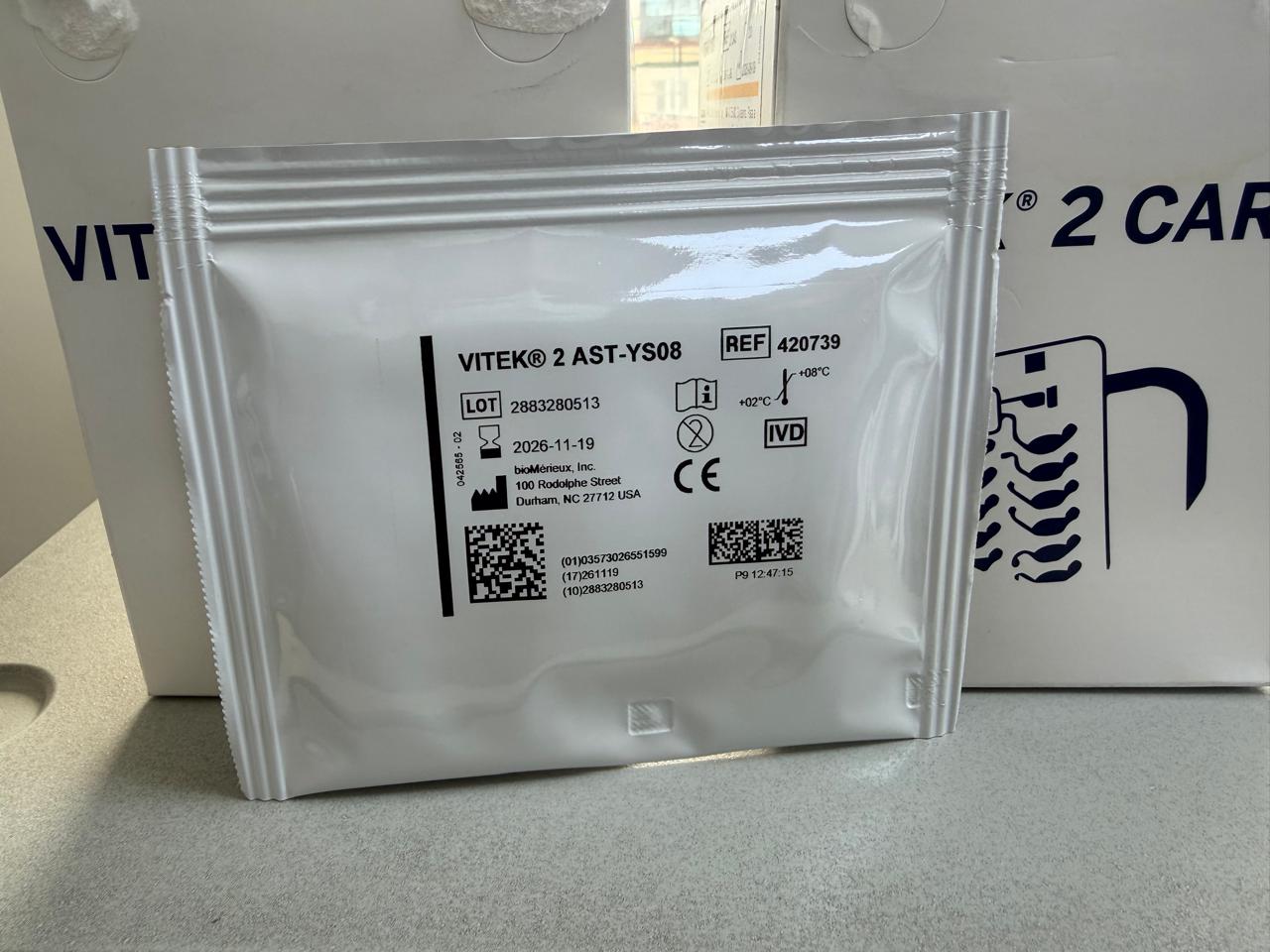
VITEK 2 Yeast AST System: Introduction, Name of Card, Principle, Procedure, Result-Interpretation, and Keynotes

VITEK 2 AST-YS08-Yeast Indentification Card

Introducton The VITEK 2 Yeast AST system is a fully automated solution for the quantitative determination of antifungal susceptibility in clinically significant yeasts, such as Candida species. It provides rapid and accurate results, often in as little as 13 to 24 hours. Name of Card …

Read more

Yeasts-Colorimetric Antifungal Susceptibility Testing: Introduction, Principle, Clinical Significance, and Keynotes

Yeasts-Colorimetric Antifungal Susceptibility Testing-Introduction, Principle, Clinical Significance, and Keynotes

Introduction Yeasts, especially Candida and Cryptococcus species, are frequent causes of opportunistic infections in immunocompromised patients. Determining their antifungal susceptibility is crucial for guiding effective therapy. While broth microdilution methods (CLSI/EUCAST) serve as reference standards, they are labor-intensive and time-consuming. Colorimetric antifungal susceptibility testing systems …

Read more

Molds-Broth Microdilution Testing (CLSI)-Introduction, Principle, Clinical Significance, and Keynotes

Introduction Invasive mold infections such as those caused by Aspergillus, Fusarium, Scedosporium, and Mucorales present significant clinical challenges, especially in immunocompromised hosts. Mortality rates are high, and empirical antifungal therapy often fails due to intrinsic or acquired resistance. Standardized antifungal susceptibility testing (AFST) is therefore …

Read more

Yeasts-Broth Microdilution Testing (EUCAST): Introduction, Principle, Clinical Significance, and Keynotes

Yeasts-Broth Microdilution Testing (EUCAST) Introduction, Principle, Clinical Significance, and Keynotes

Introduction Fungal infections caused by yeasts, particularly Candida and Cryptococcus species, represent a significant clinical challenge in immunocompromised and critically ill patients. Antifungal susceptibility testing (AFST) is crucial for guiding therapy, particularly in cases of treatment failure or the emergence of resistance. The broth microdilution …

Read more

Vancomycin-Resistant Enterococcus faecium (VREfm)-Introduction, Detection Methods, and Keynotes

Vancomycin-Resistant Enterococcus faecium (VREfm) colony morphology on CLED agar-Uropathogen

Introduction of Vancomycin-Resistant Enterococcus faecium (VREfm) Enterococcus faecium is a gram-positive, facultative anaerobic coccus that is part of the normal gastrointestinal flora but can cause nosocomial infections such as bloodstream infections, urinary tract infections, and intra-abdominal abscesses. Vancomycin-resistant Enterococcus faecium (VREfm) is defined as an isolate that harbors van …

Read more

Laboratory Requirements for Evaluating Mushroom Antifungal Activity against Clinical Dermatophytes

Laboratory Requirements for Evaluating Mushroom Antifungal Activity against Clinical Dermatophytes

Introduction To effectively evaluate mushrooms’ antifungal activity against clinical dermatophytes, laboratories require specialized equipment and techniques for fungal isolation, identification, and susceptibility testing. These include media for fungal culture, microscopy for morphological identification, and standardized methods like agar-based disk diffusion (ABDD) or broth microdilution for antifungal …

Read more

E (Epsilometer) Test-Introduction, Principle, Purpose, Procedure, Result-Interpretation, Advantages, and Disadvantages

Polymyxin B and Colistin E- Test for Acinetobacter

Introduction The E-test, also known as the Epsilometer test, is a laboratory technique used to determine the antimicrobial susceptibility of microorganisms, particularly bacteria. It is a quantitative method that provides information about the minimum inhibitory concentration (MIC) of an antimicrobial agent against a specific organism. …

Read more