
Introduction
Table of Contents
An N95 respirator is a specialised respiratory protective device certified by the National Institute for Occupational Safety and Health (NIOSH). It is engineered to establish a tight facial seal and deliver highly efficient filtration of airborne particles.
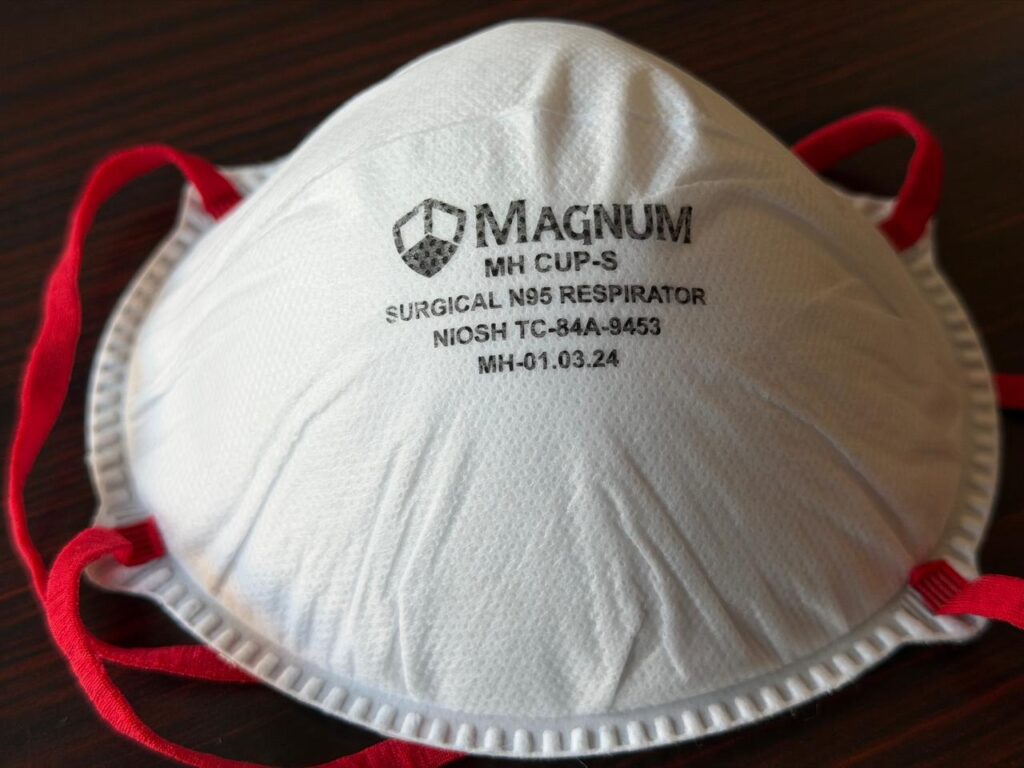
The “N” stands for “Not resistant to oil,” meaning it is meant for environments free of oil-based hazards. At the same time, the “95” indicates that the respirator filters at least 95% of microscopic airborne particles down to 0.3 microns. Unlike loose-fitting surgical masks that only act as fluid barriers, the N95 forces inhaled air directly through its advanced filter layers.
Key Features
- High Filtration Efficiency: Captures ≥95% of non-oil particulates, aerosols, viruses, and bacteria.
- Electrostatic Charge: Employs polarised electret polymer fibres to attract and trap microscopic particles electrostatically.
- Tight Facial Seal: Features form-fitting edges designed to prevent perimeter leakage around the nose and mouth.
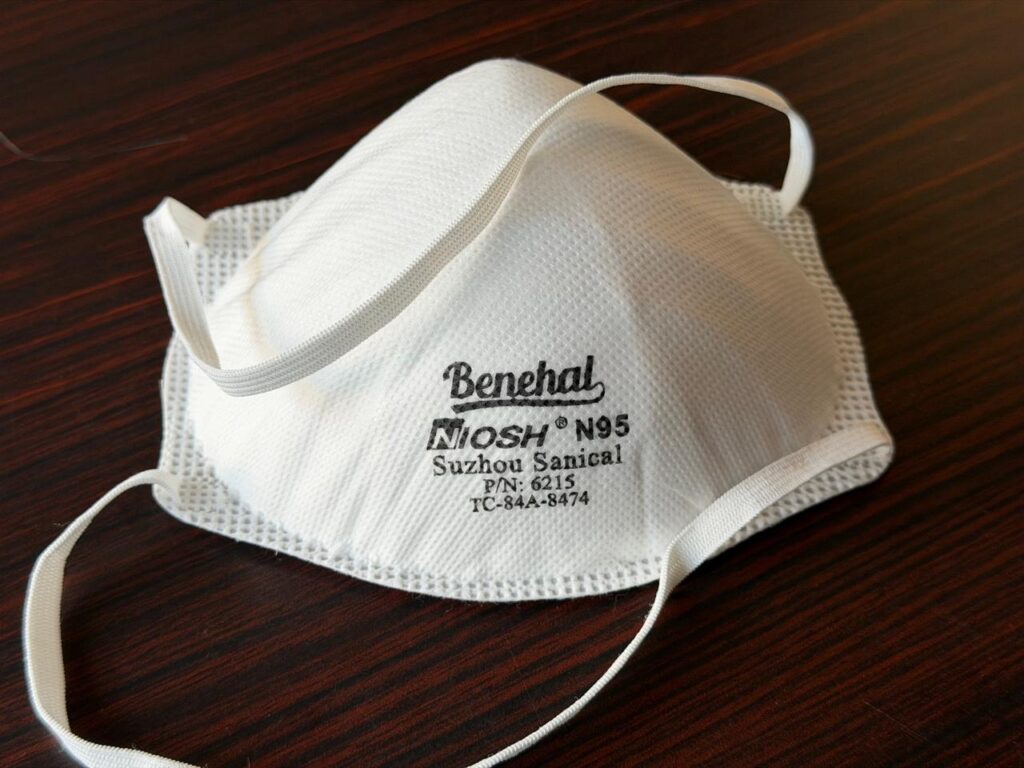
- Dual Head Straps: Utilises robust elastic straps wrapping around the crown and neck instead of ear loops.
- Adjustable Nose Clip: Includes a mouldable aluminium strip to secure a custom contour over the nasal bridge.
- Optional Exhalation Valve: Some industrial models feature a valve to lower exhalation resistance and humidity.
Primary Applications
- Healthcare Settings: Essential during aerosol-generating medical procedures and when treating airborne pathogens like influenza or COVID-19.
- Industrial and Construction: Protects personnel from inhaling toxic dust, crystalline silica, paint fumes, and heavy mist.
- Environmental Disasters: Worn by the public and emergency workers to filter dangerous ash particles during wildfire seasons.
- Allergy Management: Provides relief in environments saturated with dense pollen, mould spores, and organic dust allergens.
Vital Keynotes
- Fit Testing Mandatory: Healthcare workers must undergo formal qualitative or quantitative fit tests annually to confirm a secure seal.
- User Seal Check Required: Every single time the mask is donned, the wearer must perform positive/negative pressure breath tests.
- Not for Oil Hazards: Cannot be deployed against oil-based particles; R or P-rated respirators are required instead.
- Limited Reuse Window: While disposable, they can be reused up to 5 times in crisis shortage settings if kept uncontaminated.
- Facial Hair Limitation: Beards, long stubble, or prominent facial jewellery invalidate the mask’s seal and cause leakage.
- Breathing Restrictions: Individuals with chronic respiratory or cardiac conditions should seek medical clearance due to inhalation resistance.
- Age Restrictions: These respirators are sized for adults and are not intended for use by children.
Further Readings
- https://www.fda.gov/medical-devices/personal-protective-equipment-infection-control/n95-respirators-surgical-masks-face-masks-and-barrier-face-coverings
- https://www.cdc.gov/niosh/ppe/php/n95-use/index.html
- https://www.villagemd.com/hubfs/Affiliates%20COVID%20Resources/How%20to%20Use%20an%20N95%20Mask.pdf
- https://www.spi.com/en/blog/ohs-product/all-about-N95-masks?srsltid=AfmBOorR2rjnREHy31JvHPlpV5GrxyNSeXZ2owWyTbOO-3dokSv0oOYp
- https://medicom.com/resources/english/TDS/TDS_M2321_Medicom_Safe_Mask_N95_Respirator_English.pdf
- https://www.gblpharma.com/surgical-mask-guide-types-structure-uses-standards-and-key-differences-from-n95/
- https://www.metalformingmagazine.com/article/?/safety/equipment-and-software/covid-19-n95-masks-explained
- https://www.wired.com/story/the-physics-of-the-n95-face-mask/
- https://envomask.com/blogs/articles/what-is-an-n95-respirator?srsltid=AfmBOoq17WF4XCzRZj61eRKHw3QDfgdYvdbbtaC80lwhHbX2dhuivY2_
- https://multimedia.3m.com/mws/media/1730966O/what-is-an-n95-respirator.pdf