
Introduction
Table of Contents
A Laminar Air Flow cabinet creates a sterile work environment by capturing dust and microbes through a filtration system and exhausting the air across the work surface in a uniform, unidirectional stream. It provides product protection but does not protect the operator from hazardous pathogens.
Working Principle
The system relies on a continuous, displacement-free flow of air through high-efficiency filters.
- Air Intake: Room air enters via a pre-filter.
- Filtration: A blower forces air through a HEPA/ULPA filter.
- Laminar Flow: Air moves in a parallel, uniform velocity stream.
- Displacement: Continuous pressure prevents ambient, contaminated air from entering the cabinet.
Key Parts and Components
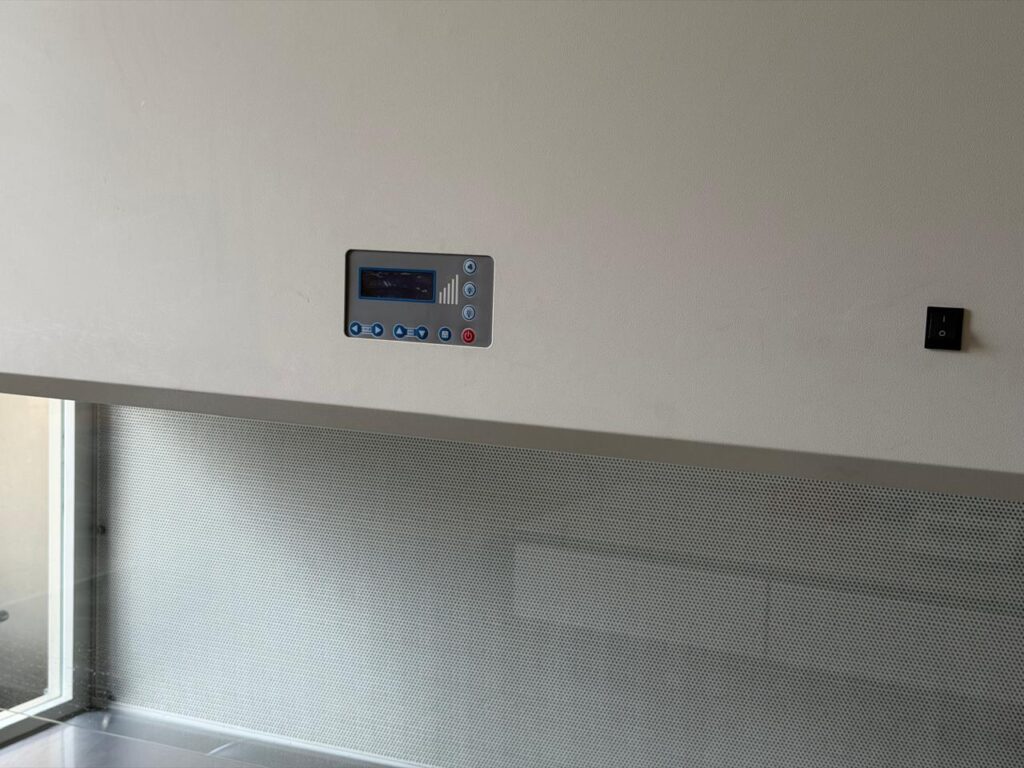
- Cabinet Body: Made of stainless steel or robust plastic for easy sanitization.
- Pre-Filter: Captures large dust particles to extend the main filter’s lifespan.
- HEPA Filter: High-Efficiency Particulate Air filter removing 99.97% of particles 0.3 µm.
- Blower/Fan: Draws room air in and forces it through the filters.
- UV Lamp: Emits short-wave ultraviolet light to sterilize the interior surfaces before use.
- Fluorescent Light: Provides high-visibility illumination for the operator.
- Sash / Front Panel: Glass or plastic shield that slides to open or close the workspace.
Airflow Types
- Horizontal LAF: Air moves from the back wall directly forward toward the user. Cleanest for the sample, but exposes the operator to fumes or particles.
- Vertical LAF: Air moves downward from the top ceiling filter. Safer for the operator, minimizes horizontal cross-contamination.
Handling Procedure
Follow these strict operational steps to maintain sterility:
- Pre-operational Prep: Wear a lab coat, gloves, face mask, and hairnet.
- Surface Sterilization: Wipe down the interior walls and bench with 70% ethanol.
- UV Decontamination: Close the sash, turn on the UV light, and leave for 15–30 minutes.
- Purge Air: Turn off the UV light, turn on the blower and visible light, and wait 5 minutes.
- Material Entry: Wipe all item exteriors with 70% ethanol before placing them inside.
- Execution: Perform work in the center of the zone; avoid blocking airflow pathways.
- Post-operational Clean: Remove all materials, wipe down surfaces with ethanol, and turn off the blower.
Primary Uses
- Microbiology: Inoculation, bacterial culture transfers, and media preparation.
- Plant Tissue Culture: Micropropagation and sterile plant cell cultivation.
- Pharmaceuticals: Compounding sterile IV bags, eye drops, and non-hazardous drugs.
- Electronics: Assembling dust-sensitive semiconductor devices and microchips.
Keynotes and Safety Warnings
- Product vs. Personnel: LAF hoods protect the product only. Never use them with biohazardous agents, infectious viruses, or toxic chemicals.
- UV Light Hazard: Never work inside the hood or look directly into it while the UV light is active.
- Air Velocity: Standard laminar airflow velocity is typically maintained around 0.3 to 0.5 m/s.
- Obstruction Risk: Avoid placing large equipment near the back or top filters to prevent turbulence.
Further Readings
- https://labs-usa.com/blog/horizontal-laminar-flow-hood/
- https://www.kewaunee.in/blog/a-quick-primer-on-laminar-flow-hood/
- https://qsgroup.it/en/products/laminar-air-flow-mobile-laf-unit/
- https://www.amerigoscientific.com/instrument/laboratory-hoods.html
- https://labfumecupboards.com/exploring-the-common-uses-of-laminar-flow-cabinets/
- https://www.tion.co.uk/core/laminar-flow-fume-cupboards/
- https://www.microsilindia.com/product/laminar-air-flow/
- https://valtria.com/en/cleanrooms/laminar-flow-cabinet/
- https://www.labox.eu/production
- https://www.hospiaid.com/products/28
- https://www.airkeyx.com/industry-solutions/detail/what-you-need-to-know-about-laminar-air-flow
- https://www.drawellanalytical.com/exploring-the-key-functions-of-laminar-flow-cabinets-creating-sterile-and-controlled-environments/
- https://labassociates.com/laminar-flow-cabinet
- https://downloads.ossila.com/manuals/benchtop-laminar-flow-hood.pdf