RPR Test: Introduction, Principle, Procedure, Result-Interpretation, Clinical Significance, and Keynotes
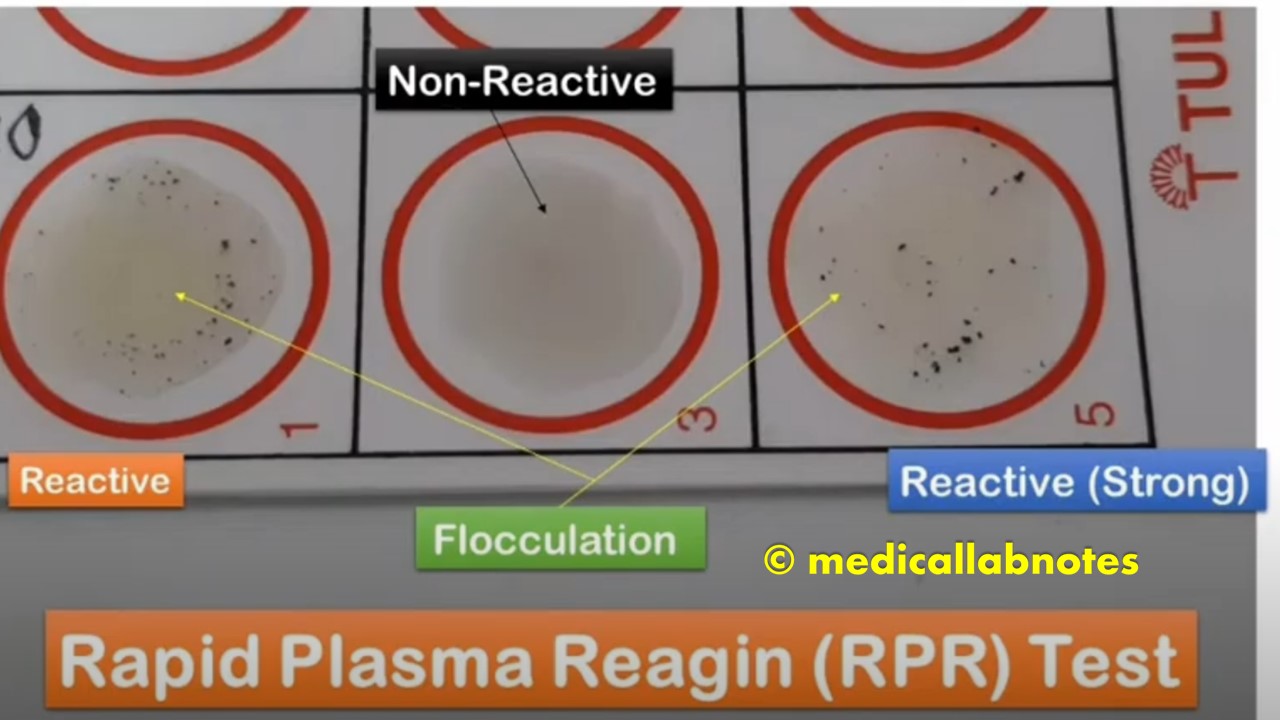
RPR Test: Introduction, Principle, Procedure, Result-Interpretation, Clinical Significance, and Keynotes

Introduction of Rapid Plasma Reagin (RPR) Test RPR is a screening non-specific test for syphilis caused by a bacterium, Treponema pallidum. It has replaced the VDRL test due to having properties like no need of preparing fresh reagents daily, no need for a microscope, and …

Read more

TPHA Test: Introduction, Principle, Procedure, Result-Interpretation, Clinical Significance, and Keynotes

TPHA Test: Introduction, Principle, Procedure, Result-Interpretation, Clinical Significance, and Keynotes

Introduction of TPHA Test TPHA test  stands for Treponema pallidum hemagglutination. This is a confirmatory test for syphilis that is caused by a bacterium, T. pallidum. TPHA test is a sensitive indirect hemagglutination test, that detects specific Treponema pallidum antibodies in serum within one hour. It uses …

Read more

Master List of Record in Clinical Laboratory: Introduction, List, and Keynotes

Master List of Record in Clinical Laboratory: Introduction, List, and Keynotes

Introduction of Master List of Records in Clinical Laboratory ‘Master List of Records in Clinical Laboratory’ is an important document to reflect the quality of laboratory that is required during ISO accreditation as well as national accreditation. It is also required during laboratory renewable. It …

Read more

VDRL Test: Introduction, Principle, Procedure, Result-Interpretation,Limitations, and Keynotes

VDRL Test Introduction,Principle, Procedure, Result-Interpretation,Limitations, and Keynotes

Introduction of VDRL Test VDRL stands for Veneral disease research laboratory. The laboratory was renamed the Treponemal Pathogenesis and Immunology Branch of the United States Public Health Service. The Venereal Disease Research Laboratory (VDRL) test is one of two variations of micro flocculation procedures used for serological testing …

Read more

High-sensitivity cardiac troponin test (hs-cTnT): Introduction, Testing Conditions, Types, Clinical Significance, and Keynotes

High-sensitivity cardiac troponin test (hs-cTnT)-Introduction, Testing Conditions, Types, Clinical Significance, and Keynotes

Introduction of Troponin Test The high-sensitivity cardiac troponin test (hs-cTnT) is the new generation of heart/cardiac enzyme assaying that allows for the detection of very low levels of troponin T, assisting to diagnose heart attacks more quickly. It works on the principle of immunochromatography. It …

Read more

Category A and B laboratory List in Nepal: Introduction, Laboratory Name, Address, License Number, Type, and Keynotes

Category A and B laboratory List in Nepal: Introduction, Laboratory Name, Address, License Number, Type, and Keynotes

Introduction of Category A and B laboratory List in Nepal There are two types of medical/clinical laboratories in Nepal. One is a government laboratory while another is a private laboratory. The private laboratory can not proceed with the tests without the accreditation of government bodies …

Read more

Staphylococcus aureus: Introduction, Pathogenicity, Lab Diagnosis, Treatment, and Keynotes

Staphylococcus aureus: Introduction, Pathogenicity, Lab Diagnosis, Treatment, and Keynotes

Introduction of Staphylococcus aureus Scientific classification of Staphylococcus aureus is given as: Domain Bacteria Phylum Firmicutes Class Bacilli Order Bacillales Family Staphylococceae Genus Staphylococcus Species aureus Table: Biological Classification of Staphylococcus aureus Staphyle means bunch and Kokko mean berry. Staphylococcus aureus was isolated by Pasteur (1880) from a pus sample. …

Read more

CLED Agar: Introduction, Composition, Principle, Preparation, Testing Procedure, Colony Characteristics, Modifications, Limitations, and Keynotes

Staphylococcus aureus (11 o'clock) Klebsiella pneumoniae (5 o'clock) and Pseudomonas aeruginosa (8 o'clock) growth on CLED agar-Back View

Introduction of CLED Agar CLED stands for cysteine, lactose, and electrolyte-deficient. CLED agar or medium is a differential culture medium used for the isolation and enumeration of bacteria in urine specimens from suspected cases of urinary tract infection (UTI). It favors the growth of all …

Read more