Hanging Drop Preparation: Introduction, Test Requirements, Procedure, Result-Interpretation, Keynotes, and Bacterial Motility Footages
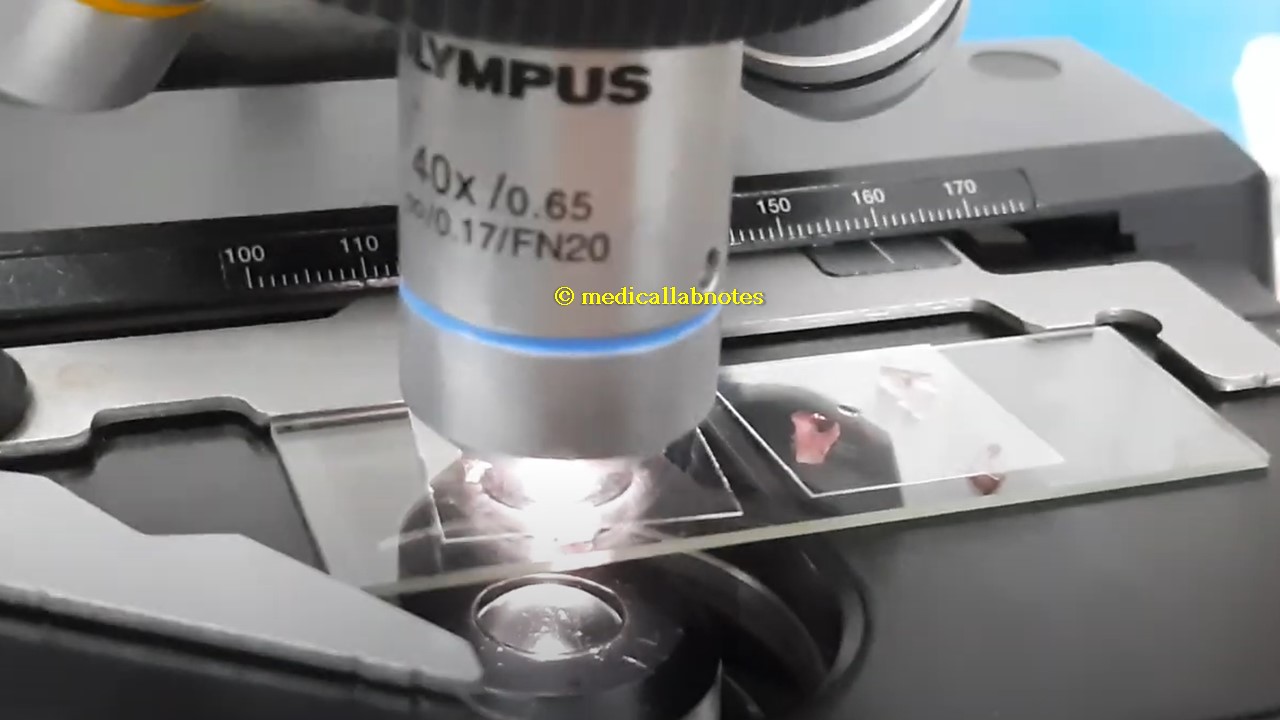
Prepared hanging drop ready for microscopy

Introduction of Motility Test for Bacteria/ Hanging Drop Preparation Bacteria are motile due to having flagellum/flagella. On the flagella, bacteria are motile and non-motile and therefore some bacteria are motile (Vibrio cholerae, E. coli, Proteus species, etc.) whereas some others are non-motile like Klebsiella, Shigella, …

Read more

Klebsiella oxytoca: Introduction, Identification Features, Keynotes, and Footage

Klebsiella oxytoca biochemical tests in TSI, SIM, Urea and Citrate Agar Demonstration

The genus Klebsiella is from the surname of  German-Swiss microbiologist Edwin Klebs (1834–1913). Klebsiella is a member of the family, Enterobacteriaceae and it is a Gram-negative, oxidase-negative, fimbriated, non -motile, non-sporing rod-shaped bacterium with a prominent polysaccharide-based capsule and having a size of 0.5 to 0.8 µm wide …

Read more

Klebsiella pneumoniae: Introduction, Identification Features, Keynotes, and Klebsiella pneumoniae Footages

Klebsiella pneumoniae biochemical tests in TSI, SIM, Citrate and Urea agar

Introduction The genus Klebsiella is from the surname of  German-Swiss microbiologist Edwin Klebs (1834–1913). Klebsiella is a member of the family, Enterobacteriaceae and it is a Gram-negative, oxidase-negative, fimbriated, non -motile, non-sporing rod-shaped bacterium with a prominent polysaccharide-based capsule and having a size of 0.5 to 0.8 …

Read more

E. coli: Introduction, Identification Features, Keynotes, and Escherichia coli Footages

Biochemical reactions of E. coli in TSI, SIM, urea and citrate agar

Introduction of E. coli Escherichia coli is a member of the family, Enterobacteriaceae and it is a Gram-negative, aerobe, and facultative anaerobic, rod-shaped bacterium. The optimal temperature for growth is 36-37°C with most strains growing over the range 18-44 °C. It is a commensal that is found …

Read more

Human Parasites Video Clips: Introduction, List of Parasites, and Parasitic Footages with Short Description

Human Parasites Video Clips: Introduction, List of Parasites, and Parasitic Footages with Short Description

Introduction of Human Parasites Video Clips ‘Human Parasites Video Clips’ is a genuine parasitic video footages collection and it is collected by the author. No doubt, it will boost your parasitic journey of study more clear and practical. List of Parasites for Human Parasites Video …

Read more

Serratia marcescens: Introduction, Identification Features, and Serratia Footages

Serratia marcescens colony morphology on nutrient agar, biochemical reactions and antibiogram

Introduction of Serratia marcescens Serratia is a member of the family, Enterobacteriaceae and it is a Gram-negative, facultatively anaerobic, rod-shaped lacking spore and capsule bacterium. This is a Gram-negative rod/ bacilli that thrive in moist environments. It frequently contaminates solutions and hospital equipment and the human reservoirs are …

Read more

Hafnia alvei: Introduction, and Properties

Hafnia alvei (white mucoid) colony on Muller-Hinton Agar (MHA)

Introduction of Hafnia alvei Hafnia alvei is a members of the Enterobacteriaceae and it is inhabited in our gastrointestinal tract and also in many animal species as part of the normal microflora. It is a Gram negative rod, non capsulated and non-sporing bacterium motile with …

Read more

Enterobacteriaceae: Introduction, Phenotypic Features, Keynotes, and Related photos

Enterobacteriaceae: Introduction, Phenotypic Features and Keynotes and Related photos

Introduction of Enterobacteriaceae The family Enterobacteriaceae was first proposed by Rahn in 1936 and it is a very large group of gram-negative bacteria that possess a number of common morphological and biochemical properties and similar DNA base compositions. The widely used systems for the classification …

Read more