Direct Microscopy Examination of Clinical Samples- Introduction, Purpose and Benefits, Methods, Applications, and Limitation

Direct Microscopy Examination of Clinical Samples- Introduction, Purpose and Benefits, Methods, Applications, and Limitation

Introduction of Direct Microscopy Examination of Clinical Samples Direct microscopy examination of clinical samples, or wet mount examination, involves examining clinical specimens under a microscope without prior staining or culturing. This technique provides a rapid assessment of the presence and morphology of microbes, facilitating preliminary diagnosis and …

Read more

Aspergillus and penicillium conidia differences: Introduction, Differences, Keynotes, and Further Readings

Conidia, conidiophore, phialides, vesicle of Aspergillus

Introduction Aspergillus conidia are produced on unbranched conidiophores with a vesicle, while Penicillium conidia are produced on branched conidiophores, forming brush-like structures. Both have small conidia, but differ in color and germination patterns.  The LPCB mount shows the hallmark features of an Aspergillus conidiophore: This brush‑ or radiate‑head …

Read more

Cryptococcal Antigen (CrAg) Testing-Introduction, Principle, Sample used, Detection Methods, Clinical Significance, Limitations, and Keynotes

Cryptococcal Antigen (CrAg) Testing-Introduction, Principle, Sample used, Detection Methods, Clinical Significance, Limitations, and Keynotes

Introduction of Cryptococcal Antigen (CrAg) Testing  Cryptococcal antigen (CrAg) testing detects the presence of antigens produced by the Cryptococcus fungus in body fluids, aiding in the diagnosis of cryptococcosis, particularly meningitis. This test helps identify infection early, even before visible symptoms appear, and is crucial for timely …

Read more

Mold Identification by MALDI-TOF (VITEK): Introduction, Procedure, Benefits, Comparison with other methods, and Keynotes

Mold Identification by MALDI-TOF (VITEK) Introduction, Procedure, Benefits, Comparison with other methods, and Keynotes

Introduction of Mold identification using MALDI-TOF mass spectrometry Mold identification using MALDI-TOF mass spectrometry, particularly with systems like VITEK MS, offers a rapid and reliable method for identifying fungal species, including molds, in clinical microbiology laboratories.  Matrix-assisted laser desorption ionization time-of-flight (MALDI-TOF) mass spectrometry is a …

Read more

Aerococcus viridans: Introduction, Morphology, Pathogenicity, Lab Diagnosis, Treatment, Prevention, and Keynotes

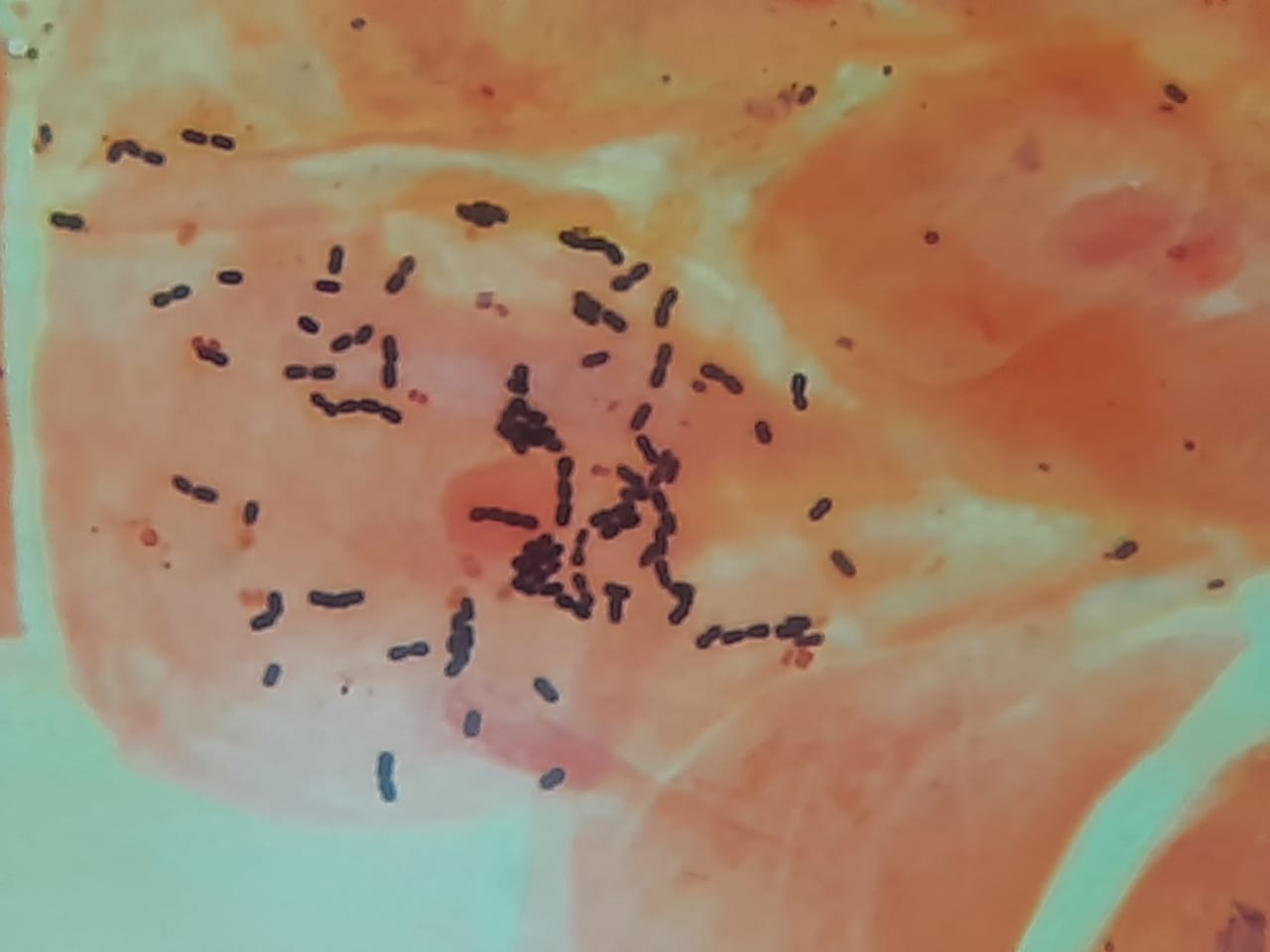
Aerococcus viridans in Gram staining of culture

Introduction Aerococcus viridans is a gram-positive coccus that rarely infects humans. It usually inhabits hospital environments. Moreover, it exists in air and water. It causes urinary tract infections, endocarditis, and bacteremia. Additionally, it appears in various clinical specimens. Furthermore, laboratories sometimes misidentify it as viridans …

Read more

Chlamydospores: Nature’s Survival Spores in Fungi and Algae-Structure, Function, and Formation Under Adverse Conditions

Chlamydospores of Candida albicans in LPCB preparation of growth on cornmeal agar (CMA)

Introduction Chlamydospores are thick-walled, asexual, resting spores produced by certain fungi and algae, functioning as survival structures under adverse conditions, and are capable of developing into new individuals without sexual fusion.  What are they? Chlamydospores are thick-walled, asexual spores that are formed by certain fungi and …

Read more

Geobacillus stearothermophilus: The Gold Standard for Autoclave Sterilization

Geobacillus stearothermophilus (formerly Bacillus stearothermophilus) is the most commonly used biological indicator (BI) organism for monitoring steam sterilization (autoclaving)

Introduction Geobacillus stearothermophilus (formerly Bacillus stearothermophilus) is the most commonly used biological indicator (BI) organism for monitoring steam sterilization (autoclaving). Below are some key points about why and how it is used for quality control (QC) checks: Why Geobacillus stearothermophilus? How Biological Indicators Work Interpreting …

Read more

Candida albicans-Introduction, Morphology, Pathogenicity, Lab Diagnosis, Treatment, Prevention, and Keynotes

Yeast cells, budding yeasts, and pseudohyphae in KOH mount of sputum microscopic examination

Introduction Candida albicans is a common fungal pathogen in humans. It inhabits mucosal surfaces naturally and colonizes the gastrointestinal tract and genitourinary system frequently. The organism causes infections in both healthy and immunocompromised individuals and adapts quickly to environmental changes within the host. Clinicians report …

Read more