
Introduction of Bacterial Load (Decoding the CFU)
Table of Contents
Bacterial load, measured in Colony-Forming Units (CFU), is a fundamental concept in microbiology used to estimate the number of viable (living) microorganisms in a sample. Unlike total cell counts that include dead bacteria, the CFU method only counts cells that can divide and form visible colonies on an agar plate, making it essential for assessing active infections, food safety, and environmental sanitation.
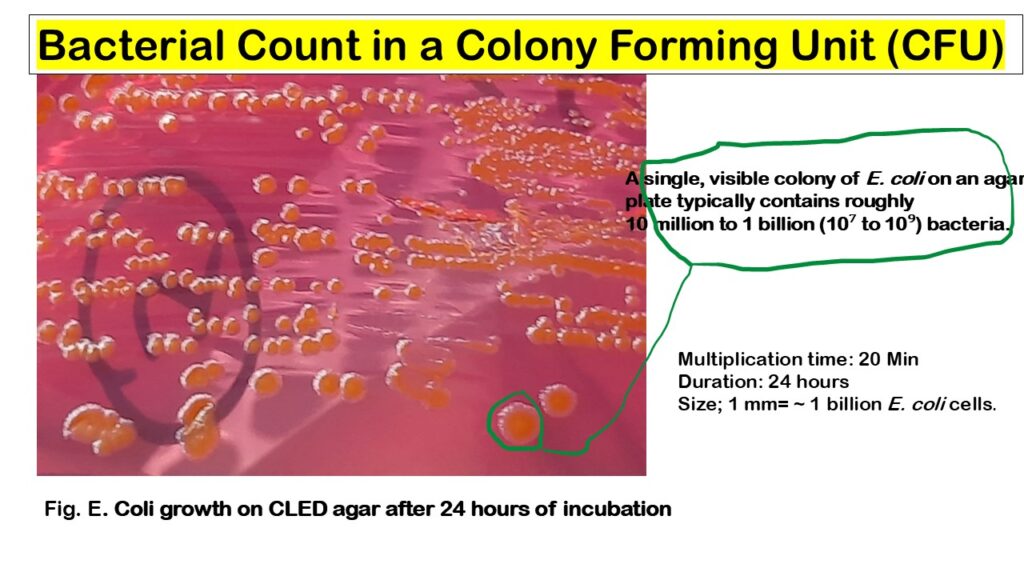
- Definition: A CFU is a unit used to estimate the number of viable bacteria or fungal cells in a sample. A single CFU may arise from a single cell or a small cluster of cells.
- Principle: Samples are often serially diluted, plated on agar, and incubated. Each viable microorganism reproduces to form a visible colony.
- Units of Expression:
- CFU/mL: Used for liquids (e.g., water, milk, blood).
- CFU/g: Used for solids (e.g., food, soil).
- CFU/: Used for air or surface sampling.
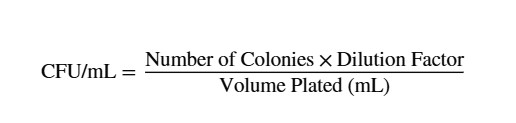
Formula-
Bacterial Load Ranges (Interpreting Results)
Bacterial loads vary significantly depending on the environment, ranging from pristine (low CFU) to highly contaminated (high CFU).
- Drinking Water: Generally expected to be <100 CFU/100 mL.
- Dental Unit Water: CDC recommends maintaining levels below 500 CFU/mL.
- Ready-to-Eat Food:
- Good: <102 CFU
- Acceptable:<104CFU/g
- Unsatisfactory/Dangerous:>104 CFU/g
- Probiotic Supplements: Commonly found in ranges of 109to 1010 CFU/serving
- Clinical (e.g., Urine Sample):<103 CFU/mL is usually considered normal flora, while>105 CFU/mL indicates a significant infection.
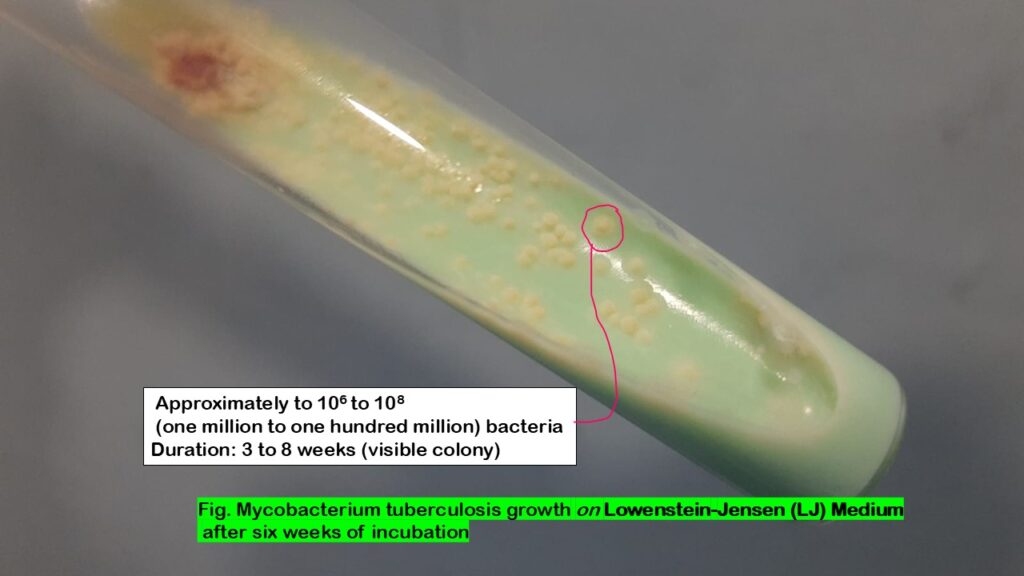
Applications of CFU Counting
- Clinical Diagnostics: Identifying bacterial infections in blood, urine, and wound samples to guide antimicrobial therapy.
- Food and Beverage Industry: Monitoring raw materials and finished products for contamination, ensuring compliance with food safety regulations.
- Pharmaceutical and Biotech: Ensuring sterility in drug manufacturing, validation of cleaning processes, and quantifying viability in probiotics.
- Environmental Monitoring: Assessing water quality, wastewater treatment efficacy, and air quality in hospitals or cleanrooms.
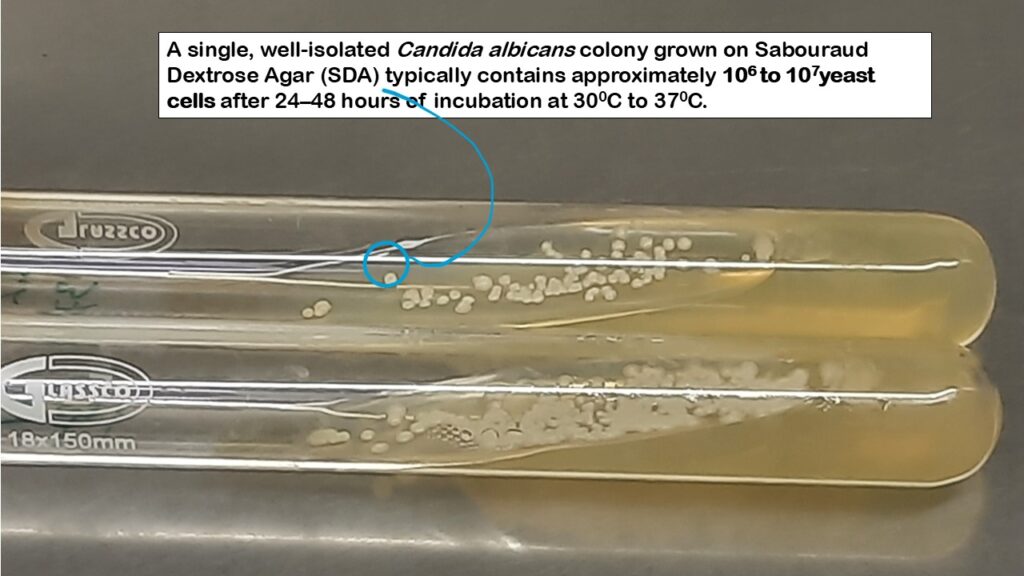
Keynotes and Critical Considerations
- Viability Assumption: CFU only detects live and culturable microorganisms. It does not account for dead cells or viable but non-culturable (VBNC) bacteria.
- Ideal Count: To be statistically valid, plates should have between 30 and 300 colonies.
- Limitations: CFU counts take 24–48 hours for colony formation and may underestimate the total population if bacteria are clumped together.
- Trends over Values: In industrial and clinical settings, trends (e.g., rising CFU levels over time) are often more critical than a single, isolated measurement.
- Accuracy Note: One CFU does not always equal one bacterium, as bacteria often grow in clusters.
Further Readings
- https://medcraveonline.com/JMEN/JMEN-05-00166
- https://pmc.ncbi.nlm.nih.gov/articles/PMC8018845/
- https://www.vedantu.com/neet/full-form-of-cfu
- https://www.foodstandards.gov.au/business/microbiological-limits
- https://www.merusonline.com/cfu-colony-forming-units/
- https://www.pharmaceuticalmicrobiology.in/2017/01/colony-forming-unit-cfu.html
- https://www.sciencedirect.com/science/article/abs/pii/S1047279716300734
- https://pmc.ncbi.nlm.nih.gov/articles/PMC7827228/
- https://www.eppendorf.com/sg-en/lab-academy/life-science/microbiology/how-to-quantify-bacterial-cultures/