Nitrate or Nitrite Reduction Test: Introduction, Composition of Medium, Principle, Test Requirements, Procedure, Result -Interpretation, and Limitations

Nitrate or Nitrite Reduction Test

Introduction of Nitrate or Nitrite Reduction Test The nitrate or nitrite reduction test uses to determine the ability of an organism to reduce nitrate to nitrite. Anaerobic metabolism requires an electron acceptor other than atmospheric oxygen. Many gram-negative bacteria use nitrate as the final electron acceptor. The …

Read more

DNase Test: Introduction, Composition, Principle, Test Requirements, Procedure, Result -Interpretations, and Limitations

Deoxyribonuclease (DNase) Test Positive and Negative Bacteria

Introduction of DNase Test for Bacteria DNase tests positive and negative bacteria as shown below image. This test is useful for the presumptive identification of Staphylococcus aureus which produces the enzyme deoxyribonuclease (DNase) from other Staphylococci which do not produce DNase. This test is also positive in the following …

Read more

MIU Test: Introduction, Principle, Composition, MIU Agar Preparation, Test Procedure, Result-Interpretation, and Keynotes

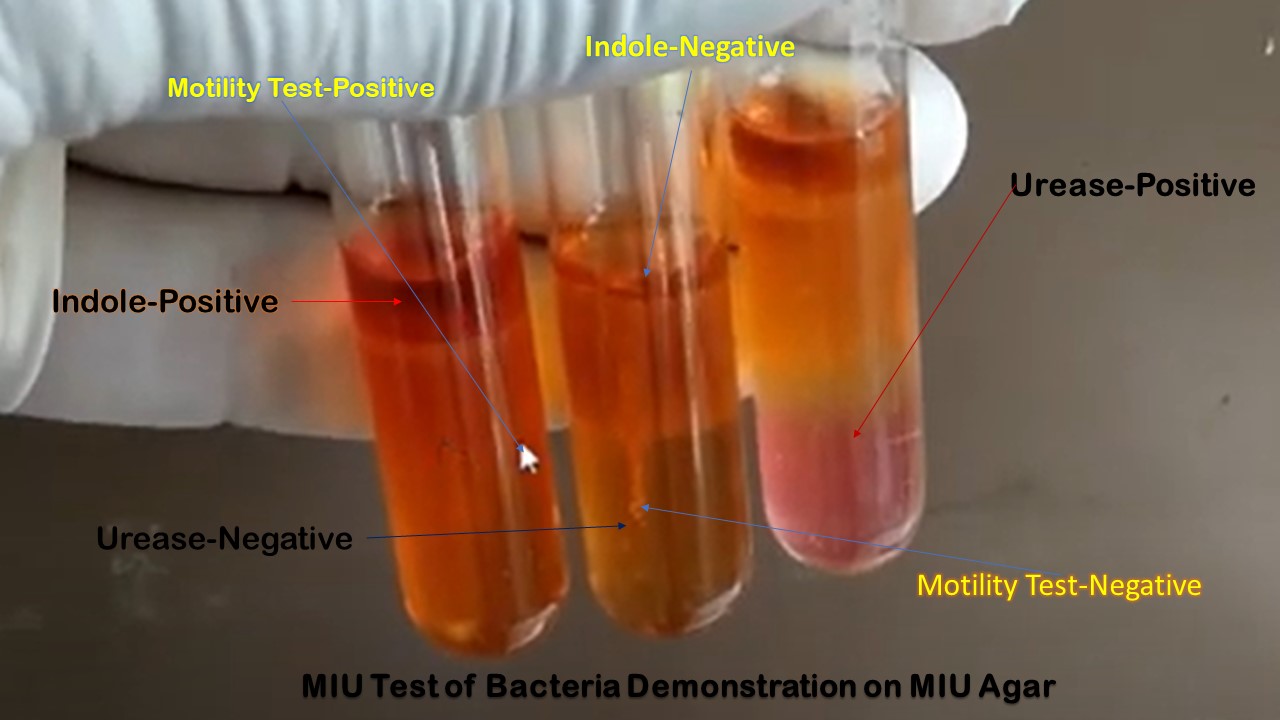
Motile and non-motile bacteria, indole positive and negative, urease positive and negative organisms on MIU agar demonstration

Introduction of MIU Test MIU test stands for motility indole urease test and it is used for three tests among them one for motility of bacteria, second for indole formation, and third for urea hydrolyzation test of bacteria. This assay is useful for the identification …

Read more

Aeromonas hydrophila: Introduction, Identification Features, Keynotes, and Aeromonas Footages

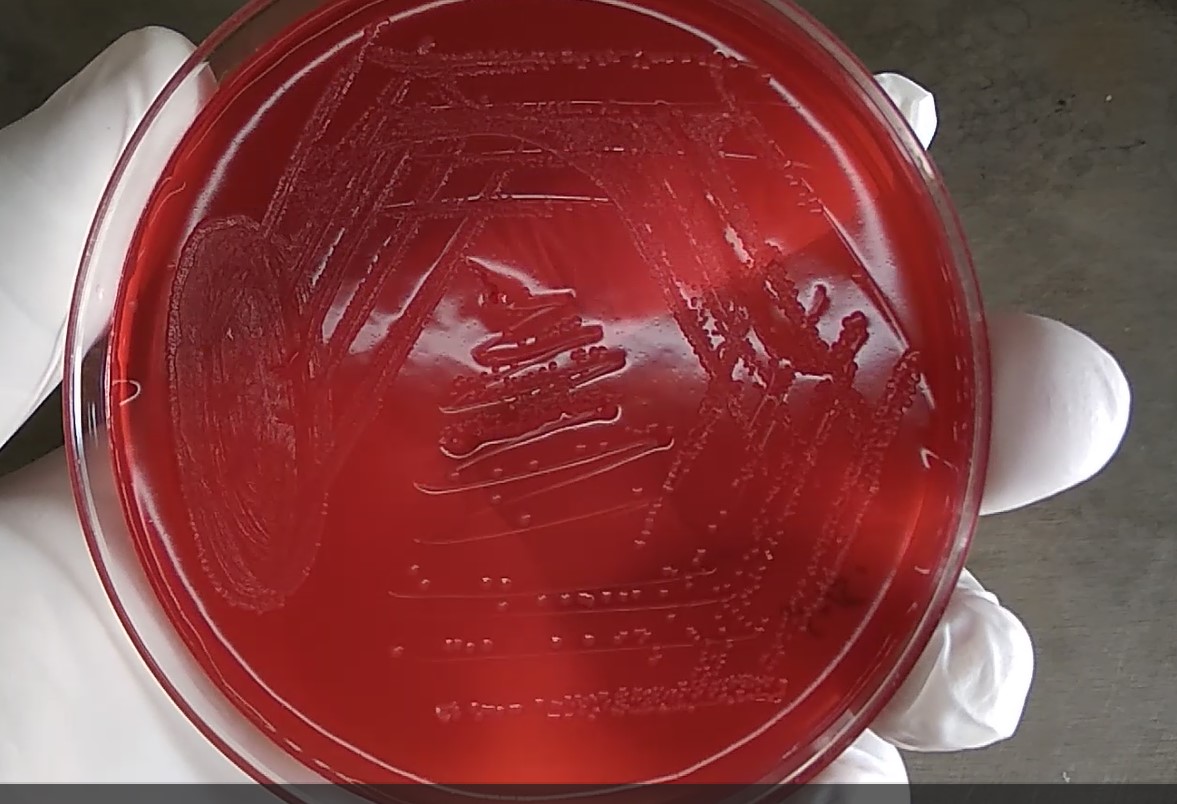
Aeromonas hydrophila growth on MacConkey agar

Introduction of Aeromonas hydrophila Aeromonas hydrophila is a gram-negative, facultative anaerobe, rod-shaped motile(due to single polar flagellum) bacterium without capsule and spore having a size from 0.3-1.0 µm wide by 1.0-3.5 µm long. It is generally found in the aquatic environment. Its presence can not …

Read more

Enterobacter cloacae: Introduction, Identification Features, Keynotes, and Enterobacter Footages

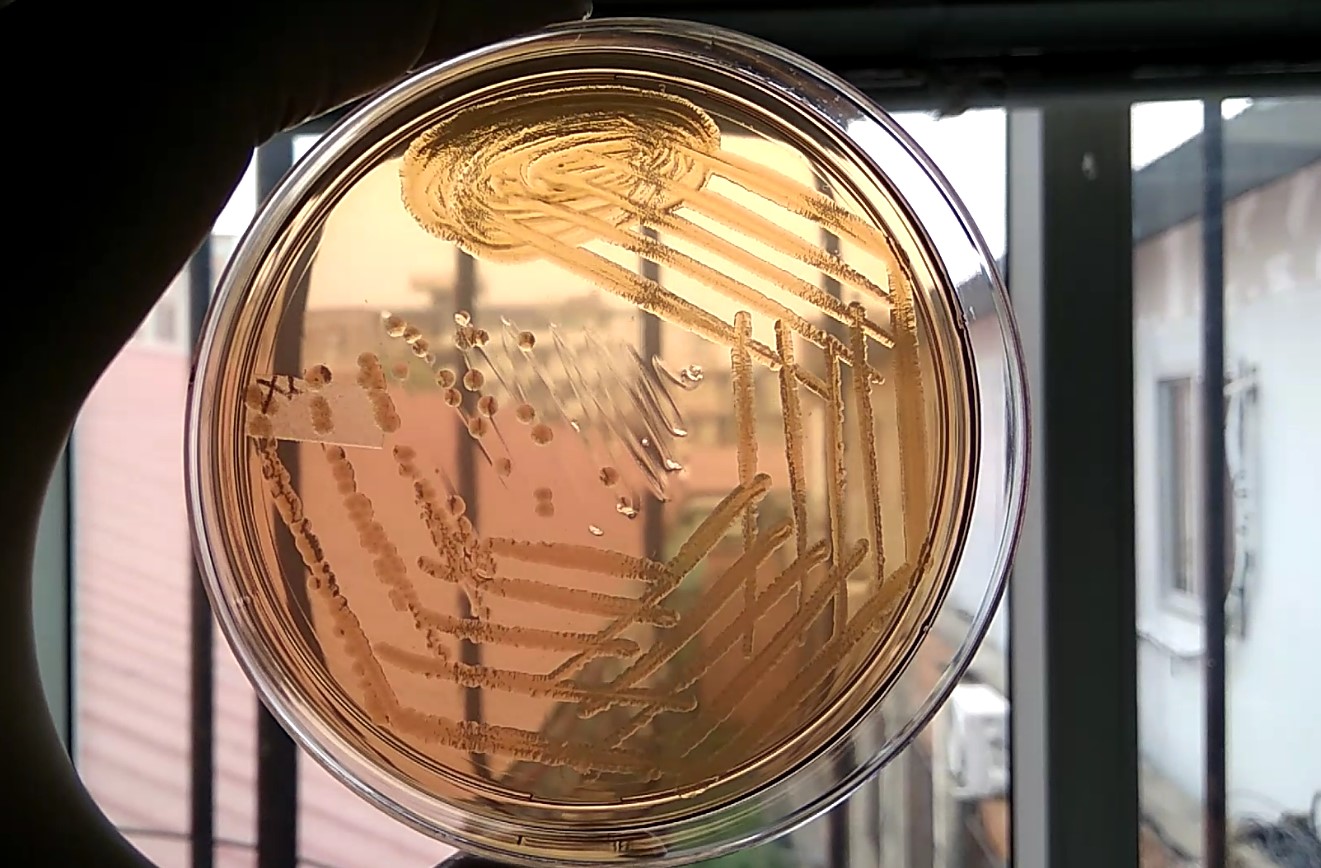
Encapsulated strain of Enterobacter aerogenes on MacConkey medium

Introduction of Enterobacter cloacae Enterobacter cloacae is a facultative anaerobic Gram-negative bacterium of size 0.3-0.6 x 0.8-2.0 μm. It is lacking capsule and spore and it is motile due to flagella which is a member of the Enterobacteriaceae family. E. cloacae is the normal gut …

Read more

Shigella flexneri: Introduction, Identification Features, Keynotes, and Shigella Footages

Shigella boydii colony morphology on XLD agar

Introduction of Shigella flexneri Shigella are Gram-negative bacilli measuring about 1-3 µm X 0.5 µm. They are non-motile, non-encapsulated, non-sporing, and non-acid-fast bacteria belonging to the family Enterobacteriaceae. They cause an infectious disease called Shigellosis. There are four species or serogroups based on biochemical and …

Read more

Citrobacter koseri: Introduction, Identification Features, and Keynotes

Citrobacter koseri growth on CLED agar

Introduction of Citrobacter koseri Citrobacter koseri is previously known as Citrobacter diversus. It is a facultative anaerobe of 1.0 × 2.0–6.0 μm in size, motile, non-capsulated, and gram-negative bacillus of the family Enterobacteriaceae. Citrobacter koseri acts as etiological agents of various pathological conditions like urinary tract infections (UTIs), …

Read more

Salmonella Paratyphi: Introduction, Identification Features, Keynotes, and Salmonella Footages

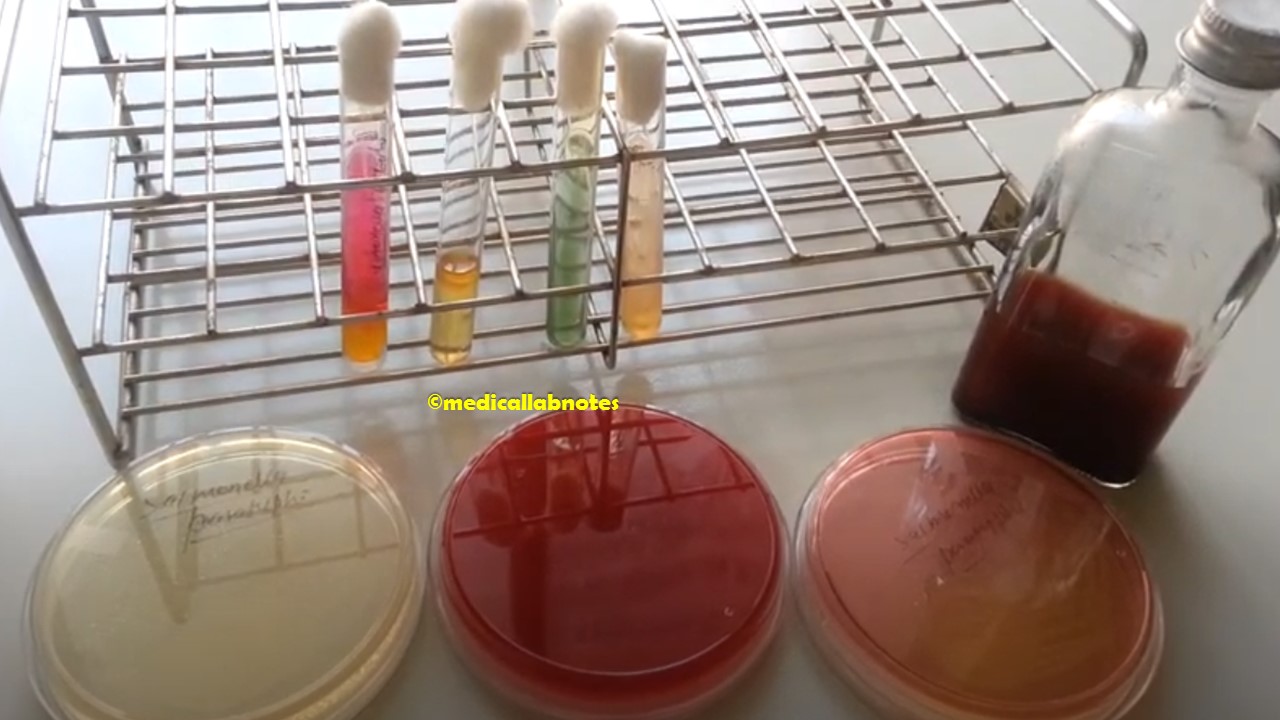
Salmonella Serovar Paratyphi growth on Nutrient agar, Blood agar, MacConkey medium, BHI broth and Biochemical reactions in TSI, SIM, citrate and urea agar

Introduction Salmonella Paratyphi (serovar) belongs to Enterobacteriaceae and thus is a Gram-negative bacterium causing mild gastroenteritis to a life-threatening bloodstream infection. It causes paratyphoid fever and it is restricted to humans. Proper sanitation and hygiene may decrease its infection chance. Travelers must be cautious during …

Read more