Proteus vulgaris: Introduction, Identification Features, Keynotes, and Proteus Footages

Dienes phenomenon of Proteus vulgaris strains

The genus Proteus was discovered in 1885 by Hauser and it is also named after a Greek god.  Proteus is a member of the family, Enterobacteriaceae and it is a Gram-negative, oxidase-negative, fimbriated, motile, non-sporing rod-shaped bacterium without capsule and having a size of 0.4–0.8 μm in diameter and …
Read more

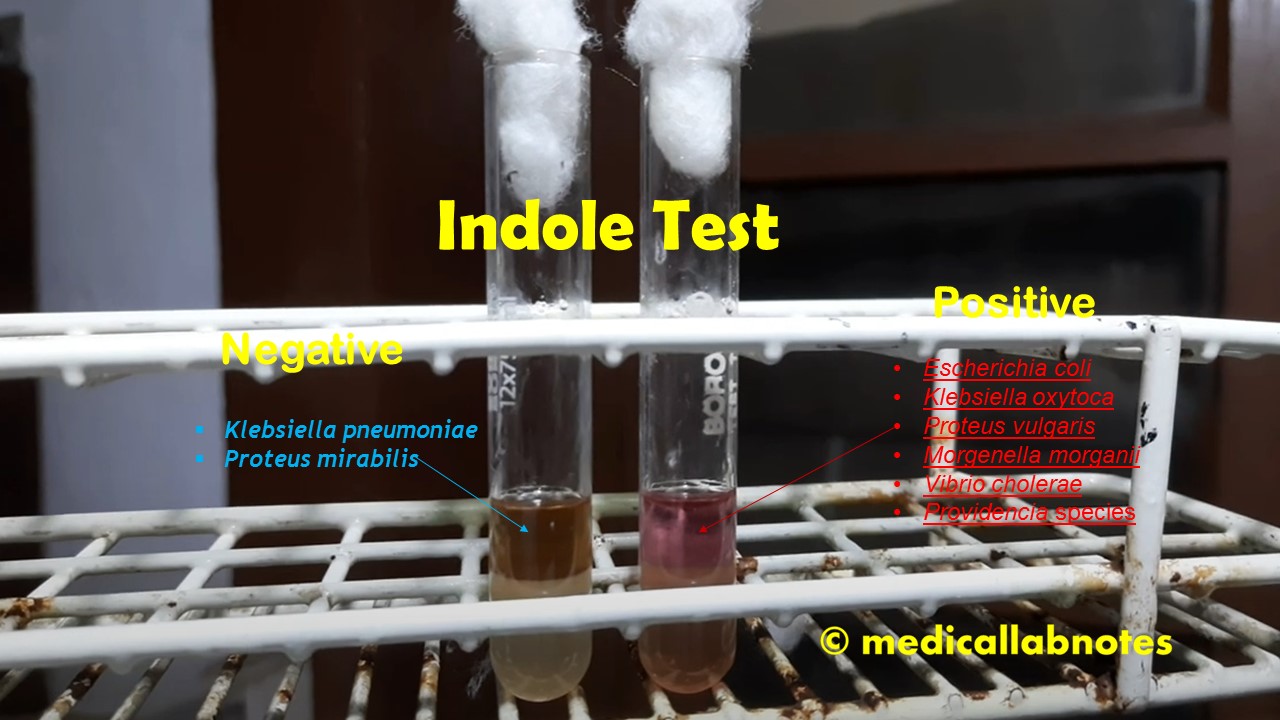
Indole test: Introduction, Principle, Test Requirements, Procedure, Result -Interpretation, and Keynotes

Indole test: Introduction, Principle, Test Requirements, Procedure, Result -Interpretation, and Keynotes

Indole Production test This indole test is useful to identify the bacteria on the basis of indole production. The list of indole-positive organisms is- Principle of Indole test The ability of an organism to split Indole from the amino acid tryptophan is due to the presence of …

Read more

Staphylococcus aureus: Introduction, Pathogenicity, Lab Diagnosis, Treatment, and Keynotes

Staphylococcus aureus: Introduction, Pathogenicity, Lab Diagnosis, Treatment, and Keynotes

Introduction of Staphylococcus aureus Scientific classification of Staphylococcus aureus is given as: Domain Bacteria Phylum Firmicutes Class Bacilli Order Bacillales Family Staphylococceae Genus Staphylococcus Species aureus Table: Biological Classification of Staphylococcus aureus Staphyle means bunch and Kokko mean berry. Staphylococcus aureus was isolated by Pasteur (1880) from a pus sample. …

Read more

Lowenstein-Jensen (LJ) Medium: Introduction, Principle Composition, Preparation, Procedure, Result- Interpretation, Limitation, and Keynotes

Lowenstein-Jensen (LJ) Medium: Introduction, Principle Composition, Preparation, Procedure, Result- Interpretation, Limitation, and Keynotes

Introduction of Lowenstein-Jensen (LJ) Medium Lowenstein-Jensen (LJ) Medium is named after the surnames of  Austrian pathologist Ernst Lowenstein (1878–1950) and the Danish chemist Kai Arne Jensen (1908–1992). The etiological agent of tuberculosis is Mycobacterium tuberculosis. It requires aerobic conditions and a protein-enriched medium for culture. The short …

Read more

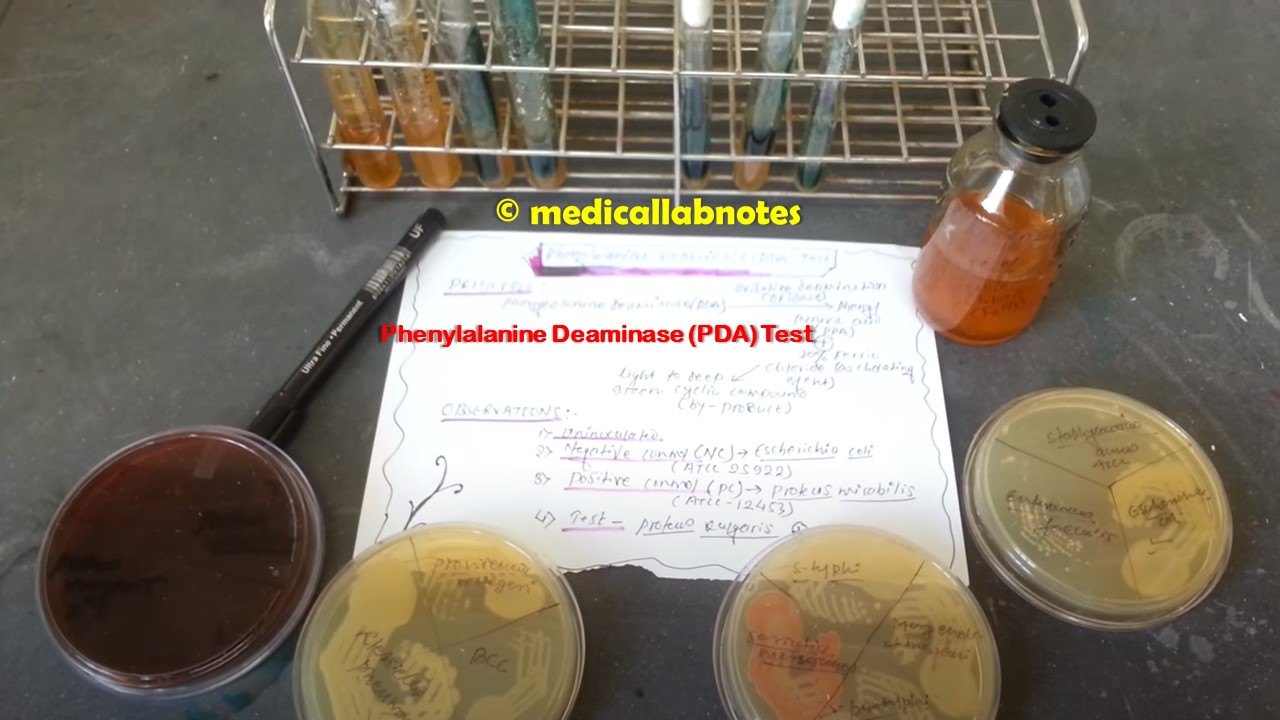
Phenylalanine Deaminase (PDA) Test: Introduction, Principle, Test Requirements, Procedure, Result- Interpretation, Keynotes, and Limitations

Phenylalanine Deaminase(PDA) Test- Introduction, Principle, Test Requirements, Procedure, Result- Interpretation, Keynotes, and Limitations

Phenylalanine Deaminase (PDA) Test PDA stands for phenylalanine deaminase and PDA tests positive and negative are as shown below footage. It is used in the differentiation of gram-negative enteric bacilli based on the ability of the microorganisms to produce phenyl pyruvic acid by oxidative deamination. The deamination of …

Read more

VITEK 2 Compact and VITEK MS: Introduction, Differences and Keynotes

VITEK 2 Compact System: Introduction, Testing Requirements, Testing Procedure, Result Interpretation and Keynotes

Introduction The VITEK 2 compact system is an automated microbiology bacteria and yeasts identification and antimicrobial susceptibility system which uses biochemicals for microbial identification whereas, VITEK MS performs the same function by covering a large number of microbes in a short time period at a …

Read more

Enterococcus faecalis: Introduction, Keynotes, and Related Footage

Enterococcus faecalis in CLED medium, blood agar, Gram staining, MacConkey medium without bile salt and cystal violet and bile esculin test

Introduction Enterococcus faecalis (previously identified as Streptococcus faecalis) is a Gram-positive coccus in singles, pairs, and even short chains which is a commensal member of the gut microbiota of a wide range of microbes. With the advent of antibiotic therapy, it has emerged as a …

Read more

Enterobacter aerogenes: Introduction, Identification Features, Keynotes, and Enterobacter aerogenes Footages

Enterobacter aerogenes: Introduction, Identification Features, Keynotes, and Enterobacter aerogenes Footages

Introduction Enterobacter aerogenes is a Risk Group 2 organism and is responsible for nosocomial infection, human and animal diseases and normally present in the gut of vertebrates and also in the environment and thus it may be the organism of concern for on health scheme. …

Read more