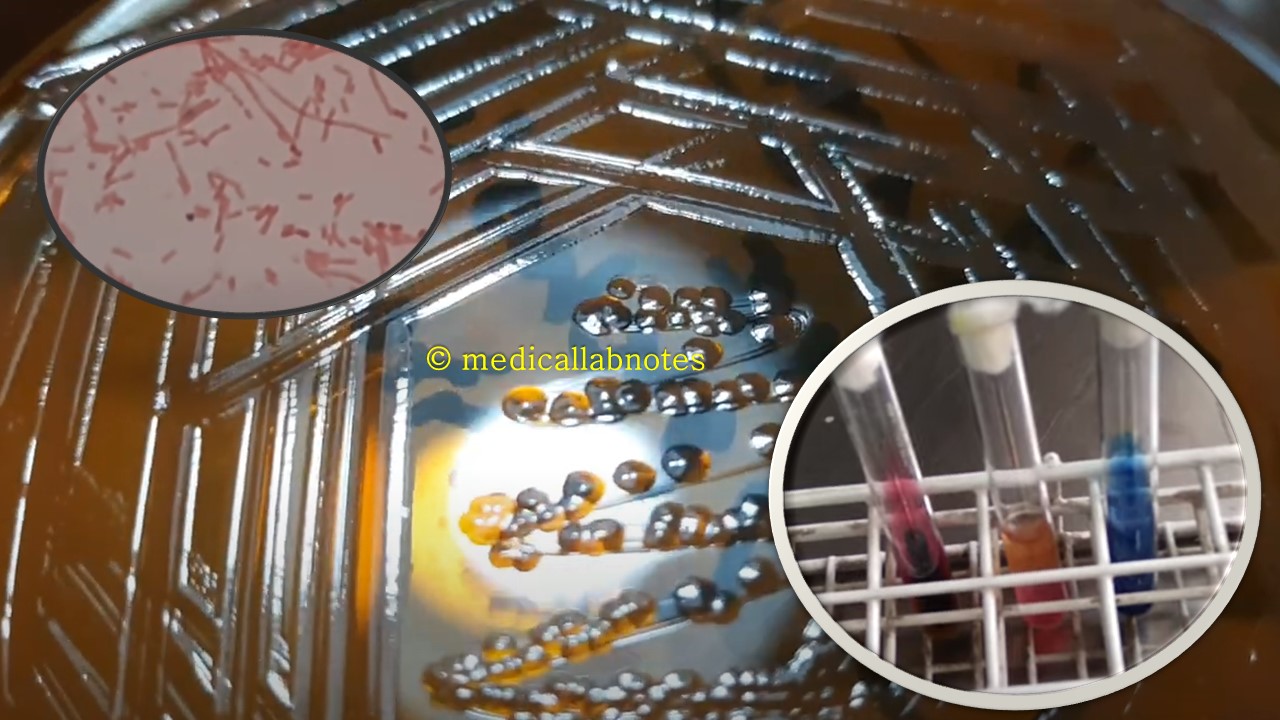
Biochemical Test of Gram-Negative Bacteria: Introduction, Common Tests, List of Organisms, Keynotes, and Some Related Footages

Biochemical Test of Gram-Negative Bacteria: Introduction, Common Tests, List of Organisms, Keynotes, and Some Related Footages

Introduction of Biochemical Test of Gram-Negative Bacteria Gram-negative bacteria are the most common etiological agents which are responsible for bacterial infections as well as viral co-infections. Clinical Microbiology Laboratory generally becomes busy due to those isolates. The need for ‘Biochemical Test of Gram-Negative Bacteria’ is …

Read more

Bacterial Video Clips: Introduction, List of Bacteria, and Bacterial Footages with Short Description

Bacterial Video Clips: Introduction, List of Bacteria, and Bacterial Footages with Short Description

Introduction of Human Bacteria Video Clips ‘Bacterial Video Clips’ is a genuine bacterial video footage collection and it is collected by the author. No doubt, it will boost your bacterial journey of study more clearly and practically. List of Bacteria Bacterial Footages with Short Description …

Read more

Citrobacter freundii: Introduction, Identification Features, and keynotes

Citrobacter freundii colony characteristics on CLED agar of Urine Culture

Introduction of Citrobacter freundii Citrobacter freundii is a member of the family, Enterobacteriaceae and it is a Gram-negative bacillus, non-sporing, non-encapsulated, aerobic, or facultative anaerobe that causes various types of infections of the urinary tract, respiratory tract, peritoneum, liver, bone, endocardium, intestines, soft tissue, meninges, …

Read more

Salmonella Typhi: Introduction, Identification Features, Keynotes, and Salmonella Footages

Salmonella Typhi growth on MacConkey, Gram stained image, biochemical tests and Salmonella Typhi and S. Paratyphi on XLD agar

Introduction of Salmonella Typhi Salmonella Typhi is a member of the family, Enterobacteriaceae and it is a Gram-negative bacillus, non-sporing, non-encapsulated, aerobic, or facultative anaerobe of size 2 to 4 × 0.6 µm that causes enteric fever (typhoid fever) and food poisoning or gastroenteritis. Biochemical …

Read more

Vibrio cholerae: Introduction, Identification Features, Keynotes, and Vibrio Footages

Vibrio cholerae: Introduction, Identification Features, Keynotes, and Vibrio Footages

Introduction The genus, Vibrio is a member of the family, Vibrionaceae and the most common human pathogens are Vibrio cholerae, V. parahaemolyticus, and V. vulnificus. Vibrio cholerae is a species of Gram-negative, motile, non-sporing, and non-capsulated, facultative anaerobe and comma-shaped bacterium. It is a ubiquitous …

Read more

Hemolysis and Hemodigestion: Introduction, Differences, and Related Footages

Hemolysis and Hemodigestion- Introduction, Differences, and Related Footages

Introduction of Hemolysis and Hemodigestion When the pure isolated colony of organism on a blood agar plate is exposed in bright transmitted light, we differentiate between hemolysis and hemodigestion since hemolysis is the process of killing blood cells by bacteria, and the area surrounding a …

Read more

Pseudomonas aeruginosa: Introduction, Identification Features, Keynotes, and Pseudomonas Footages

Pseudomonas aeruginosa: Introduction, Identification Features, Keynotes, and Pseudomonas Footages

Introduction of Pseudomonas aeruginosa Pseudomonas aeruginosa is a widely distributed environment like in soil and water, Gram-negative rods, aerobic, motile due to having a polar flagellum, non-sporing, non- capsulated but many strains have mucoid slime layer, produce water-soluble pigments and opportunistic pathogens of size 1.5 – …

Read more

Proteus mirabilis: Introduction, Identification Features, Keynotes, and Proteus Footages

Proteus mirabilis-Introduction, Identification Features, Keynotes, and Proteus Footages

Introduction of Proteus mirabilis The genus Proteus was discovered in 1885 by Hauser and it is also named after a Greek god.  Proteus is a member of the family, Enterobacteriaceae and it is a Gram-negative, oxidase-negative, fimbriated, motile, non-sporing rod-shaped bacterium without capsule and having a size …

Read more