Gene Sequencing: Introduction, and Frequently Asked Questions (FAQs)
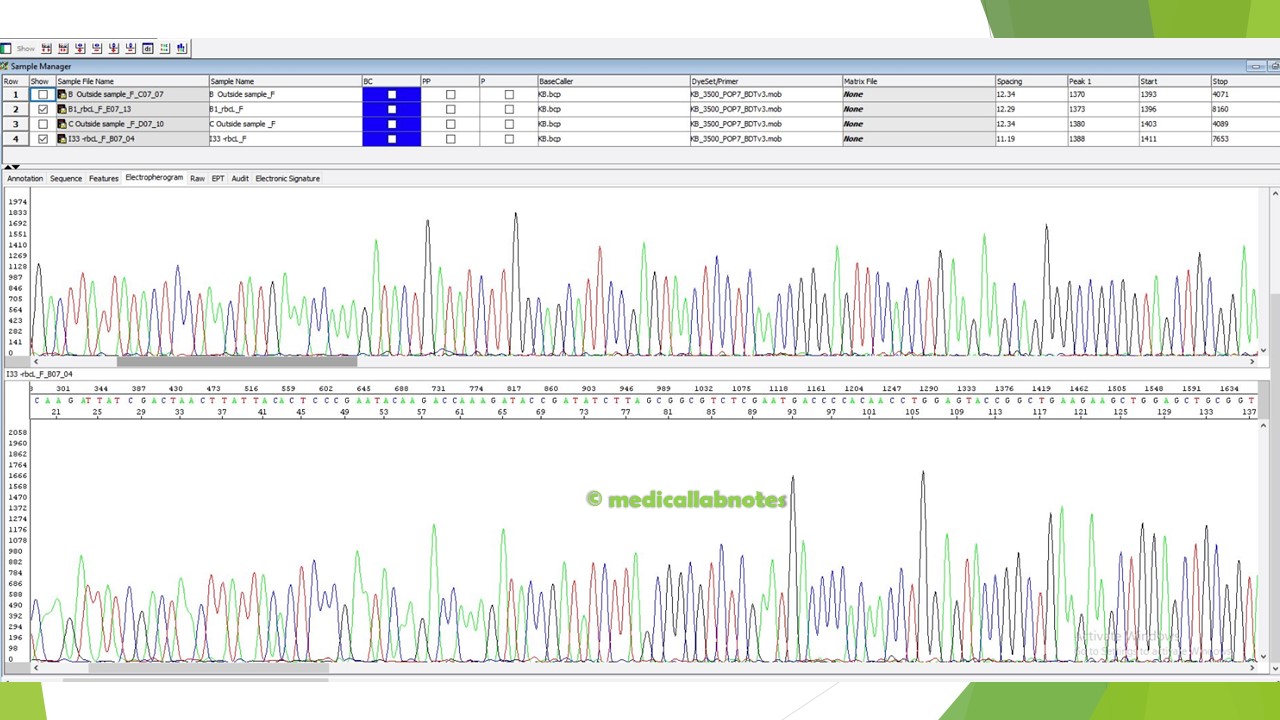
Cryptococcus Sequencing

Introduction of Gene Sequencing Deoxyribonucleic acid (DNA) sequencing is the process of finding out the nucleic acid sequence – the order of nucleotides in DNA. It includes any method or technology (Sanger/Next-generation sequencing) that is used to find out the order of the four bases …
Read more

Molecular Diagnostics Laboratory: Introduction, List of Tests, Specimen,Testing Method, and Keynotes

Molecular Diagnostics Laboratory: Introduction, List of Tests, Specimen,Testing Method, and Keynotes

Introduction of Molecular Diagnostics Laboratory As we know, simple diseases are due to either metabolic disorders or infectious agents (bacteria, viruses, fungi, parasites, prions). Molecular Diagnostics is a powerful tool for the identification of both conditions at genetic levels (e.g. metabolic disorders like cancer, and …

Read more

Human Papillomavirus (HPV) Genes detection using Real-Time PCR: Introduction, Principle, Test Requirements, Procedure, Result Interpretation and Keynotes

Interpretation of Test Results for Human Papillomavirus (HPV) Genes Detection 

 Introduction of Human Papillomavirus (HPV) Genes Detection Human papillomaviruses (HPV) are small double-stranded (ds) DNA viruses that belong to the family of Papillomaviridae. having a circular genome of the size of approximately 7.9-kilobases. There are more than 100 types of HPV that have been identified, …

Read more

Negative Pressure HEPA Filtration Unit for Isolation Rooms and Other High Risk Areas: Introduction, Parts of Instrument/Unit, Working Mechanisms, Applications and Keynotes

Negative Pressure HEPA Filtration Unit for Isolation Rooms and Other High Risk Areas Introduction, Parts of InstrumentUnit, Working Mechanisms, Applications and Keynotes

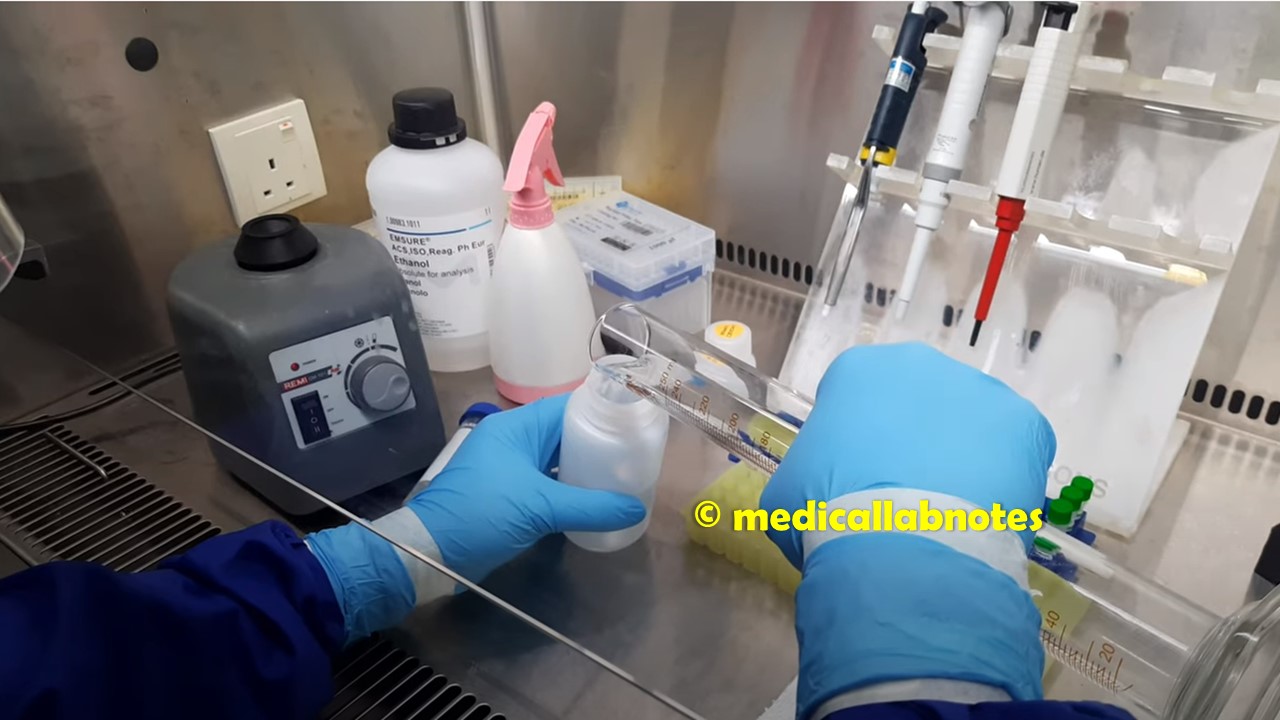
Introduction “Negative Pressure HEPA Filtration Unit” is useful for hospital (isolation ward that keeps patients with infectious illnesses or immunocompromised individuals who are susceptible to infections from others, away from other patients, visitors, and healthcare workers) and molecular laboratory (Sample Aliquoting and RNA Extraction Room …

Read more

Abbott ID Now for Rapid COVID-19 Point of Care Testing: Introduction, Principle, Test Requirements, Testing Procedure, and Result Interpretation and Keynotes

Abbott ID Now for Rapid COVID-19 Point of Care Testing: Introduction, Principle, Test Requirements, Testing Procedure, and Result Interpretation and Keynotes

Introduction of Abbott ID Now for Rapid COVID-19 Point of Care Testing The ID Now (Abbott) COVID-19 Test performed on the ID Now Instrument is a rapid molecular in vitro diagnostic test utilizing an isothermal nucleic acid amplification technology for the qualitative detection and discrimination …

Read more

COVID-19 PCR Laboratory Setup: Introduction, Design, Test Requirements, Laboratory Practices, Decontamination Approaches, Validation/Verification Study, Quality Control Plan, quality Indicator, Proficiency Testing, and Keynotes

COVID-19 PCR Laboratory Setup Introduction, Design, Test Requirements, Testing Procedure Sample, Result Interpretation, and Keynotes

Introduction of COVID-19 PCR Laboratory COVID-19 PCR Laboratory is the most common laboratory which was used in the COVID-19 pandemic for the diagnosis of COVID-19 (detecting genes of SARS-CoV-2) as well as prognosis COVID patients. To my knowledge, there is no country where there is …

Read more

LAMP and PCR: Introduction, Differences, and Keynotes

LAMP vs PCR: Introduction, Differences, and Keynotes

Introduction LAMP stands for Loop-mediated Isothermal Amplification while PCR full form is polymerase chain reaction and LAMP is the nucleic acid amplification assay. The lamp is a newer technique whereas PCR is older. The LAMP is comparatively more efficient and cost-effective than PCR testing. Differences …

Read more

Antigen Versus PCR for SARS-CoV-2: Introduction, Principle, Differences, and Keynotes

Abbott sars-cov-2 antigen test

Introduction of Antigen Versus PCR for SARS-CoV-2 Antigen and PCR tests in COVID-19 patients are the most common assays applicable for laboratory diagnosis of COVID-19 caused by a virus, severe acute respiratory syndrome coronavirus 2 (SARS‑CoV‑2). The antigen is a foreign substance that induces an …

Read more