
Introduction
Table of Contents
Viral Nucleic Acid Extraction Kits are specialized laboratory tools used to isolate high-quality viral DNA and RNA from biological samples. These kits streamline the process of breaking open viral capsids, removing contaminants like proteins and lipids, and recovering purified genetic material for downstream molecular applications.
Principle of Extraction
Commercial kits rely primarily on two solid-phase extraction technologies to isolate viral genetic material:
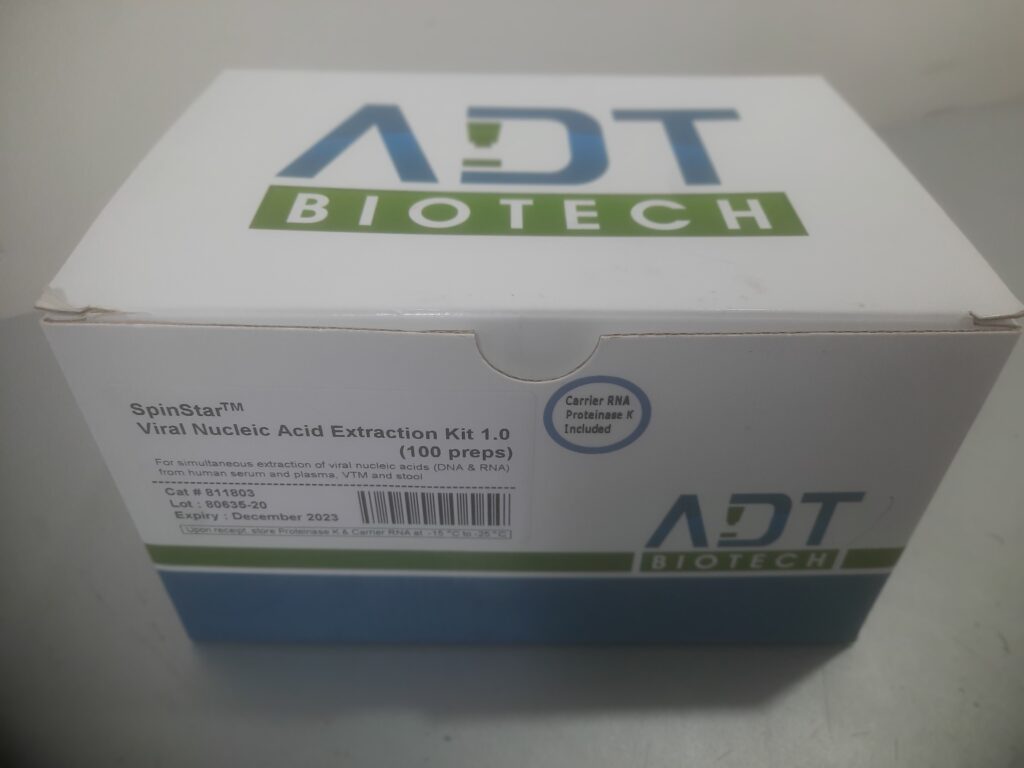
1. Silica Membrane Spin Columns
- Binding: Lysis buffers contain chaotropic salts (such as guanidine thiocyanate) that disrupt the viral envelope/capsid and force nucleic acids to bind selectively to a silica membrane.
- Washing: Centrifugation moves impurities through the column while the DNA/RNA remains locked to the membrane.
- Elution: Low-salt buffers or nuclease-free water alter the chemical environment, releasing the bound viral nucleic acids.
2. Magnetic Beads
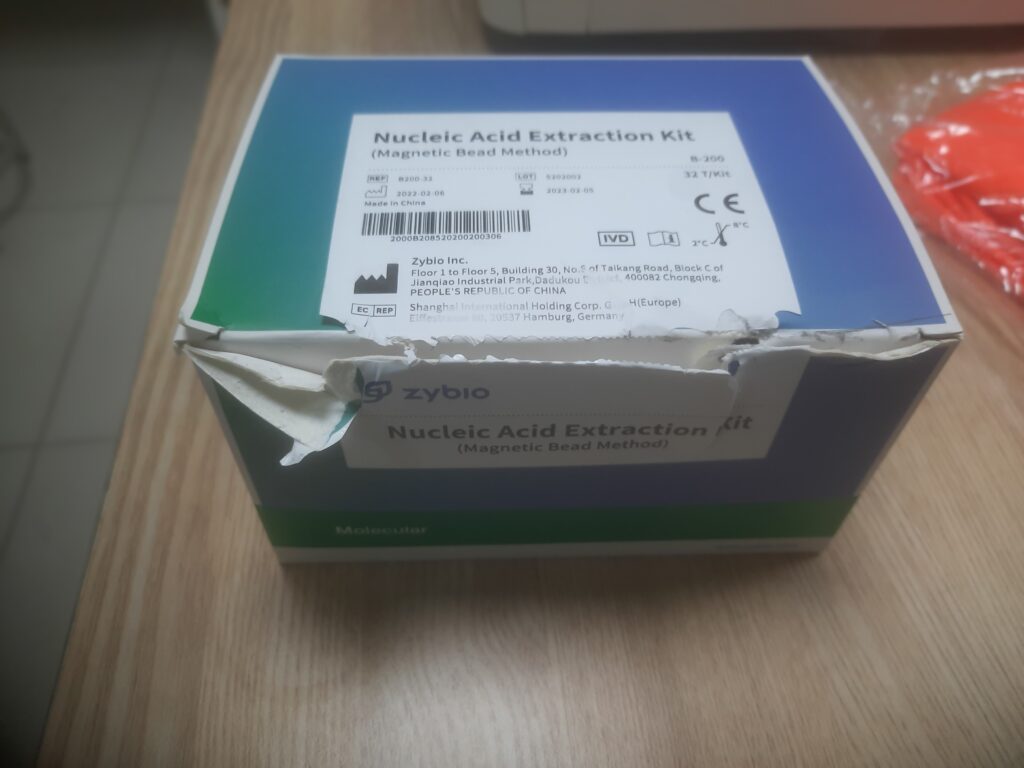
- Binding: Paramagnetic beads coated with silica or specific functional groups bind to the nucleic acids in the presence of a binding buffer.
- Separation: An external magnetic field immobilizes the beads, allowing the supernatant containing waste to be drawn off.
- Washing & Elution: Beads are washed while held by the magnet and then transferred to an elution buffer where the genetic material is released. This method is highly favored for automated, high-throughput workflows.
Common Procedure
While workflows vary slightly by manufacturer (such as Qiagen or Thermo Fisher Scientific), they follow five foundational steps:
Sample Preparation➔ Cell/Viral Lysis ➔Nucleic Acid Binding➔ Washing➔ Elution
- Sample Preparation: Mixing biological fluids (serum, plasma, or swab fluid) with carrier RNA to protect the trace amounts of viral targets from degradation.
- Lysis: Adding a lysis buffer containing detergents and Proteinase K to digest viral capsids and inactivate cellular nucleases.
- Binding: Mixing the lysate with ethanol or isopropanol to optimize binding conditions before passing it through a column or mixing it with magnetic beads.
- Washing: Applying sequential wash buffers to strip away residual proteins, cellular debris, salts, and extraction inhibitors.
- Elution: Adding a small volume of sterile, nuclease-free water or TE buffer to collect the purified viral DNA/RNA.
Applications
Purified viral genetic material is critical for fields demanding absolute accuracy:
- Clinical Diagnostics: Running qPCR and RT-PCR tests to identify infections like Influenza, HIV, Hepatitis, and SARS-CoV-2.
- Epidemiology & Surveillance: Processing samples for Next-Generation Sequencing (NGS) to track viral mutations and variants.
- Virology Research: Investigating viral replication, gene expression profiles, and viral load quantification.
- Blood Screening: Assaying donated blood products to ensure they are free of blood-borne viral pathogens.
Keynotes
- Carrier RNA: Always use carrier RNA during extraction; viral loads can be incredibly low, and carrier RNA acts as a shield against trace RNases while boosting precipitation yields.
- RNase-Free Environment: Viral RNA is exceptionally fragile. Use dedicated pipettes, barrier tips, and decontamination sprays (like RNase AWAY) to prevent sample degradation.
- Complete Ethanol Removal: Ensure spin columns are spun completely dry before elution. Residual ethanol carried over into the final tube will inhibit downstream PCR enzymes.
- Sample Input Controls: Avoid overloading columns or beads with too much biological sample; excess cellular debris clogs filters, limits binding sites, and lowers final purity.
Further Readings
- https://worldwide.promega.com/resources/technologies/lab-automation-resource-center/how-to-automate-viral-nucleic-acid-extraction/
- https://pmc.ncbi.nlm.nih.gov/articles/PMC7122149/
- https://www.rocker.com.tw/en/application/nucleic_acid_extraction/
- https://www.thermofisher.com/fr/en/home/life-science/dna-rna-purification-analysis/viral-rna-dna-purification.html
- https://firegene.com/blogs/news/viral-dna-rna-extraction-kit-selection-guide?srsltid=AfmBOoqxtoUYHI0_wZ_-XXj914815kko0ZfnyoBd7Ri1pg0vsmfQJKs4
- https://bitesizebio.com/13516/how-dna-extraction-rna-miniprep-kits-work/
- https://onlinelibrary.wiley.com/doi/10.1155/ipid/5579320
- https://aelabgroup.com/nucleic-acid-extraction-purification-complete-guide/