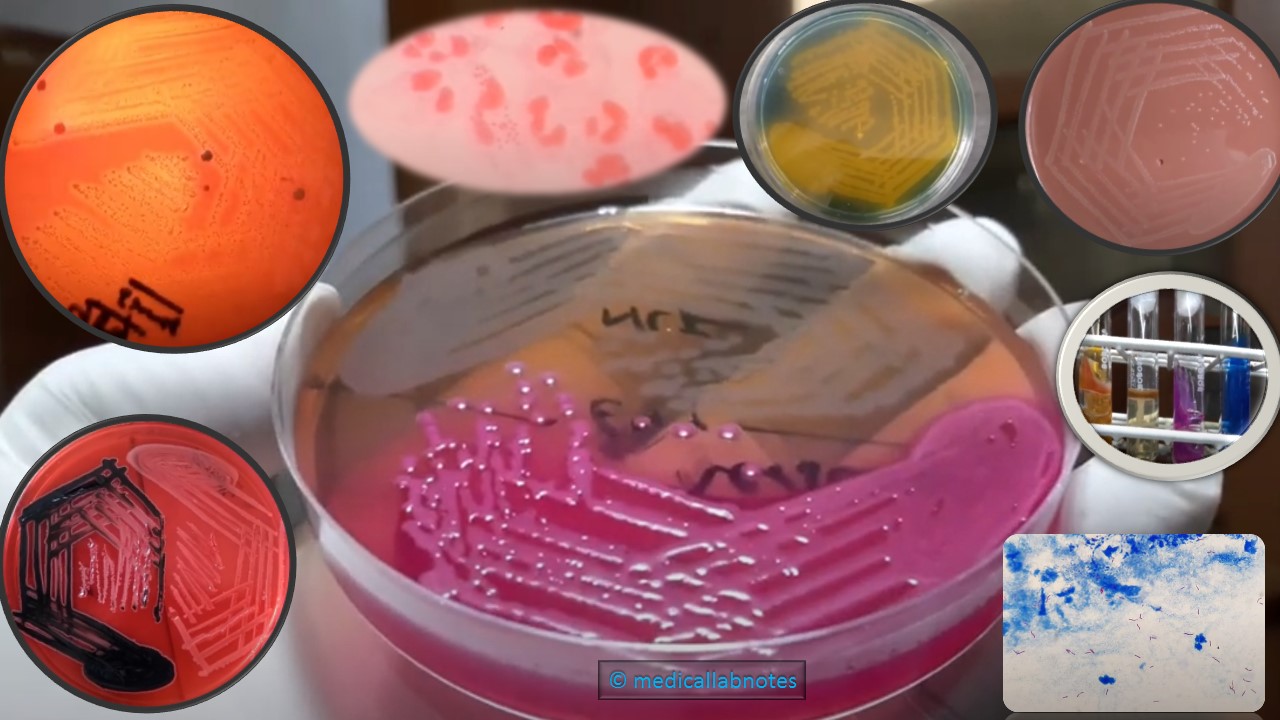
Vibrio cholerae: Introduction, Identification Features, Keynotes, and Vibrio Footages

Vibrio cholerae: Introduction, Identification Features, Keynotes, and Vibrio Footages

Introduction The genus, Vibrio is a member of the family, Vibrionaceae and the most common human pathogens are Vibrio cholerae, V. parahaemolyticus, and V. vulnificus. Vibrio cholerae is a species of Gram-negative, motile, non-sporing, and non-capsulated, facultative anaerobe and comma-shaped bacterium. It is a ubiquitous …

Read more

Pseudomonas aeruginosa: Introduction, Identification Features, Keynotes, and Pseudomonas Footages

Pseudomonas aeruginosa: Introduction, Identification Features, Keynotes, and Pseudomonas Footages

Introduction of Pseudomonas aeruginosa Pseudomonas aeruginosa is a widely distributed environment like in soil and water, Gram-negative rods, aerobic, motile due to having a polar flagellum, non-sporing, non- capsulated but many strains have mucoid slime layer, produce water-soluble pigments and opportunistic pathogens of size 1.5 – …

Read more

Klebsiella oxytoca: Introduction, Identification Features, Keynotes, and Footage

Klebsiella oxytoca biochemical tests in TSI, SIM, Urea and Citrate Agar Demonstration

The genus Klebsiella is from the surname of  German-Swiss microbiologist Edwin Klebs (1834–1913). Klebsiella is a member of the family, Enterobacteriaceae and it is a Gram-negative, oxidase-negative, fimbriated, non -motile, non-sporing rod-shaped bacterium with a prominent polysaccharide-based capsule and having a size of 0.5 to 0.8 µm wide …

Read more

Klebsiella pneumoniae: Introduction, Identification Features, Keynotes, and Klebsiella pneumoniae Footages

Klebsiella pneumoniae biochemical tests in TSI, SIM, Citrate and Urea agar

Introduction The genus Klebsiella is from the surname of  German-Swiss microbiologist Edwin Klebs (1834–1913). Klebsiella is a member of the family, Enterobacteriaceae and it is a Gram-negative, oxidase-negative, fimbriated, non -motile, non-sporing rod-shaped bacterium with a prominent polysaccharide-based capsule and having a size of 0.5 to 0.8 …

Read more

E. coli: Introduction, Identification Features, Keynotes, and Escherichia coli Footages

Biochemical reactions of E. coli in TSI, SIM, urea and citrate agar

Introduction of E. coli Escherichia coli is a member of the family, Enterobacteriaceae and it is a Gram-negative, aerobe, and facultative anaerobic, rod-shaped bacterium. The optimal temperature for growth is 36-37°C with most strains growing over the range 18-44 °C. It is a commensal that is found …

Read more

Serratia marcescens: Introduction, Identification Features, and Serratia Footages

Serratia marcescens colony morphology on nutrient agar, biochemical reactions and antibiogram

Introduction of Serratia marcescens Serratia is a member of the family, Enterobacteriaceae and it is a Gram-negative, facultatively anaerobic, rod-shaped lacking spore and capsule bacterium. This is a Gram-negative rod/ bacilli that thrive in moist environments. It frequently contaminates solutions and hospital equipment and the human reservoirs are …

Read more

Atlas of Bacteria: Introduction, List of Contents, and Description

Atlas of Bacteria: Introduction, List of Contents and Description

Introduction to Atlas of Bacteria The name ‘ Atlas of Bacteria’ is given even due to the vast spectrum of bacteriology but puny collection and another thing is that only an epic center collection of author authentical performance. So, please if you have benefited from …

Read more