Voges Proskauer Test: Introduction, Principle, Test Requirements, Test Procedure, Result-Interpretation, Positive and Negative Bacteria, and Limitations

Voges Proskauer Test Reagents, Negative and Positive Test Results of VP Tests

Voges-Proskauer (VP ) Test Voges Proskauer  test for identification to the species level of the following groups of organisms Principle of Voges Proskauer Test Organisms utilizing the butylene glycol pathway produce acetylmethylcarbinol (acetoin) and butanediol, neutral end products that raise the pH towards neutrality (pH …
Read more

Methyl Red Test: Introduction, Principle, Test Requirements, Test Procedure, Result-Interpretation, Positive and Negative Bacteria, and Limitations

Methyl Red Test-Positive and Negative Test Results

Introduction of Methyl Red Test The Methyl Red test is for enteric gram-negative rods, as part of identification to species level. Its short name is MR test. Principle of Methyl Red Test The methyl red (MR) test uses to determine if an organism is able …

Read more

Escherichia hermanii: Introduction, Classification, Pathogenecity, Lab Diagnosis, Treatment, and Keynotes

Escherichia hermanii colony morphology on MacConkey agar

Introduction of Escherichia hermanii Escherichia hermannii is a gram-negative rod. This bacterium belongs to the family of Enterobacteriaceae. It was first described in 1982. It had been previously known as enteric group 11 of Escherichia coli but was later reclassified as a distinct species in …

Read more

Urinary Tract Infection Caused by Kluyvera intermedia: Patient History, Introduction of Pathogen, Lab Diagnosis, AST Pattern, and Keynotes

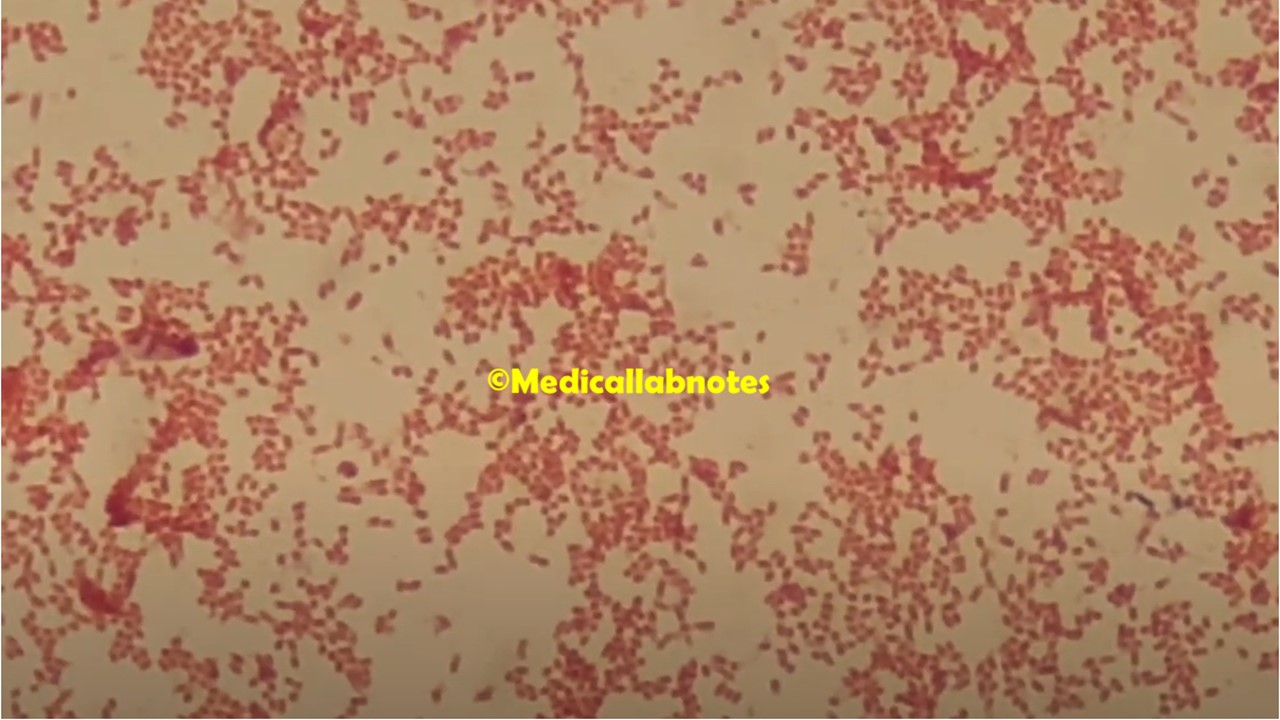
Gram Negative Rods of Kluyvera intermedia in Gram Staining of Culture

Patient History of Urinary Tract Infection Caused by Kluyvera An 80- year- old man with painful urination was requested for testing Urine Routine Examination (R/E), Complete Blood Cell (CBC) count, Thyroid stimulating hormone (TSH), Prostate-specific antigen (PSA), Liver function test (LFT), Renal function test (RFT), …

Read more

Decarboxylase Test: Introduction, Principle, Test Requirements, Procedure, Result-Interpretation, Limitations, and Keynotes

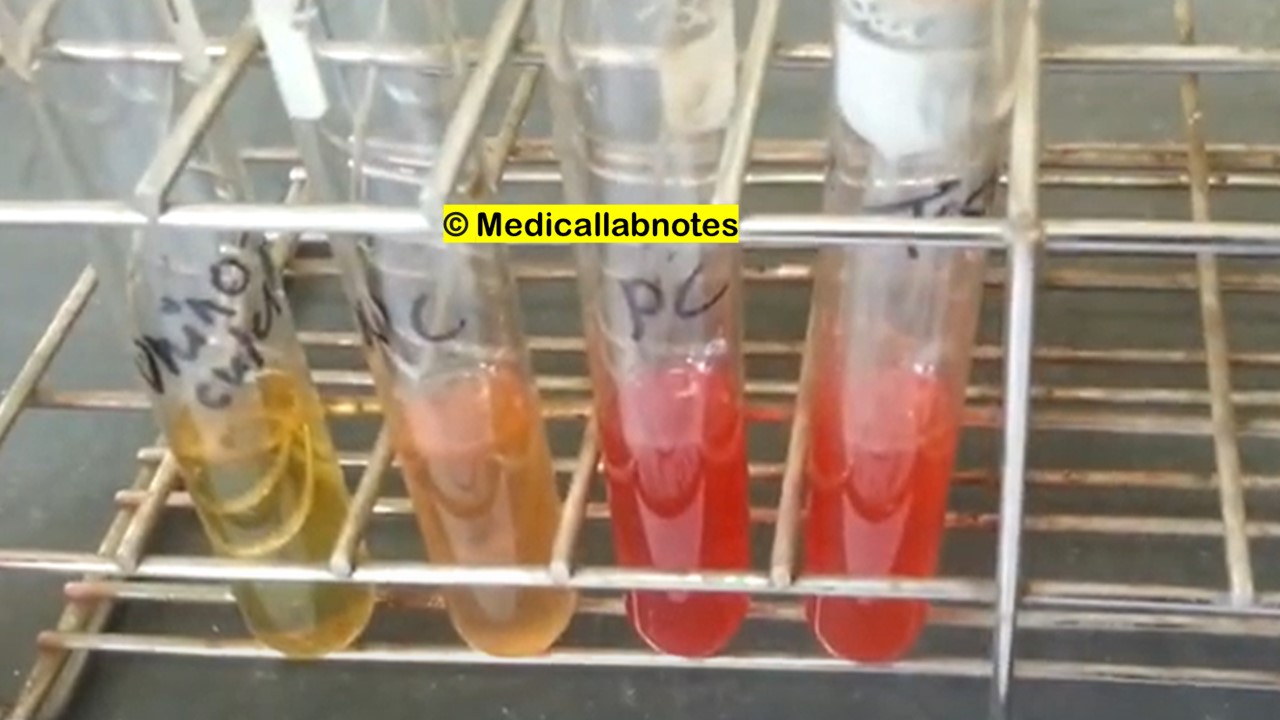
Decarboxylase Test-Positive and Negative Results Demonstration

Principle of Decarboxylase-Dihydrolase Test Lysine, ornithine, and arginine are the most common amino acids which use to detect an organism’s ability to decarboxylate or hydrolyze an amino acid in a decarboxylase medium, forming an amine that produces an alkaline pH. The basal medium for the …

Read more

Methyl-α-D-glucopyranoside (MGP) Test: Introduction, Principle, Test Requirements, Procedure, Result-Interpretation, Limitations, and Keynotes

Methyl-α-D-glucopyranoside (MGP) Test- Positive and Negative Results Demonstration

Introduction of Methyl-α-D-glucopyranoside (MGP)Test Methyl-α-D-glucopyranoside (MGP) test is effective for species identification of Enterococcus. Enterococcus gallinarum and Enterococcus casseliflavus are MGP test positive while Enterococcus faecalis and Enterococcus faecium are negative. Vancomycin-resistant Enterococcus faecium (VREF) is a serious nosocomial problem that is difficult to differentiate from  Enterococcus gallinarum and Enterococcus casseliflavus, while not important for purposes of control of …

Read more

Indoxyl Acetate Disk Test: Introduction, Principle, Test Requirements, Procedure, Result-Interpretation, Limitations, and Keynotes

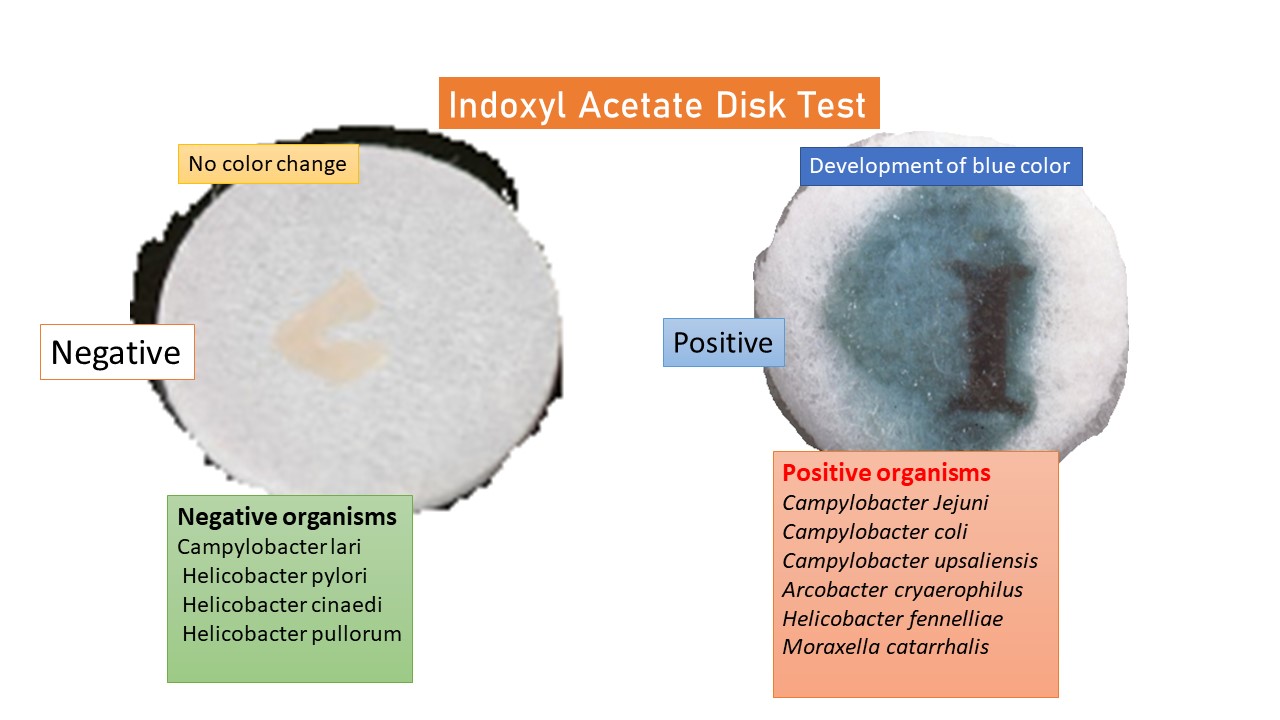
Indoxyl Acetate Disk Test-Positive and Negative Results

Introduction of Indoxyl Acetate Disk Test  Indoxyl is a tryptophan product of putrefactive decomposition in the intestines of humans by a bacterial esterase. This Indoxyl Acetate Disk test uses to distinguish Campylobacter species. Positive tests are Campylobacter jejuni and Campylobacter coli whereas Campylobacter lari and Campylobacter fetus are negative. Principle of Indoxyl Acetate Disk Assay The …

Read more

Hippurate Hydrolysis Test: Introduction, Principle, Test Requirements, Procedure, Result-Interpretation, Limitations, and Keynotes

Hippurate Hydrolysis Test-Positive and Negative Results

Introduction of Hippurate Hydrolysis Test The Hippurate Hydrolysis Test is applied to determine the ability of the organism to produce hippuricase which hydrolyzes the substrate hippurate. It is useful in the identification of Streptococcus agalactiae, Campylobacter jejuni, Listeria monocytogenes, and Gardnerella vaginalis.  Principle of the Test The end products …

Read more