
Introduction
Table of Contents
- Classification: Belongs to the family Enterobacteriaceae.
- Habitat: Widely found in soil, water, plants, and damp environments (like bathrooms).
- Nature: Opportunistic pathogen that thrives in moist hospital environments.
- Significance: Frequently causes nosocomial (hospital-acquired) outbreaks.
Morphology
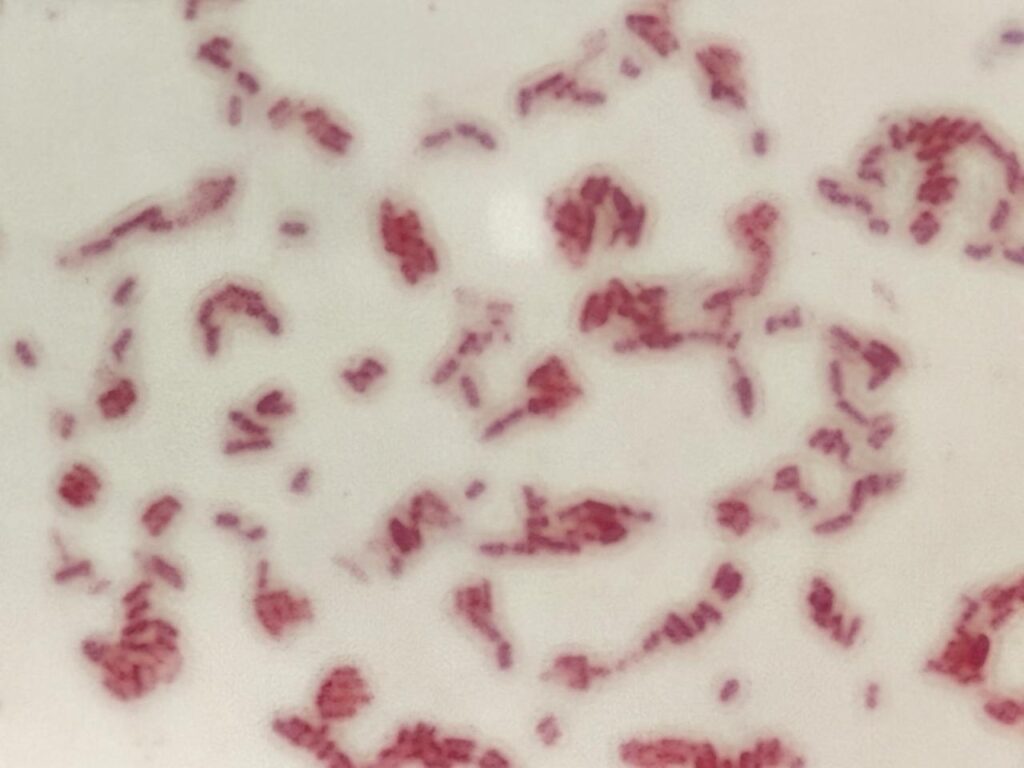
- Gram Stain: Gram-negative.
- Shape: Bacillus (rod-shaped).
- Motility: Motile via peritrichous flagella.
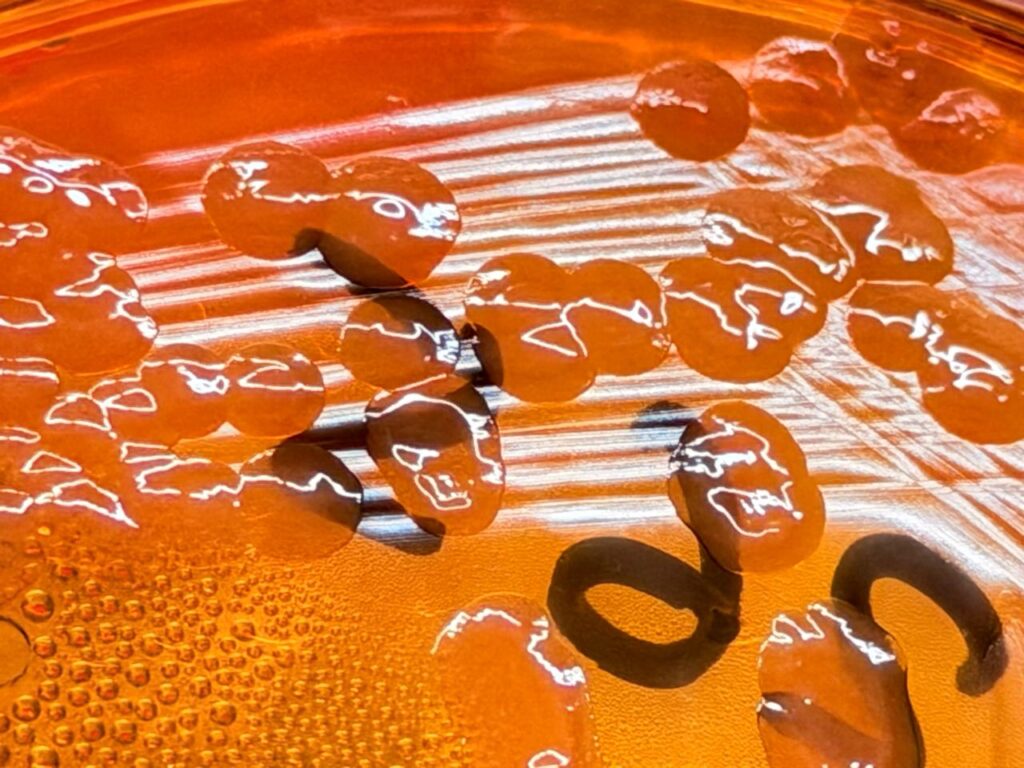
- Pigmentation: Some strains produce a dark red/pink pigment called prodigiosin.
- Temperature: Pigment production is optimal at room temperature (25°C) and decreases at 37°C.
- Spores: Non-spore-forming.
Pathogenicity
- Transmission: Spread via hand-to-hand contact by healthcare workers or contaminated medical devices.
- Infections: Cause urinary tract infections (UTIs), respiratory tract infections, wound infections, and sepsis.
- Vulnerable Groups: Affects intensive care unit (ICU) patients, newborns, and the immunocompromised.
- Biofilms: Forms strong biofilms on indwelling medical devices like catheters and intravenous lines.
- Virulence Factors: Secretes extracellular enzymes including DNase, lipase, and gelatinase.
Lab Diagnosis
- Specimen: Urine, sputum, blood, wound swabs, or intravenous catheter tips.
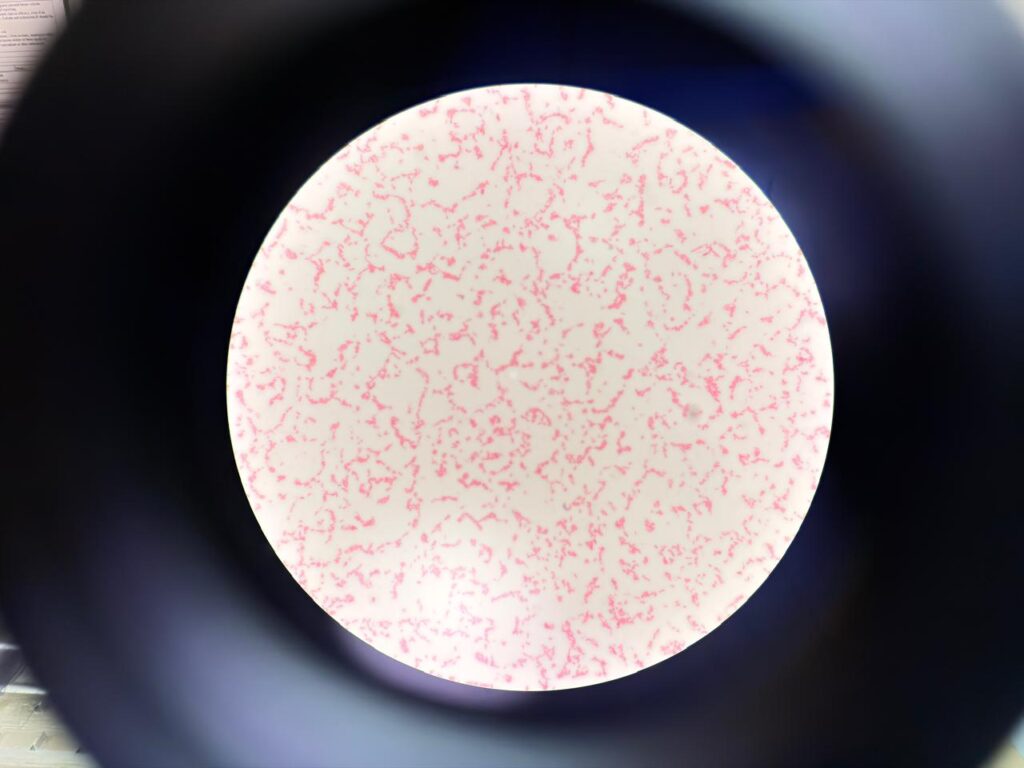
- Microscopy: Gram-negative rods with no specific structural arrangement.
- Culture: Grows well on Nutrient Agar and MacConkey Agar.
- Colony Appearance: Non-lactose-fermenting colonies on MacConkey; may show red/pink coloration if prodigiosin is produced.
- Biochemical Profile: Catalase positive, Oxidase negative, Citrate positive, and Indole negative.
- Key Differentiation: Rapidly hydrolyzes DNA (DNase positive), gelatin (gelatinase positive), and lipids (lipase positive).
Treatment
- Resistance: Intrinsic resistance to many common antibiotics, including ampicillin, first-generation cephalosporins, and macrolides.
- AmpC Beta-Lactamase: Carries inducible chromosomal AmpC genes that can lead to resistance during treatment.
- First Line: Fluoroquinolones (like ciprofloxacin), carbapenems (like meropenem), or fourth-generation cephalosporins (cefepime).
- Susceptibility: Strict reliance on culture and sensitivity testing due to multi-drug resistance (MDR) risks.
Prevention
- Hand Hygiene: Strict adherence to handwashing and sanitizing protocols in healthcare settings.
- Sterilization: Thorough disinfection of medical equipment, respirators, and endoscopes.
- Catheter Care: Timely removal and aseptic management of indwelling urinary and central venous catheters.
- Environmental Control: Keeping sinks, showers, and liquid soap dispensers clean, as bacteria thrive in damp areas.
Keynotes
- Red Pigment: Prodigiosin acts as a visual marker for environmental colonization, often resembling “pink mold” in bathrooms.
- Historical Fact: Once considered non-pathogenic, it was used in the 1950s biological warfare experiment “Operation Haze” to track aerosol dispersion.
- Serratia-Induced UTI: Often associated with long-term catheterization.
- Enzyme Triad: Uniquely positive for DNase, lipase, and gelatinase, differentiating it from most other Enterobacteriaceae.
Further Readings
- https://pmc.ncbi.nlm.nih.gov/articles/PMC12691863/
- https://www.scribd.com/presentation/93977951/Serratia-marcescens
- https://www.sciencedirect.com/topics/medicine-and-dentistry/serratia-infection
- https://pmc.ncbi.nlm.nih.gov/articles/PMC12290430/
- https://www.researchgate.net/profile/Patrick_Grimont/publication/226092360_The_Genus_Serratia/links/0c960531489b4c2785000000/The-Genus-Serratia.pdf
- https://pmc.ncbi.nlm.nih.gov/articles/PMC3592283/
- https://quiplabs.com/serratia-marcescens/
- https://pmc.ncbi.nlm.nih.gov/articles/PMC4231636/
- https://www.ijcmas.com/7-2-2018/K.%20Sharanya,%20et%20al.pdf
- https://ispub.com/print/7865
- https://biologyjournal.in/assets/archives/2022/vol7issue4/7-3-26-400.pdf
- https://www.sciencephoto.com/media/10875/view/serratia-marcescens-bacteria
- https://www.jmb.or.kr/journal/view.html?uid=6678&vmd=Full