
Introduction
Table of Contents
Klebsiella aerogenes (formerly Enterobacter aerogenes) is an opportunistic Gram-negative, facultative anaerobic bacterium responsible for serious healthcare-associated infections (HAIs), including bloodstream infections and pneumonia. It is highly associated with antibiotic resistance (including XDR strains) and poor clinical outcomes.
- Reclassification: Previously known as Enterobacter aerogenes, it was reclassified to the Klebsiella genus in 2017 based on phylogenetic evidence.
- Habitat: Commonly found in the human gastrointestinal tract, soil, and waste.
- Clinical Significance: Primarily an opportunistic pathogen causing infections like septicemia, pneumonia, and urinary tract infections (UTIs) in hospitalized patients.
Morphology
- Shape: Short, plump, Gram-negative rods (bacilli).
- Capsule: Possesses a prominent capsule, which is a major virulence factor protecting against phagocytosis.
- Motility: Unlike many Enterobacteriaceae, K. aerogenes is generally non-motile.
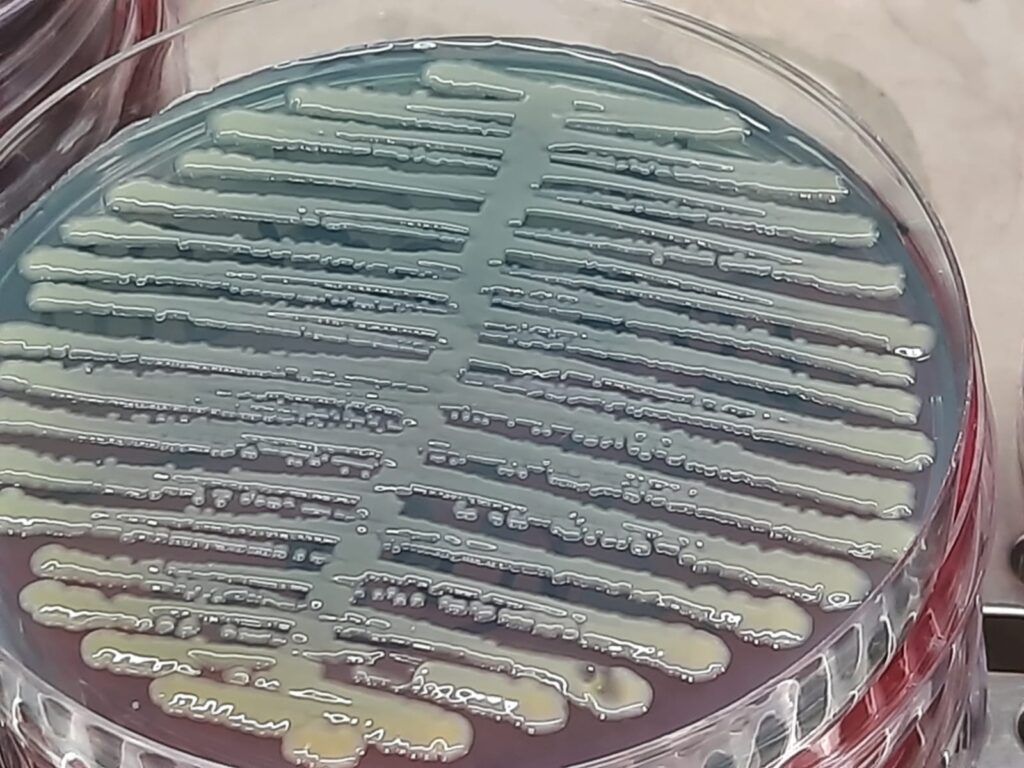
- Colony Characteristics: On MacConkey agar, it produces large, mucoid, pink/red colonies due to lactose fermentation and capsular polysaccharide production.
Pathogenicity & Virulence Factors
- Nosocomial Infections: Frequently cause infections in patients with compromised immunity, venous catheters, or those undergoing surgical procedures.
- Virulence Factors:
- Capsule: Protects against phagocytosis and serum killing.
- Adhesins: Fimbriae help in adhering to host mucosal surfaces.
- Siderophores: Iron uptake systems that enable survival in host tissues.
- Antibiotic Resistance: Often exhibits inducible resistance mechanisms (e.g., lactamase).
Lab Diagnosis
- Specimen Collection: Blood, urine, sputum, or wound swabs, depending on the infection site.
- Microscopy: Gram staining shows Gram-negative rods.
- Culture: Grows well on MacConkey and Nutrient agar.
- Biochemical Tests:
- IMViC: Typically, Indole (-), MR (-), VP (+), Citrate (+).
- Fermentation: Ferments lactose with the production of acid and gas.
- Molecular Methods: Real-time PCR (qPCR) is used for rapid, specific detection of resistance genes and identification.
Treatment
- Susceptibility: Treatment must be guided by antimicrobial susceptibility testing due to widespread resistance.
- Antibiotics: Often resistant to standard antibiotics. Treatment often involves carbapenems, though resistance is emerging.
- Management: Requires removal of infected devices (e.g., catheters).
Prevention
- Infection Control: Strict adherence to hand hygiene is crucial to prevent spread in hospitals.
- Surface Disinfection: Use disinfectants like hydrogen peroxide and bleach to treat contaminated surfaces.
- Environmental Monitoring: Monitoring hospital environments to minimize outbreaks.
Keynotes
- K. aerogenes is associated with higher mortality rates in bloodstream infections compared to other Enterobacter species.
- It is a well-known producer of hydrogen gas, having industrial applications.
- Klebsiella aerogenes is increasingly recognized for being extensively drug-resistant (XDR).
Further Readings
- https://link.springer.com/article/10.1007/s10096-017-3160-z
- https://www.ncbi.nlm.nih.gov/books/NBK13792/
- https://en.wikipedia.org/wiki/Klebsiella_aerogenes
- https://emedicine.medscape.com/article/219907-medication
- https://emedicine.medscape.com/article/219907-medication
- https://aeroclave.com/how-to-kill-and-protect-yourself-from-klebsiella-aerogenes
- https://www.researchgate.net/publication/328828750_Klebsiella_spp_as_a_pathogen_Epidemiology_pathogenesis_identification_treatment_and_prevention
- https://www.mdpi.com/2076-2607/14/2/292
- https://link.springer.com/article/10.1186/s12866-025-03942-4
- https://www.researchgate.net/publication/385203864_Klebsiella_Pneumoniae_-_Taxonomy_Occurrence_Identification_Virulence_Factors_and_Pathogenicity