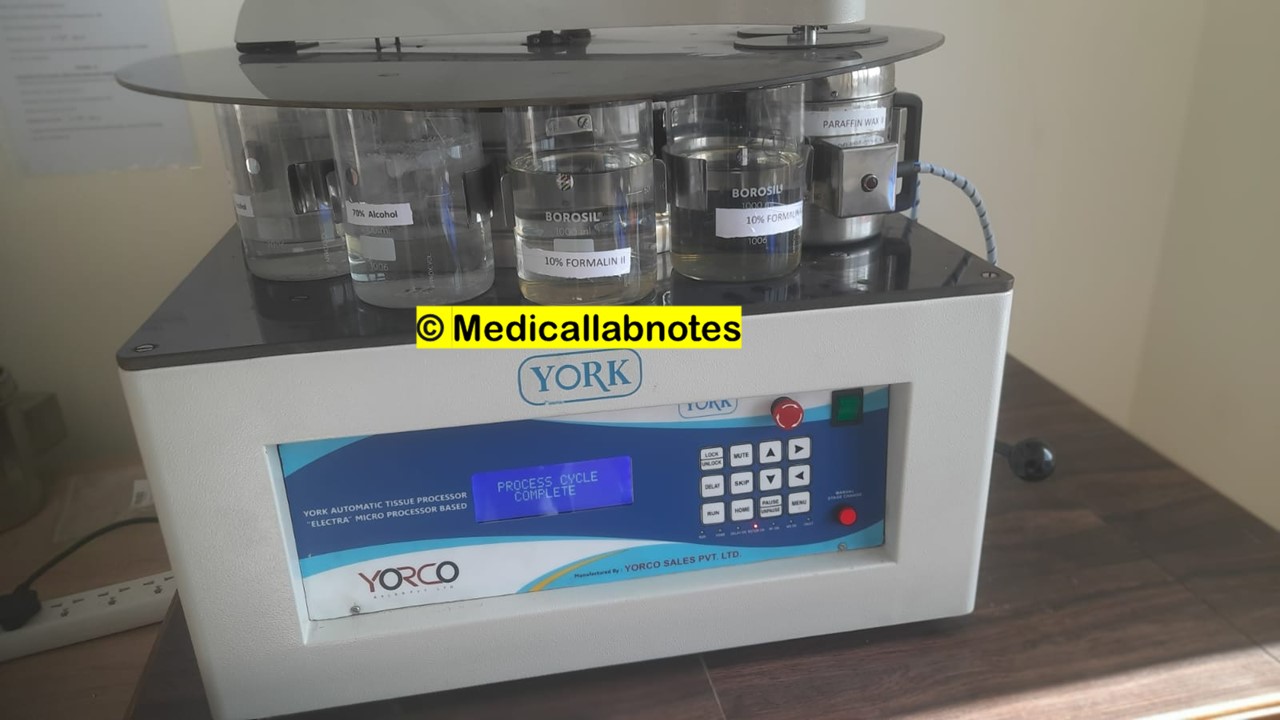
Automatic Tissue Processor: Introduction, Principle, Types, Handling Procedure, Uses, and Keynotes

Automatic Tissue Processor

Introduction An automatic tissue processor is a laboratory instrument . It automates the process of tissue fixation, dehydration, clearing, and embedding for histological analysis. This instrument is widely used in pathology laboratories for preparing tissue samples for examination under a microscope. The automatic tissue processor …

Read more

Pantoea: Introduction, Classification Morphology, Pathogenicity, Lab Diagnosis, Treatment, and Prevention

Pantoea in Gram Staining of Culture Microscopy at Magnification of 4000X

Introduction Pantoea is a genus of gram-negative bacteria that belong to the family Enterobacteriaceae. These bacteria are commonly found in soil, water, and plant surfaces, and some species are known to be associated with plants, animals, and humans as opportunistic pathogens. There are several species …

Read more

Mycology Reference Laboratory: Introduction, Requirements, Mycological Tests, Importance and Keynotes

Introduction of Mycology Reference Laboratory A Mycology Reference Laboratory is a specialized laboratory that focuses on the identification, characterization, and study of fungi. Fungi are a diverse group of organisms that can cause a variety of infections in humans, animals, and plants, as well as …

Read more

Motility of Bacteria: Introduction, List of Motile and Non-motile Bacteria, Keynotes, and Related Videos

Introduction For Motility of Bacteria Bacteria are motile due to having flagella (singular -flagellum). Some common motile bacteria are E.coli, Salmonella, Proteus, Pseudomonas, Citrobacter, and Enterobacter while non-motile are Klebsiella, Shigella, and Acinetobacter. Motility Types of Different Microbes S.No Motility Types Microbes 1. Darting Motility …

Read more

Scrub Typhus Antibody Test-Introduction, Principle, Test Requirements, Procedure, Result Interpretation, Test Result, Test Method, Limitations, and Keynotes

Scrub Typhus Antibody Test-Negative and Positive Results

Introduction of Scrub Typhus  Scrub typhus and typhoid are quite different but common thing is that both cover fever. Scrub typhus also known as bush typhus, is a disease caused by the intracellular parasite, Orientia ( formerly Rickettsia)  tsutsugamushi and typhoid by Salmonella enterica serotype Typhi. Both causative agents are bacteria. Scrub …

Read more

GeneXpert Test For Tuberculosis: Introduction, Principle, Test Requirements, Test Procedure, Result -Interpretation, Advantages, Disadvantage, and Keynotes

GeneXpert Test For Tuberculosis-Mycobacterium tuberculosis (MTB) Detected High

Introduction of GeneXpert Test GeneXpert test is a molecular test for tuberculosis diagnosis by detecting the presence of  Mycobacterium tuberculosis (bacteria), as well as testing for resistance to the drug rifampicin. Principle of GeneXpert Test GeneXpert test is a highly sensitive and specific test for tuberculosis(TB) diagnosis that detects DNA sequences …

Read more

Czapek Dox Agar: Introduction, Composition, Principle, Test Requirements, Procedure, Result-Interpretation, Colony Characteristics, Modifications, Uses, and Keynotes

Aspergillus flavus growth on Czapek Dox Agar

Introduction of Czapek Dox Agar Czapek medium also called Czapek’s agar (CZA) from the surname of inventor Czech botanist Friedrich Johann Franz Czapek (1902-1903). Later CZA was modified by another American inventor, chemist Arthur Wayland Dox  (1910) and thus its name became’ Czapek-Dox medium’ and formula prepared …

Read more

Culture Media: Introduction, Common Ingredients, Types, Preparation, and Use of Common Culture Medium, Keynotes, and Related Images

Culture media with variety of microbes-Micrococcus growth on nutrient agar (upper left), Lactose fermenting(Lf) and non-lactose fermenting (NLF) colonies of Gram negative bacteria colonies on MacConkey medium, Hameophilus influenzae colony morphology on chocolate agar(lower left), beta-hemolytic colonies of Staphylococcus aureus( middle), and Pseudomonas aeruginosa antibiogram pattern on Muller-Hinton agar(MHA)

Introduction of Culture Media Culture media are required to grow the organisms and they are generally from clinical specimens to identify the causative agent. Common Ingredients of Culture Media Common Ingredients of Culture Media and their basic constituents are as follows- Water: It is the …

Read more