Gram-Positive and Gram-Negative Bacteria: Introduction, Differences, and Related Footage

Differences between Gram Positive and Gram Negative Bacteria: Introduction, and Related Footages

Introduction of Gram-Positive and Gram-Negative Bacteria ‘Gram-Positive Bacilli (GPB)‘ is also called Gram-Positive Rods (GPR) bacteria which retain crystal violet dye and stain blue or purple on Gram’s staining. The most common medically important bacteria of GPR are Mycobacterium tuberculosis, Mycobacterium leprae, Listeria monocytogenes, Nocardia asteroides, Actinomyces israelii, Bacillus anthracis, Bacillus cereus, Bifidobacterium species, Corynebacterium …

Read more

Enterococcus faecalis: Introduction, Keynotes, and Related Footage

Enterococcus faecalis in CLED medium, blood agar, Gram staining, MacConkey medium without bile salt and cystal violet and bile esculin test

Introduction Enterococcus faecalis (previously identified as Streptococcus faecalis) is a Gram-positive coccus in singles, pairs, and even short chains which is a commensal member of the gut microbiota of a wide range of microbes. With the advent of antibiotic therapy, it has emerged as a …

Read more

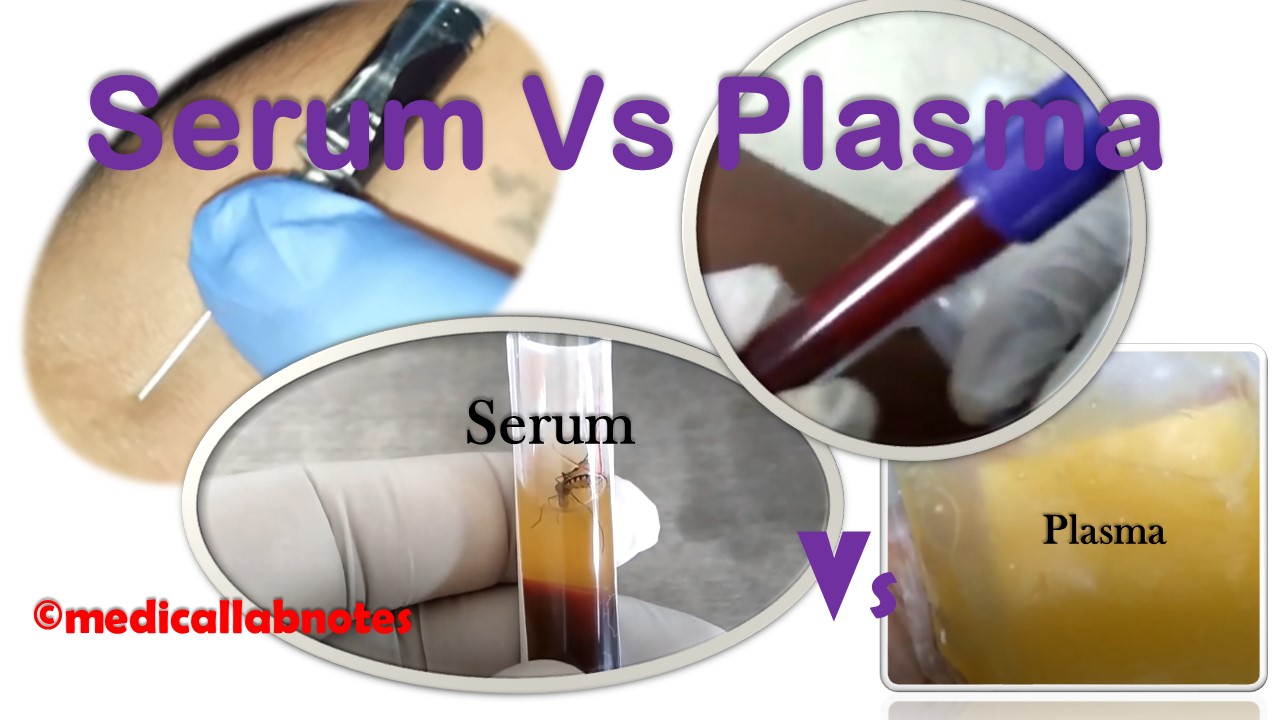
Serum and Plasma: Introduction, Differences, Keynotes, and Related Footages

Serum and Plasma: Introduction, Differences, Keynotes, and Related Footages

Introduction of Serum and Plasma The serum is a clear yellow fluid that is separated when blood is allowed to clot freely while the plasma is yellowish and slight alkaline fluid, in which blood cells float. Differences between Serum and Plasma S. No Characteristics Serum …

Read more

Enterobacter aerogenes: Introduction, Identification Features, Keynotes, and Enterobacter aerogenes Footages

Enterobacter aerogenes: Introduction, Identification Features, Keynotes, and Enterobacter aerogenes Footages

Introduction Enterobacter aerogenes is a Risk Group 2 organism and is responsible for nosocomial infection, human and animal diseases and normally present in the gut of vertebrates and also in the environment and thus it may be the organism of concern for on health scheme. …

Read more

Biochemical Test of Gram-Negative Bacteria: Introduction, Common Tests, List of Organisms, Keynotes, and Some Related Footages

Biochemical Test of Gram-Negative Bacteria: Introduction, Common Tests, List of Organisms, Keynotes, and Some Related Footages

Introduction of Biochemical Test of Gram-Negative Bacteria Gram-negative bacteria are the most common etiological agents which are responsible for bacterial infections as well as viral co-infections. Clinical Microbiology Laboratory generally becomes busy due to those isolates. The need for ‘Biochemical Test of Gram-Negative Bacteria’ is …

Read more

Vibrio cholerae: Introduction, Identification Features, Keynotes, and Vibrio Footages

Vibrio cholerae: Introduction, Identification Features, Keynotes, and Vibrio Footages

Introduction The genus, Vibrio is a member of the family, Vibrionaceae and the most common human pathogens are Vibrio cholerae, V. parahaemolyticus, and V. vulnificus. Vibrio cholerae is a species of Gram-negative, motile, non-sporing, and non-capsulated, facultative anaerobe and comma-shaped bacterium. It is a ubiquitous …

Read more

Hemolysis and Hemodigestion: Introduction, Differences, and Related Footages

Hemolysis and Hemodigestion- Introduction, Differences, and Related Footages

Introduction of Hemolysis and Hemodigestion When the pure isolated colony of organism on a blood agar plate is exposed in bright transmitted light, we differentiate between hemolysis and hemodigestion since hemolysis is the process of killing blood cells by bacteria, and the area surrounding a …

Read more

Pseudomonas aeruginosa: Introduction, Identification Features, Keynotes, and Pseudomonas Footages

Pseudomonas aeruginosa: Introduction, Identification Features, Keynotes, and Pseudomonas Footages

Introduction of Pseudomonas aeruginosa Pseudomonas aeruginosa is a widely distributed environment like in soil and water, Gram-negative rods, aerobic, motile due to having a polar flagellum, non-sporing, non- capsulated but many strains have mucoid slime layer, produce water-soluble pigments and opportunistic pathogens of size 1.5 – …

Read more