Gram Negative Bacteria Biochemical Test: Table, Introduction, Common Tests with Short Description, List of Organisms, and Related Pictures

Biochemical Test of Common Gram Negative Bacteria

Common Gram Negative Bacteria Biochemical Test Table Introduction of Gram-Negative Bacteria Biochemical Test ‘Common Gram Negative Bacteria Biochemical Test’ is a genuine puny collection of clinically relevant bacteria isolated in the clinical bacteriology laboratory by the creator and those etiological agents captured in his camera …

Read more

L-pyrrolidinyl-β-naphthylamide (PYR) Test: Introduction, Principle, Test Requirements, Procedure, Result-Interpretations, and Limitations

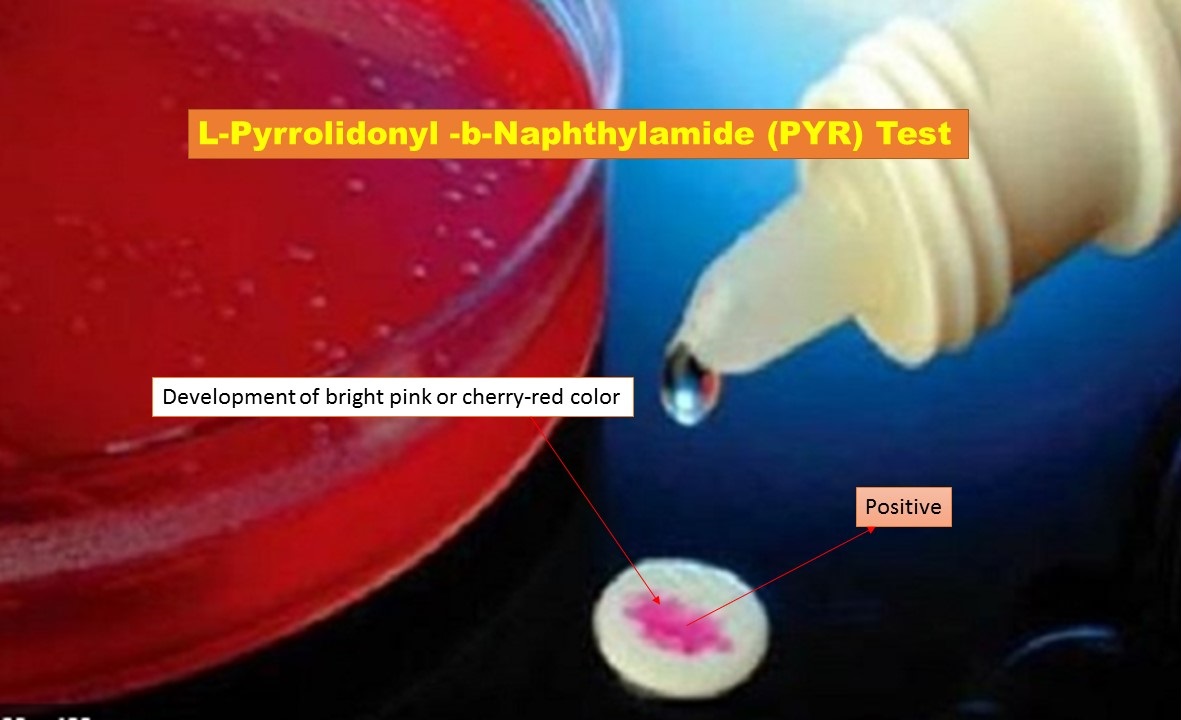
L-pyrrolidinyl-β-naphthylamide (PYR) Test-Positive

Introduction of L-pyrrolidinyl-β-naphthylamide (PYR) Test L-pyrrolidinyl-β-naphthylamide (PYR) test uses to identify the capability of organisms utilizing substrate, PYR by L-pyrroglutamyl amino-peptidase. Application of this test are as follows: Principle of L-pyrrolidinyl-β-naphthylamide (PYR) Test L-pyrrolidinyl-β-naphthylamide (PYR) acts as a substrate for the detection of the enzyme …

Read more

API Test for Bacteria: Introduction, Principle, Test Requirements, Test Procedure, Result- Interpretation, Advantages, and Keynotes

API Test - Bacteria, Strip, Reagents, Reading Sheet and Log Book

Introduction of API Test for Bacteria API test for bacteria as shown above picture is a 20-jumbo tests kit for a biochemical panel for the identification and differentiation of members of the family Enterobacteriaceae.  API stands for Analytical Profile Index. It is an API 20E Test kit …

Read more

Acetate Utilization Test: Introduction, Composition, Principle, Test Requirements, Test Procedure, Result and Interpretation, and Keynotes

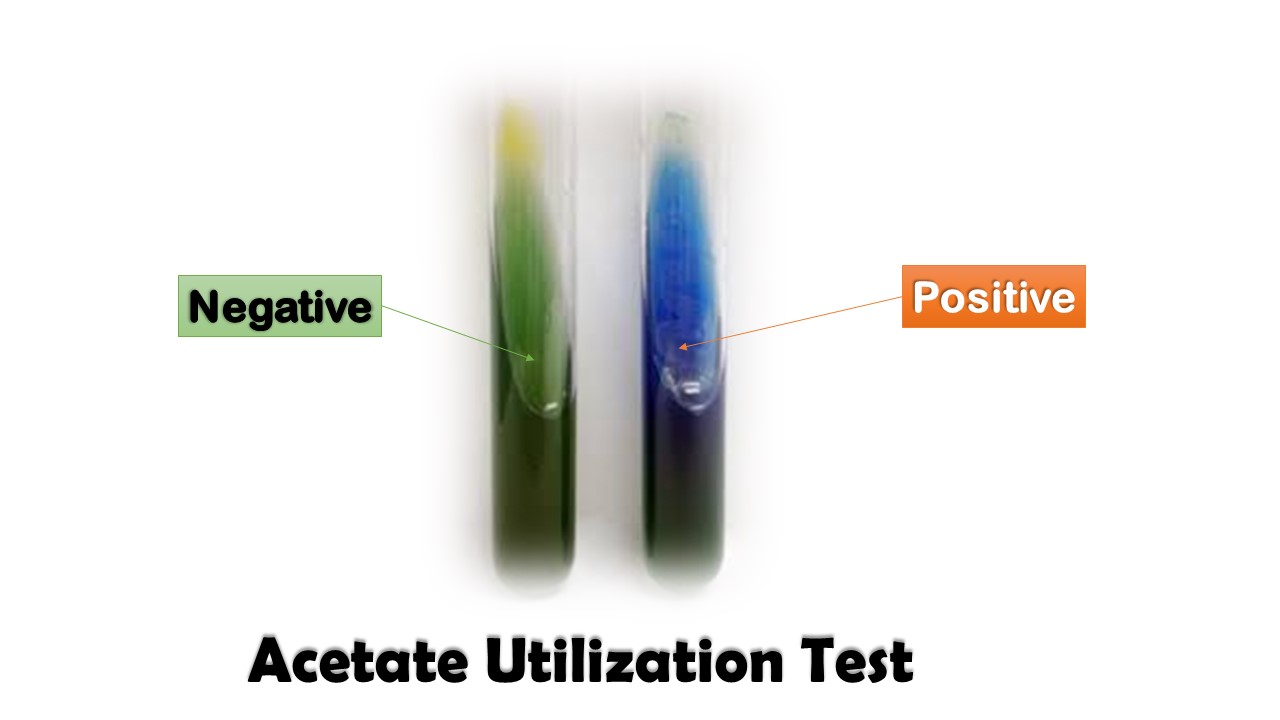
Acetate Utilization Test-Negative (left) and Positive (right side)

Introduction of Acetate Utilization Test Acetate Utilization Test ueses to determine the ability of an organism to use acetate as the sole source of carbon same as in the citrate utilization test for Enterobacteriaceae. It is the recommended assay for the differentiation of Shigella species from Escherichia coli. Composition of …

Read more

Oxidation-Fermentation (OF) Test: Introduction, Composition of the medium, Test Requirements, Principle, Procedure, Result -Interpretation, and Limitations

Fermentation Test Positive and Negative Results of Bacteria

Oxidation-Fermentation (OF) Test Introduction Hugh and Leifson developed an Oxidation-Fermentation (OF) basal medium in 1953. It is a recommended medium for the detection of oxidation or fermentation of carbohydrates by bacteria. This basal medium is useful to aid in the identification of gram-negative bacteria on …

Read more

Nitrate or Nitrite Reduction Test: Introduction, Composition of Medium, Principle, Test Requirements, Procedure, Result -Interpretation, and Limitations

Nitrate or Nitrite Reduction Test

Introduction of Nitrate or Nitrite Reduction Test The nitrate or nitrite reduction test uses to determine the ability of an organism to reduce nitrate to nitrite. Anaerobic metabolism requires an electron acceptor other than atmospheric oxygen. Many gram-negative bacteria use nitrate as the final electron acceptor. The …

Read more

ONPG Test: Introduction, Principle, Test Requirements, Procedure, Result -Interpretation, and Keynotes

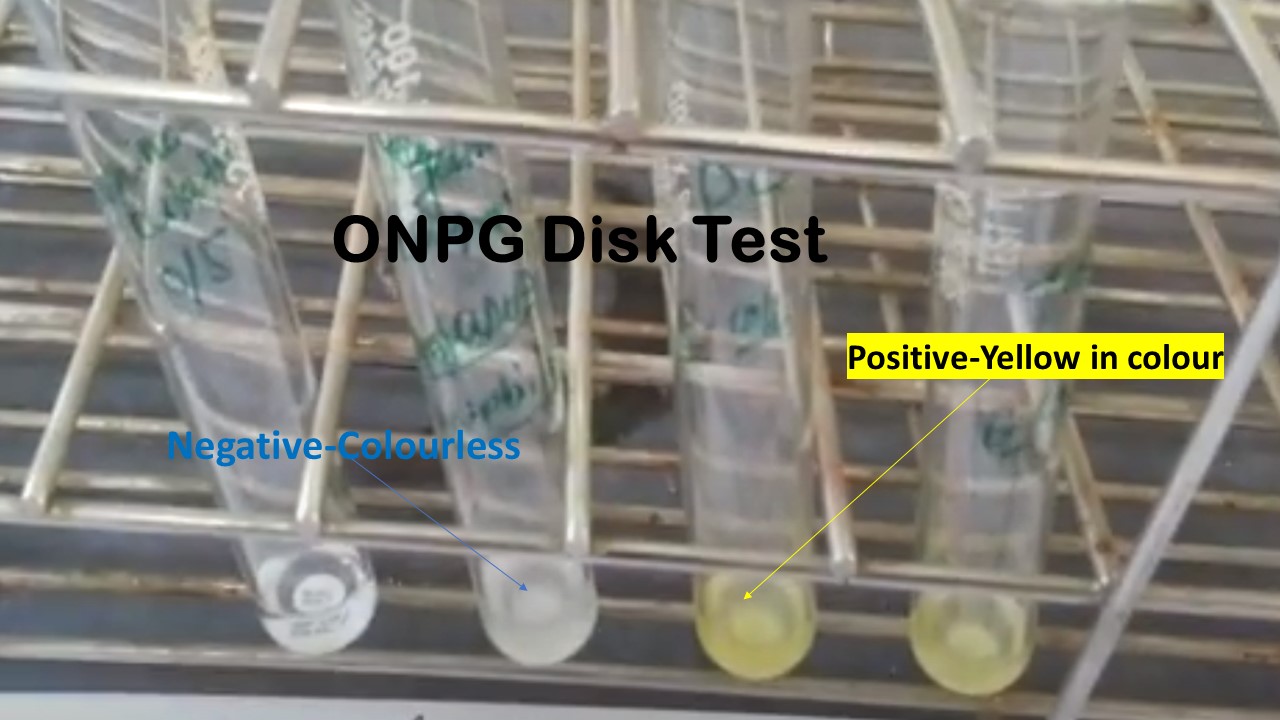
ONPG Test Negative (left) and Positive Bacteria (right)

Introduction of ONPG Test ONPG test is useful in differentiating members of the family  Enterobacteriaceae and genera Neisseria based on b-D-galactosidase activity. ONPG stands for o-Nitrophenyl-b-D-galactopyranoside. Here we discuss on ONPG Disk Test which is simple and easy to perform. Principle The ability of an organism to ferment lactose …

Read more

MIU Test: Introduction, Principle, Composition, MIU Agar Preparation, Test Procedure, Result-Interpretation, and Keynotes

Motile and non-motile bacteria, indole positive and negative, urease positive and negative organisms on MIU agar demonstration

Introduction of MIU Test MIU test stands for motility indole urease test and it is used for three tests among them one for motility of bacteria, second for indole formation, and third for urea hydrolyzation test of bacteria. This assay is useful for the identification …

Read more