
Introduction of Penicillium vs Paecilomyces
Table of Contents
Penicillium is a ubiquitous, saprophytic mold found in soil, air, and decaying organic matter. Known for producing the first antibiotic, penicillin, it is typically non-pathogenic but occasionally causes opportunistic infections in immunocompromised hosts.
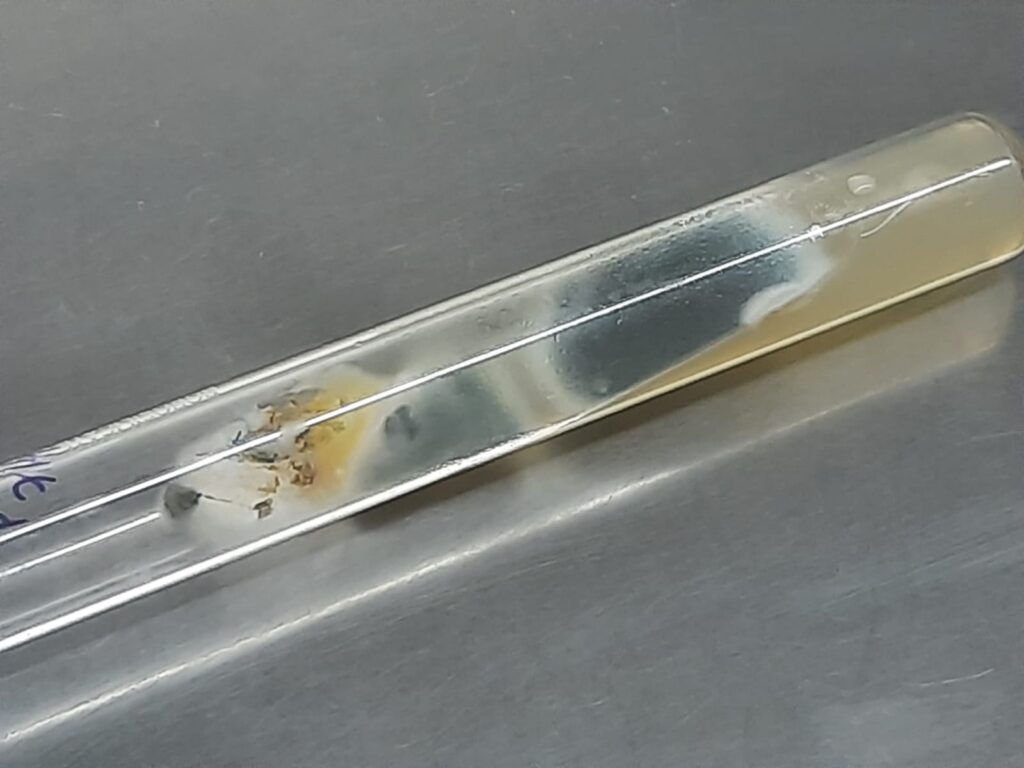
Paecilomyces (especially P. lilacinus and P. variotii) is a filamentous fungus found in soil and damp environments. It is increasingly recognized as an emerging opportunistic pathogen, particularly in patients with indwelling devices or immune suppression. Note: P. lilacinus has been reclassified as Purpureocillium lilacinum.
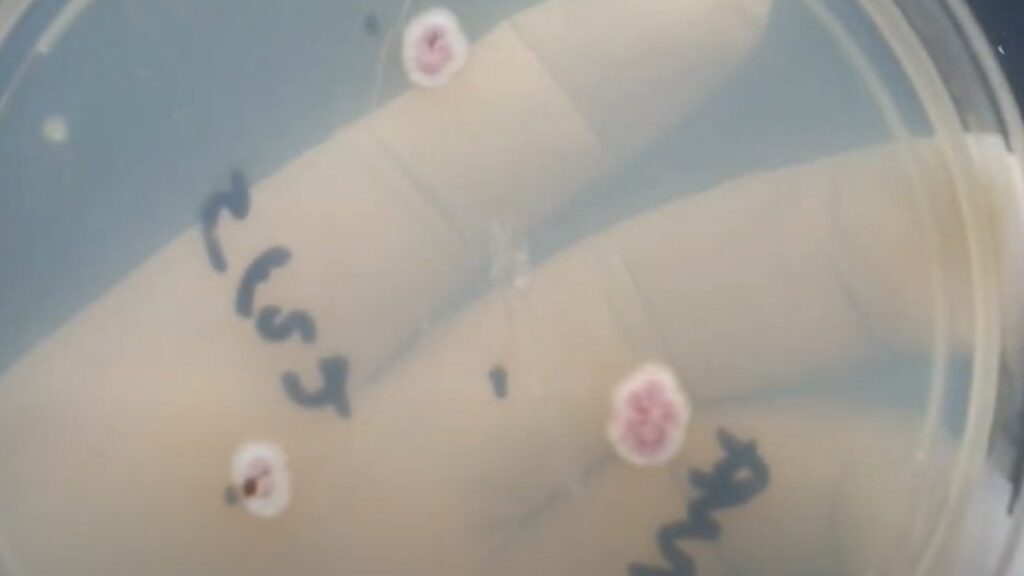

Penicillium vs Paecilomyces – Detailed Comparison
| Feature | Penicillium spp. | Paecilomyces spp. (now reclassified mostly under Purpureocillium) |
|---|---|---|
| Taxonomy | Genus: Penicillium | Genus: Paecilomyces (e.g., P. lilacinus, P. variotii) |
| Habitat | Soil, decaying matter, and moist indoor environments | Soil, decaying matter, moist indoor environments |
| Colony morphology (on SDA) | Velvety, green/blue-green with white border; radial grooves | Velvety or powdery, tan/yellow/greenish with lilac or brown shades |
| Microscopy (LPCB mount) | Brush-like conidiophores with flask-shaped phialides arranged in chains | Elongated, tapering phialides, arising from conidiophores, with more delicate conidial chains |
| Conidiophore structure | Branched, metulae + phialides | Long, unbranched/tapered phialides (no metulae) |
| Hyphae | Septate, hyaline | Septate, hyaline |
| Clinical relevance | Rare pathogen; can cause keratitis, otomycosis, or pulmonary infection | More frequently causes infections: keratitis, sinusitis, prosthetic infections, onychomycosis |
| Pathogenic potential | Low (mostly contaminant) | Moderate; P. lilacinus and P. variotii can be opportunistic pathogens |
| Temperature tolerance | Generally grow at 25–30°C | Some species grow at 37°C and cause invasive disease |
| Resistance to antifungals | Generally susceptible to amphotericin B | P. lilacinus shows resistance to amphotericin B and azoles |
| Use in industry | Source of penicillin, cheese production | Rare industrial use |
| Differentiation points | Greenish colonies, typical brush structure | Lilac-pigmented colonies, long tapering phialides |
Pathogenicity
| Feature | Penicillium spp. | Paecilomyces spp. |
|---|---|---|
| Virulence | Low | Moderate |
| Common Infections | Keratitis, onychomycosis, sinusitis, prosthetic infections, and catheter-related fungemia | Common in immunocompromised patients and in patients with implants or catheters |
| Host Type | Rarely pathogenic; mostly in immunocompromised | Can be disseminated in neonates or transplant recipients |
| Dissemination | Rare | Can disseminate in neonates or transplant recipients |
Laboratory Diagnosis


| Step | Description |
|---|---|
| Direct Microscopy (KOH/LPCB) | Septate hyaline hyphae; distinct conidiophore patterns |
| Culture (SDA/PDA) | |
| • Penicillium | Green/blue-green velvety colonies |
| • Paecilomyces | Lilac, tan, or yellowish colonies |
| Microscopic Morphology | |
| • Penicillium | Brush-like conidiophores with metulae and phialides |
| • Paecilomyces | Long tapering phialides without metulae |
| Slide Culture | Confirms typical structures |
| MALDI-TOF MS / PCR | Species-level ID and confirmation |
| Temperature Growth | Paecilomyces can grow at 37°C; Penicillium typically prefers 25–30°C |

Treatment
| Pathogen | Preferred Treatment |
|---|---|
| Penicillium spp. | Often not treated unless invasive; may respond to amphotericin B or azoles |
| Paecilomyces spp. | P. variotii: Usually susceptible to amphotericin B and posaconazole P. lilacinus: Often resistant to amphotericin B; may require voriconazole or posaconazole |
- Perform Antifungal Susceptibility Testing (AFST) for accurate therapy.

Prevention
- Minimize exposure to contaminated soil, dust, or decaying matter, particularly in individuals with weakened immune systems.
- Maintain sterility of prosthetic devices, catheters, and ocular implants.
- Use HEPA filters in high-risk hospital units (oncology, transplant).
- Practice strict hand hygiene and environmental disinfection in healthcare settings.
Keynotes on Penicillium vs Paecilomyces
- Penicillium is mainly an environmental contaminant; Paecilomyces is a true opportunistic pathogen.
- Paecilomyces lilacinus often shows resistance to amphotericin B and fluconazole.
- Culture colony color helps: green for Penicillium, lilac/yellow for Paecilomyces.
- Microscopic identification is based on the phialide arrangement — brush-like (Penicillium) vs tapered (Paecilomyces).
- Penicillium marneffei (now Talaromyces marneffei) is a pathogenic exception causing systemic infection in HIV/AIDS.
- Slide culture improves microscopic differentiation.
- Paecilomyces can grow at 37°C, unlike most Penicillium spp.
- Treatment should be guided by species identification and antifungal sensitivity.
- Infections typically occur in immunocompromised or device-associated settings.
- Accurate identification via MALDI-TOF or sequencing is crucial due to treatment differences.
Further Readings
- https://pmc.ncbi.nlm.nih.gov/articles/PMC4551059/
- https://www.sciencedirect.com/topics/agricultural-and-biological-sciences/paecilomyces
- https://www.researchgate.net/figure/Penicillium-expansum-and-Paecilomyces-formosus-pellets-in-Malt-Extract-ME-medium-after_fig2_331912920
- https://link.springer.com/article/10.1007/BF03051675
- https://bmcinfectdis.biomedcentral.com/articles/10.1186/s12879-024-09496-6
- https://www.sciencedirect.com/topics/immunology-and-microbiology/paecilomyces
- https://www.tandfonline.com/doi/pdf/10.5941/MYCO.2012.40.1.066
- https://www.mdpi.com/2223-7747/9/12/1746
- https://www.frontiersin.org/journals/plant-science/articles/10.3389/fpls.2017.00870/full