Leptospira Test-Introduction, Principle, Test Requirement, Procedure, Test Result, Test Method, Result-Interpretation, and Keynotes

Leptospira Test-Rapid Test Device, Diluent, and Specimen

Introduction of Leptospira Rapid Diagnostic Test  Leptospira rapid diagnostic test is for both present and past infection status, immunoglobulin M (IgM) indicates present history whereas immunoglobulin G (IgG) indicates past as shown above picture. Advantage Lepto IgG/IgM Combo Rapid Test is a visual, rapid, sensitive, …

Read more

Scrub Typhus Antibody Test-Introduction, Principle, Test Requirements, Procedure, Result Interpretation, Test Result, Test Method, Limitations, and Keynotes

Scrub Typhus Antibody Test-Negative and Positive Results

Introduction of Scrub Typhus  Scrub typhus and typhoid are quite different but common thing is that both cover fever. Scrub typhus also known as bush typhus, is a disease caused by the intracellular parasite, Orientia ( formerly Rickettsia)  tsutsugamushi and typhoid by Salmonella enterica serotype Typhi. Both causative agents are bacteria. Scrub …

Read more

MR-VP Test: Introduction, Principle, Test Requirement, Procedure, Result- Interpretation, and Keynotes

Result and Interpretation of Voges Proskauer Test

Introduction of MR-VP Test MR-VP test stands for Methyl Red –Voges Proskauer Test. MR-VP test will be discussed in two tests separately. One is for Methyl Red (MR) test and while other is for Voges Proskauer (VP)test. Introduction of Methyl Red Test The Methyl Red test is …

Read more

Voges Proskauer Test: Introduction, Principle, Test Requirements, Test Procedure, Result-Interpretation, Positive and Negative Bacteria, and Limitations

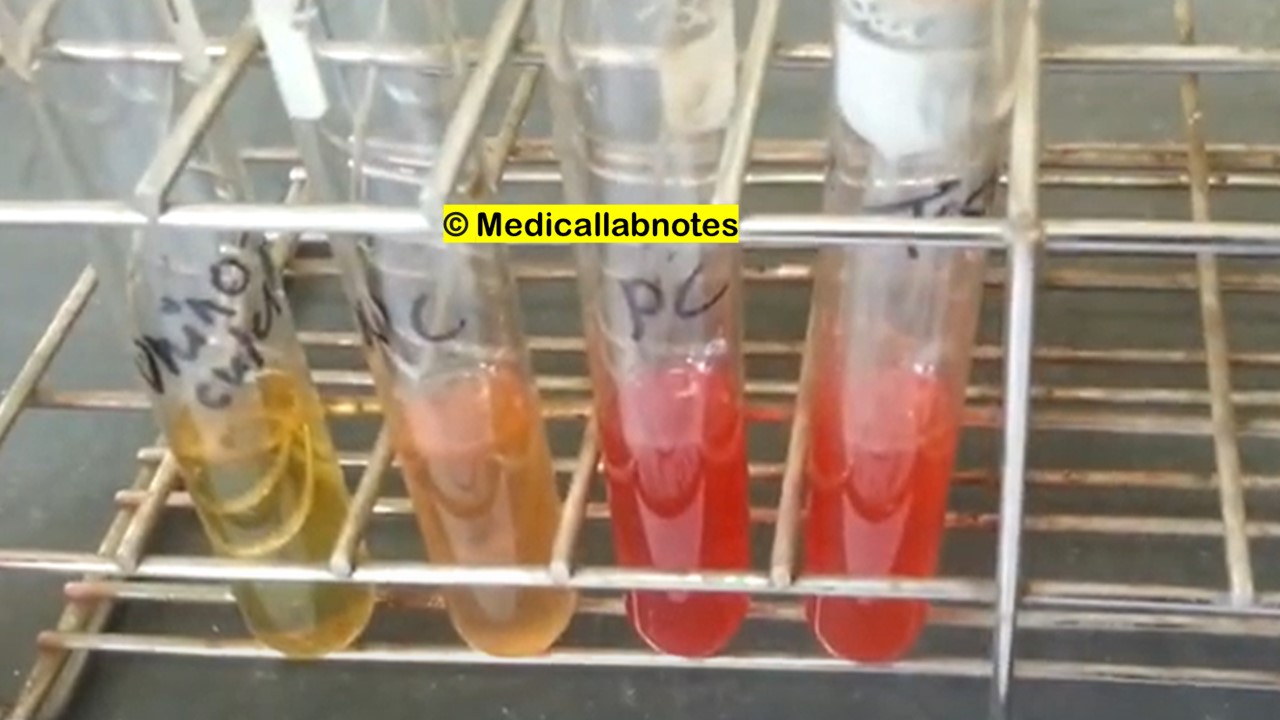
Voges Proskauer Test Reagents, Negative and Positive Test Results of VP Tests

Voges-Proskauer (VP ) Test Voges Proskauer  test for identification to the species level of the following groups of organisms Principle of Voges Proskauer Test Organisms utilizing the butylene glycol pathway produce acetylmethylcarbinol (acetoin) and butanediol, neutral end products that raise the pH towards neutrality (pH …

Read more

Methyl Red Test: Introduction, Principle, Test Requirements, Test Procedure, Result-Interpretation, Positive and Negative Bacteria, and Limitations

Methyl Red Test-Positive and Negative Test Results

Introduction of Methyl Red Test The Methyl Red test is for enteric gram-negative rods, as part of identification to species level. Its short name is MR test. Principle of Methyl Red Test The methyl red (MR) test uses to determine if an organism is able …

Read more

Escherichia hermanii: Introduction, Classification, Pathogenecity, Lab Diagnosis, Treatment, and Keynotes

Escherichia hermanii colony morphology on MacConkey agar

Introduction of Escherichia hermanii Escherichia hermannii is a gram-negative rod. This bacterium belongs to the family of Enterobacteriaceae. It was first described in 1982. It had been previously known as enteric group 11 of Escherichia coli but was later reclassified as a distinct species in …

Read more

Auramine-Phenol Fluorochrome Staining: Introduction, Principle, Test Requirements, Test Procedure, Result- Interpretation, Limitations, and Keynotes

Acid fast bacilli (AFB) of Mycobacterium tuberculosis in Auramine-phenol fluorochrome Staining

Introduction of Auramine-Phenol stain Auramine-Phenol is a fluorochrome stain used to visualize acid-fast structures of various microorganisms, especially Mycobacterium tuberculosis and in modified form for Mycobacterium leprae, Nocardia species, Cryptosporidium parvum, Cyclospora cayetanensis , Isospora belli, and fungal spores. Ziehl-Neelsen (hot), and Kinyoun (cold) are still widely used methods to detect acid-fast structures …

Read more

Cryptosporidium: Introduction, Classification, Morphology, Pathogenicity Lab Diagnosis, Treatment, Prevention, and Keynotes

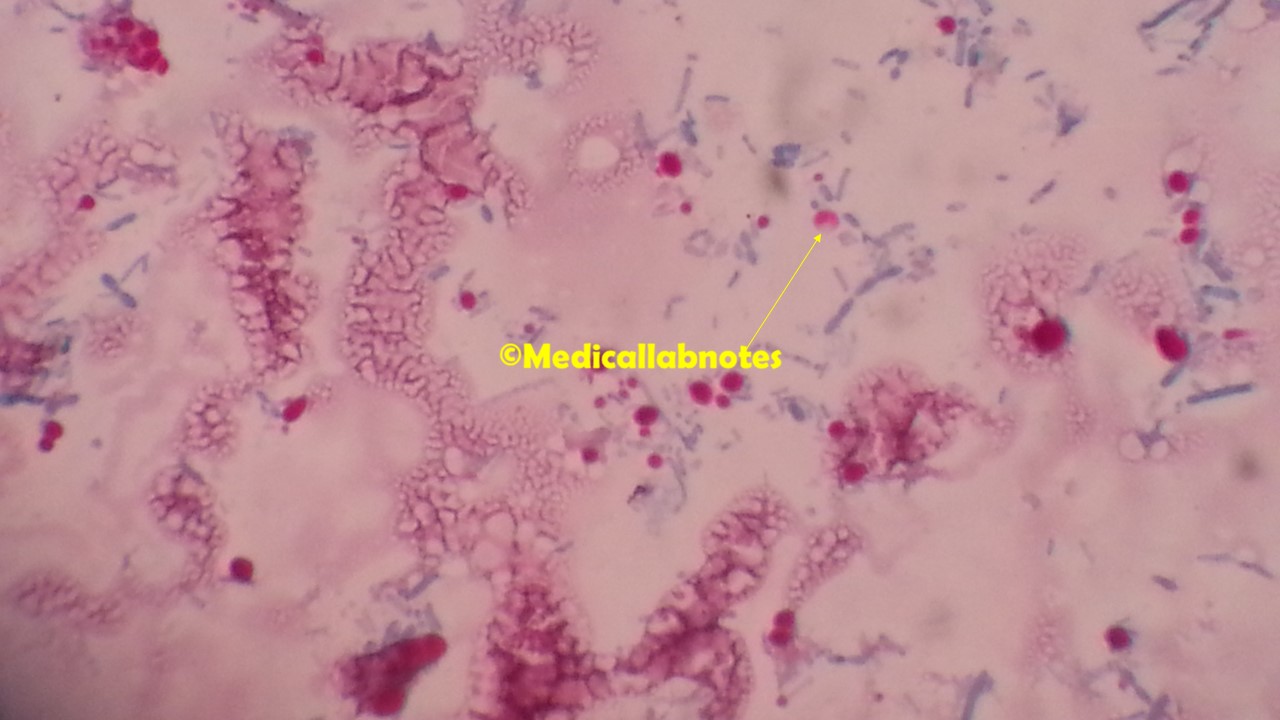
Oocyst of cryptosporidium parvum in Modified Kinyoun's acid-fast stain of stool microscopy

Introduction of Cryptosporidium Cryptosporidium is a coccidian parasite that causes diarrhea called Cryptosporidiosis. It was discovered by medical parasitologist, Ernest Edward in 1907. Human infection caused by Cryptosporidium parvum was seen in 1976. The clinically important species of this genus are C. parvum, C. mammals, …

Read more