Decarboxylase Test: Introduction, Principle, Test Requirements, Procedure, Result-Interpretation, Limitations, and Keynotes

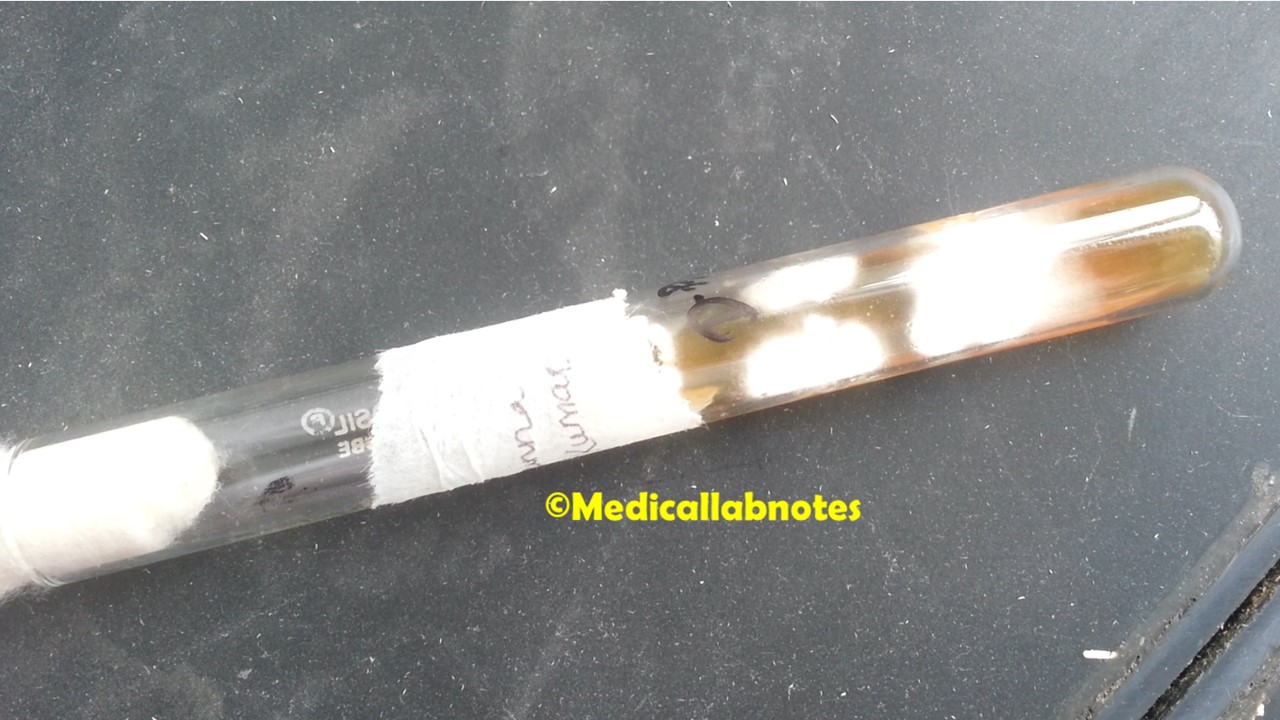
Decarboxylase Test-Positive and Negative Results Demonstration

Principle of Decarboxylase-Dihydrolase Test Lysine, ornithine, and arginine are the most common amino acids which use to detect an organism’s ability to decarboxylate or hydrolyze an amino acid in a decarboxylase medium, forming an amine that produces an alkaline pH. The basal medium for the …

Read more

Methyl-α-D-glucopyranoside (MGP) Test: Introduction, Principle, Test Requirements, Procedure, Result-Interpretation, Limitations, and Keynotes

Methyl-α-D-glucopyranoside (MGP) Test- Positive and Negative Results Demonstration

Introduction of Methyl-α-D-glucopyranoside (MGP)Test Methyl-α-D-glucopyranoside (MGP) test is effective for species identification of Enterococcus. Enterococcus gallinarum and Enterococcus casseliflavus are MGP test positive while Enterococcus faecalis and Enterococcus faecium are negative. Vancomycin-resistant Enterococcus faecium (VREF) is a serious nosocomial problem that is difficult to differentiate from  Enterococcus gallinarum and Enterococcus casseliflavus, while not important for purposes of control of …

Read more

Indoxyl Acetate Disk Test: Introduction, Principle, Test Requirements, Procedure, Result-Interpretation, Limitations, and Keynotes

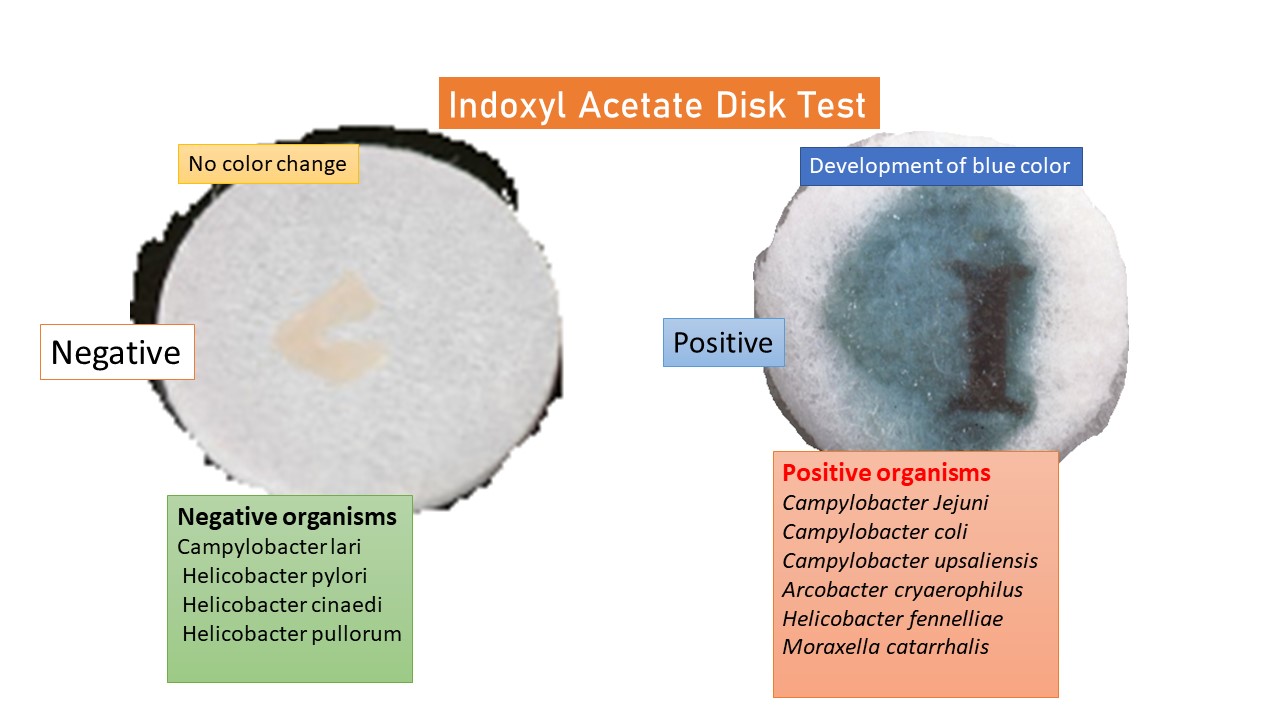
Indoxyl Acetate Disk Test-Positive and Negative Results

Introduction of Indoxyl Acetate Disk Test  Indoxyl is a tryptophan product of putrefactive decomposition in the intestines of humans by a bacterial esterase. This Indoxyl Acetate Disk test uses to distinguish Campylobacter species. Positive tests are Campylobacter jejuni and Campylobacter coli whereas Campylobacter lari and Campylobacter fetus are negative. Principle of Indoxyl Acetate Disk Assay The …

Read more

XLD Agar: Introduction, Composition, Principle, Preparation, Test Requirements, Procedure, Colony Characteristics, Modifications, Uses, and Limitations

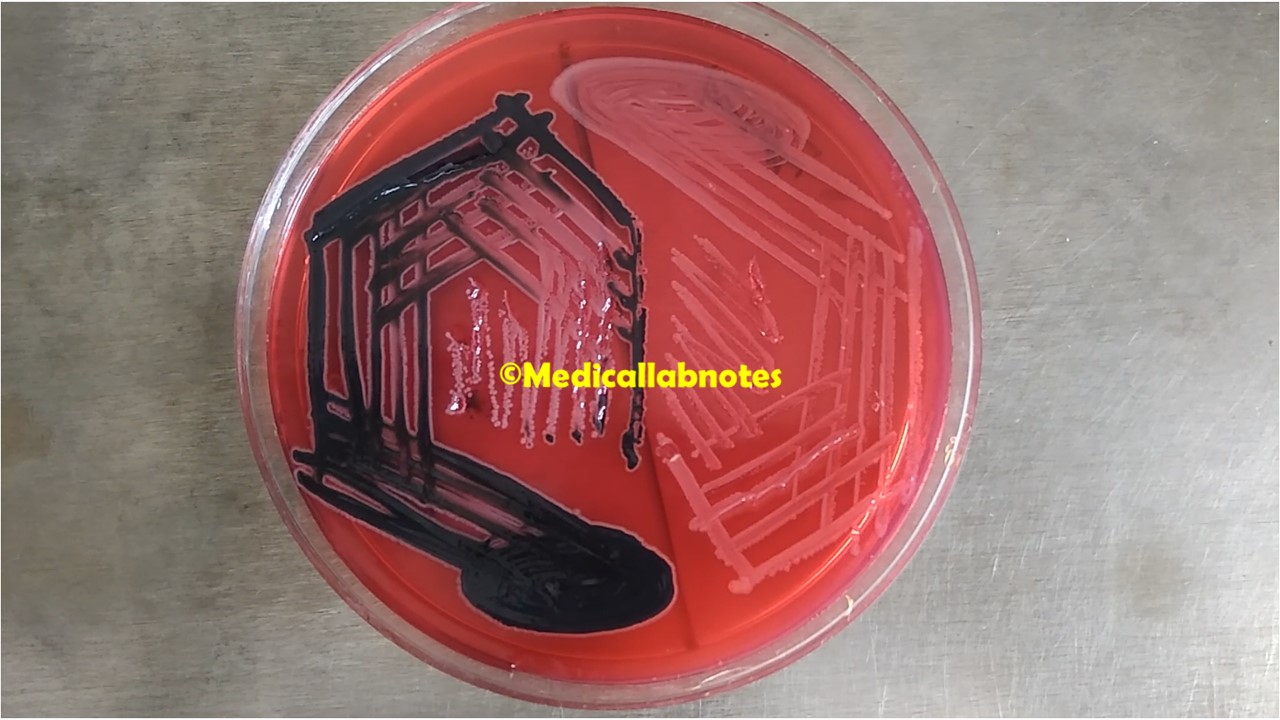
Salmonella Typhi (black colony) and Shigella growth on xylose lysine deoxycholate (XLD) agar

Introduction of XLD Agar XLD agar is a selective, differential, and indicator medium for the isolation of enteric pathogens. XLD stands for xylose lysine deoxycholate. It also supports the growth of more fastidious enteric organisms. XLD agar was developed by Taylor. It was specially designed to allow the …

Read more

Czapek Dox Agar: Introduction, Composition, Principle, Test Requirements, Procedure, Result-Interpretation, Colony Characteristics, Modifications, Uses, and Keynotes

Aspergillus flavus growth on Czapek Dox Agar

Introduction of Czapek Dox Agar Czapek medium also called Czapek’s agar (CZA) from the surname of inventor Czech botanist Friedrich Johann Franz Czapek (1902-1903). Later CZA was modified by another American inventor, chemist Arthur Wayland Dox  (1910) and thus its name became’ Czapek-Dox medium’ and formula prepared …

Read more

Dermatophyte Test Medium (DTM): Introduction, Composition, Principle, Test Requirements, Procedure, Result-Interpretation, Colony Characteristics, Modifications,Uses, and Keynotes

Dermatophytes growth on Dermatophyte Test Medium (DTM)

Introduction of Dermatophyte Test Medium (DTM) Dermatophyte Test Medium (DTM) is a selective and differential medium recommended for the cultivation and isolation of pathogenic dermatophytes. The Dermatophytes are a distinct group of fungi that infect the hair, skin, and nails in humans producing a variety of …

Read more

Potato Dextrose Agar (PDA): Introduction, Composition, Principle, Test Requirements, Procedure, Result-Interpretation, Colony Characteristics, Modifications, Uses, and Keynotes

A. fumigatus growth on PDA

Introduction of Potato Dextrose Agar (PDA) Potato Dextrose Agar ( PDA) is a fungal medium and its ingredients are clear from its name it contains potato ( vegetable), dextrose ( sugar), and agar ( solidifying agent). PDA  is recommended for the isolation and enumeration of fungi …

Read more

API Test for Bacteria: Introduction, Principle, Test Requirements, Test Procedure, Result- Interpretation, Advantages, and Keynotes

API Test - Bacteria, Strip, Reagents, Reading Sheet and Log Book

Introduction of API Test for Bacteria API test for bacteria as shown above picture is a 20-jumbo tests kit for a biochemical panel for the identification and differentiation of members of the family Enterobacteriaceae.  API stands for Analytical Profile Index. It is an API 20E Test kit …

Read more