
Introduction
Table of Contents
The VITEK 2 Yeast Identification (YST) system is an automated platform designed for the rapid identification of clinically significant yeasts and yeast-like organisms.
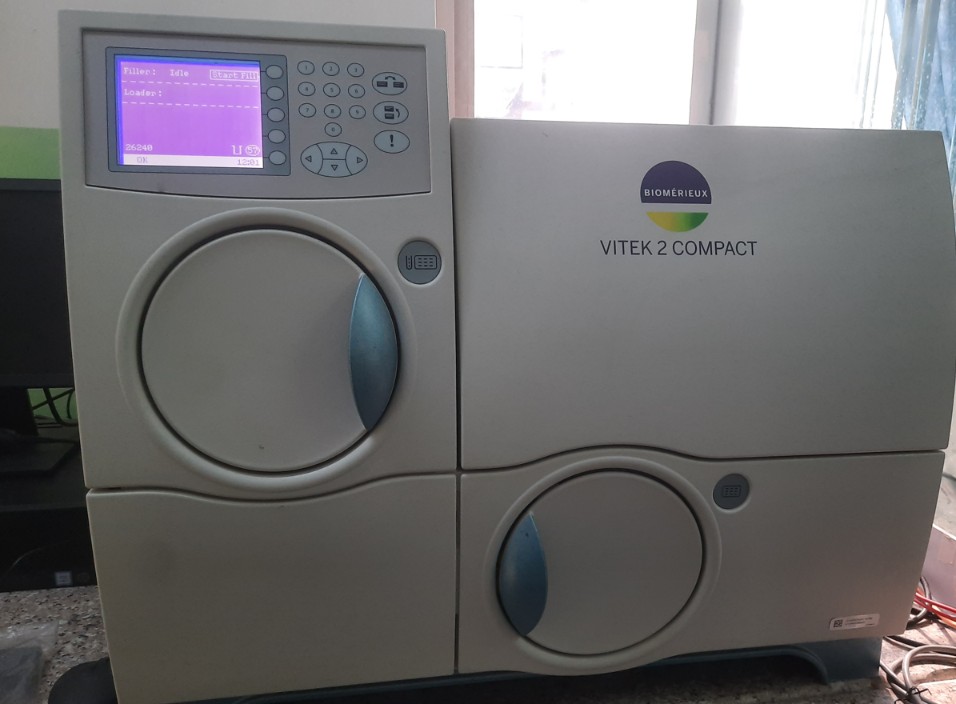
It significantly reduces the turnaround time from several days (traditional methods) to approximately 15 to 18 hours.
Name of the Card
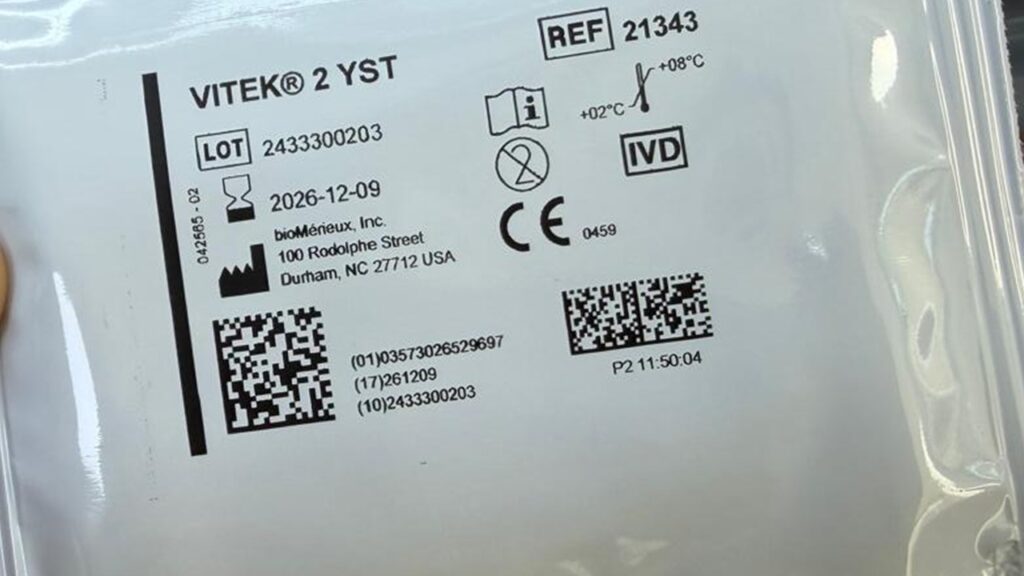
The card used is the VITEK 2 YST Card (Identification of Yeasts and Yeast-like Organisms).
Principle
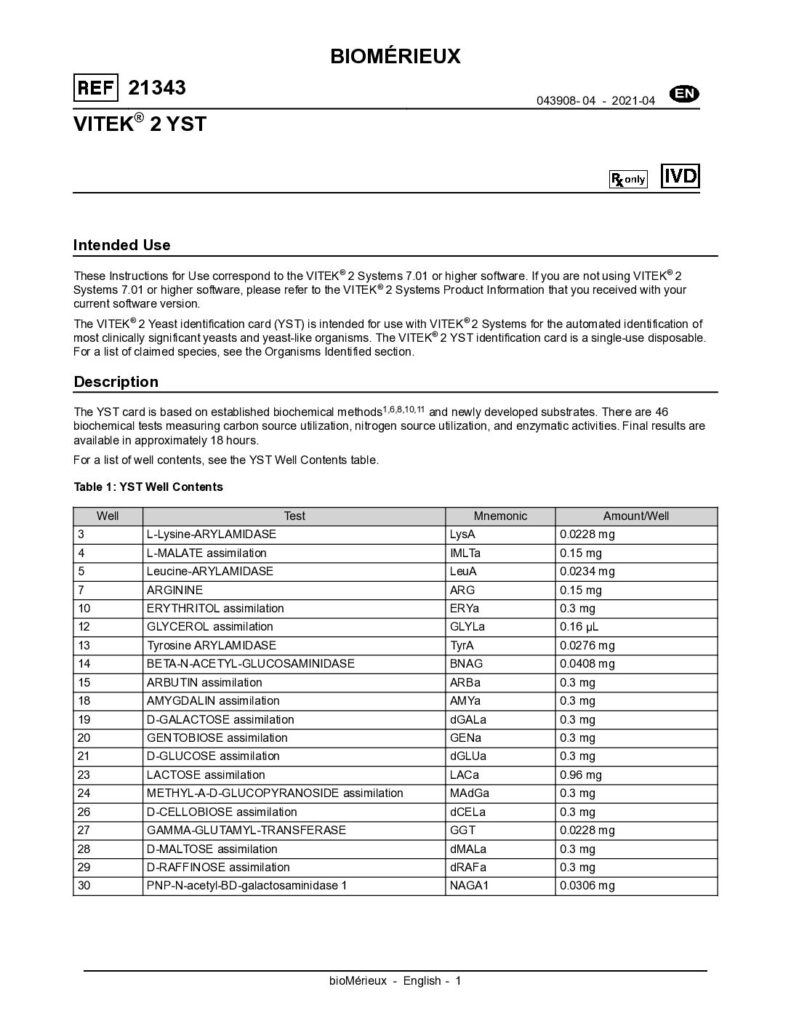
The system utilizes advanced colorimetric technology. The YST card contains 64 microwells with 47 different biochemical tests, including:
- Carbon source utilization (assimilation) of various carbohydrates.
- Enzymatic activities (e.g., arylamidases, phosphatases, urease).
- Resistance/Inhibition tests (e.g., actidione/cycloheximide).
The instrument monitors these wells every 15 minutes, measuring light attenuation to detect growth or metabolic changes. A specific algorithm then compares the resulting “biochemical profile” against a comprehensive database.
Procedure
The standardized workflow involves the following steps:
- Culture: Grow the isolate on appropriate agar (e.g., Sabouraud Dextrose Agar) to obtain pure, young colonies.
- Suspension: Aseptically transfer colonies into 3.0 mL of sterile saline (0.45% to 0.50% NaCl).
- Turbidity Adjustment: Adjust the suspension to a McFarland standard of 1.80 to 2.20 using a DensiCHEK meter.
- Loading: Place the suspension tube and YST card into a cassette.
- Processing: The instrument automatically fills the card via vacuum, seals it to prevent contamination, and begins incubation at 35.5°C.
Result Interpretation
The software analyzes the metabolic data and provides one of the following outputs:
- Unequivocal Identification: A single species is identified with a high percent probability (e.g., “Excellent,” “Very Good,” or “Good”).
- Low Discrimination: The system cannot distinguish between 2 or 3 closely related organisms. It will provide a list of possibilities and suggest supplemental tests (e.g., morphology on cornmeal agar) to finalize the ID.
- No Identification: The biochemical profile does not match any known patterns in the database.
- Inconsistent Results: Usually indicated by a red flag, suggesting technical issues like a mixed culture or incorrect inoculum density.
Organisms Identified
The YST database currently includes approximately 50–60 taxa. Key identified groups include:
- Candida species: C. albicans, C. glabrata, C. tropicalis, C. parapsilosis, C. krusei, C. lusitaniae, and C. dubliniensis.
- Cryptococcus species: C. neoformans and C. gattii.
- Other Yeasts: Saccharomyces cerevisiae, Rhodotorula spp., Trichosporon spp., and Geotrichum spp.

Keynotes
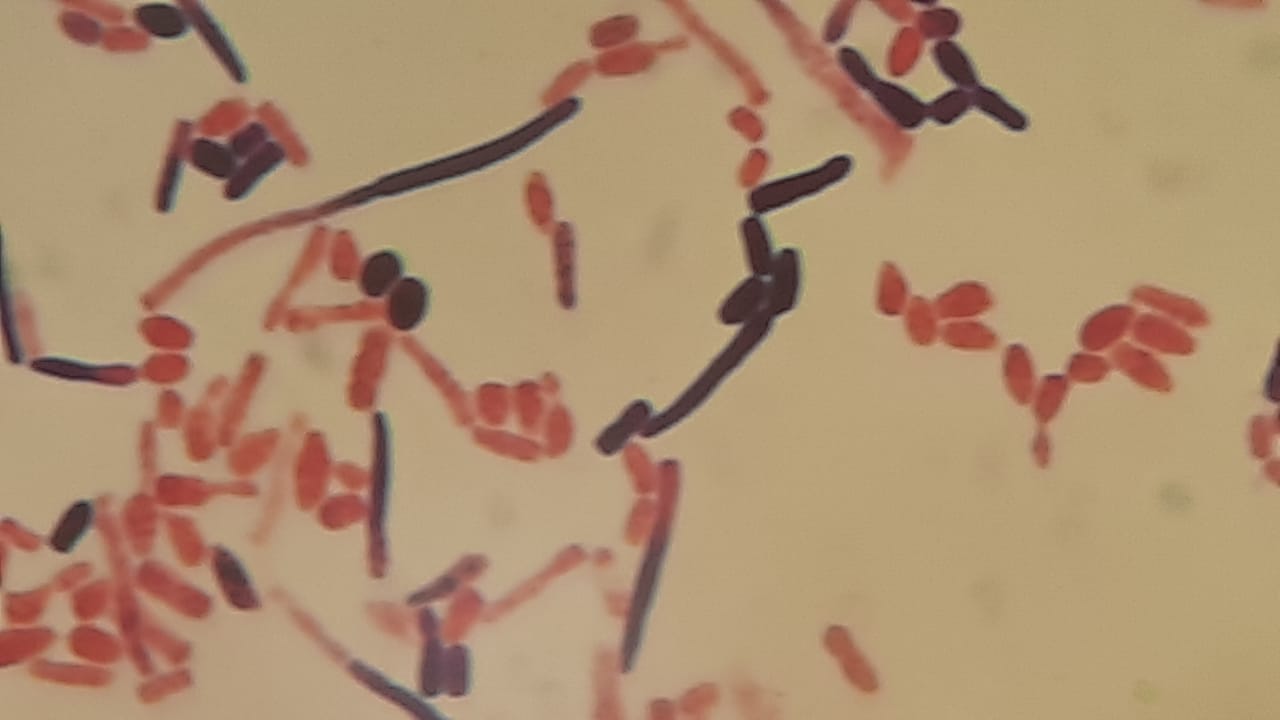
- Gram Stain Requirement: Always perform a Gram stain first to confirm the organism is indeed a yeast before using the YST card.
- Suspension Age: The prepared suspension must be used within 30 minutes.
- Limitations: Some rare or newly described species may be misidentified or require molecular methods for definitive ID.
- Safety: The card is a closed system, which minimizes the risk of laboratory-acquired infections from aerosols.
Further Readings
- https://www.biomerieux.com/corp/en/our-offer/clinical-products/vitek-2-ast-cards.html
- https://pmc.ncbi.nlm.nih.gov/articles/PMC86587/
- https://msa.sm.ee/ctrl/et/Fail/laadi_alla/169690
- https://medicallabnotes.com/vitek-2-compact-system-introduction-testing-requirements-testing-procedure-result-interpretation-and-keynotes/
- https://www.biomerieux.com/us/en/our-offer/clinical-products/vitek-2.html
- https://journals.asm.org/doi/10.1128/jcm.38.5.1782-1785.2000
- https://pmc.ncbi.nlm.nih.gov/articles/PMC2576618/
- https://www.clinicalmicrobiologyandinfection.org/article/S1198-743X(14)62860-3/fulltext
- https://www.accessdata.fda.gov/scripts/cdrh/cfdocs/cfmaude/detail.cfm?mdrfoi__id=7495942&pc=JXB
- https://www.researchgate.net/publication/6536301_Multicenter_Evaluation_of_the_New_VITEK_2_Advanced_Colorimetric_Yeast_Identification_Card
- https://pmc.ncbi.nlm.nih.gov/articles/PMC2756910/
- https://live-biotherapeutic.creative-biolabs.com/vitek-system-for-biochemical-identification.htm
- https://www.cureus.com/articles/275004-bridging-diagnostic-gaps-utilising-hicrome-agar-and-tetrazolium-reduction-medium-for-the-rapid-and-presumptive-identification-and-speciation-of-candida-species-in-vulvovaginal-candidiasis-in-low-resource-environments
- https://journals.asm.org/doi/10.1128/jcm.02469-06