Blood Cancer: An Overview of Introduction, Types, Pathogenesis, Prevention, and Keynotes

Blood Cancer: An Overview of Introduction, Types, Pathogenesis, Prevention, and Keynotes

Introduction Blood cancer, also known as hematological malignancy, refers to a group of cancers that originate in the blood-forming tissues, including the bone marrow, lymphatic system, and blood cells. Unlike solid tumors, blood cancers affect the production, function, and lifespan of blood cells, leading to …

Read more

Streptococcus agalactiae (GBS): Introduction, Pathogenicity, Lab Diagnosis, Treatment, and Keynotes

Gram-positive cocci in chains Streptococcus agalactiae (GBS)

Introduction Streptococcus agalactiae, also known as Group B Streptococcus (GBS), is a Gram-positive, beta-hemolytic coccus arranged in chains. It is a major cause of neonatal sepsis, meningitis, and infections in pregnant women, and an emerging pathogen in immunocompromised adults. GBS commonly colonizes the gastrointestinal and …

Read more

Fungal Elements in KOH Mount of Pleural Fluid Microscopy-Introduction, Possible Fungi Observed in Pleural Fluid KOH Mount, Applications, and Keynotes

Fungal Elements in KOH Mount of Pleural Fluid Microscopy-Introduction, Possible Fungi Observed in Pleural Fluid KOH Mount, Applications, and Keynotes

Introduction KOH Mount of Pleural Fluid is a rapid, direct microscopic test used to detect fungal elements in suspected pleural infections. A 10–20% Potassium Hydroxide (KOH) solution clears cellular debris, fibrin, and protein content in pleural fluid while preserving chitin-rich fungal structures such as hyphae, …

Read more

PT/INR: Introduction, Application, and Keynotes

Prothrombin Time Test and INR (PT/INR)

Introduction PT (Prothrombin Time) and INR (International Normalised Ratio) are laboratory tests used to assess the extrinsic and common pathways of the blood coagulation system. PT measures the time it takes for blood to clot, while INR standardises this measurement globally, allowing consistent interpretation across …

Read more

Fungal Elements in KOH Mount of Bile Microscopy-Introduction, Fungal Elements Observed in Bile KOH Mount, Applications, and Keynotes

Bile sample before centrifugation for KOH mount and fungal culture

Introduction KOH Mount of Bile is a direct microscopic examination technique used to detect fungal elements in bile fluid collected during ERCP, biliary drainage, cholecystectomy, or liver procedures.Because bile contains mucus, epithelial debris, fats, and pigments, a 10–20% Potassium Hydroxide (KOH) solution is used to …

Read more

Fungal Elements in KOH Mount of Sputum Microscopy-Introduction, Fungal Elements Observed in Sputum KOH Mount, Applications, and Keynotes

Fungal Elements in KOH Mount of Sputum Microscopy at a magnification of 1600X

Introduction KOH mount of sputum is a rapid, direct microscopic technique used to detect fungal elements in the respiratory tract. A 10–20% Potassium Hydroxide (KOH) solution digests mucus, epithelial cells, and debris in sputum, while preserving the chitin-rich fungal cell walls, making them appear clear, …

Read more

Fungal Elements in KOH Mount of BAL (Bronchoalveolar Lavage) Microscopy- Introduction, Fungal Elements Observed in BAL KOH Mount, Applications, and Keynotes

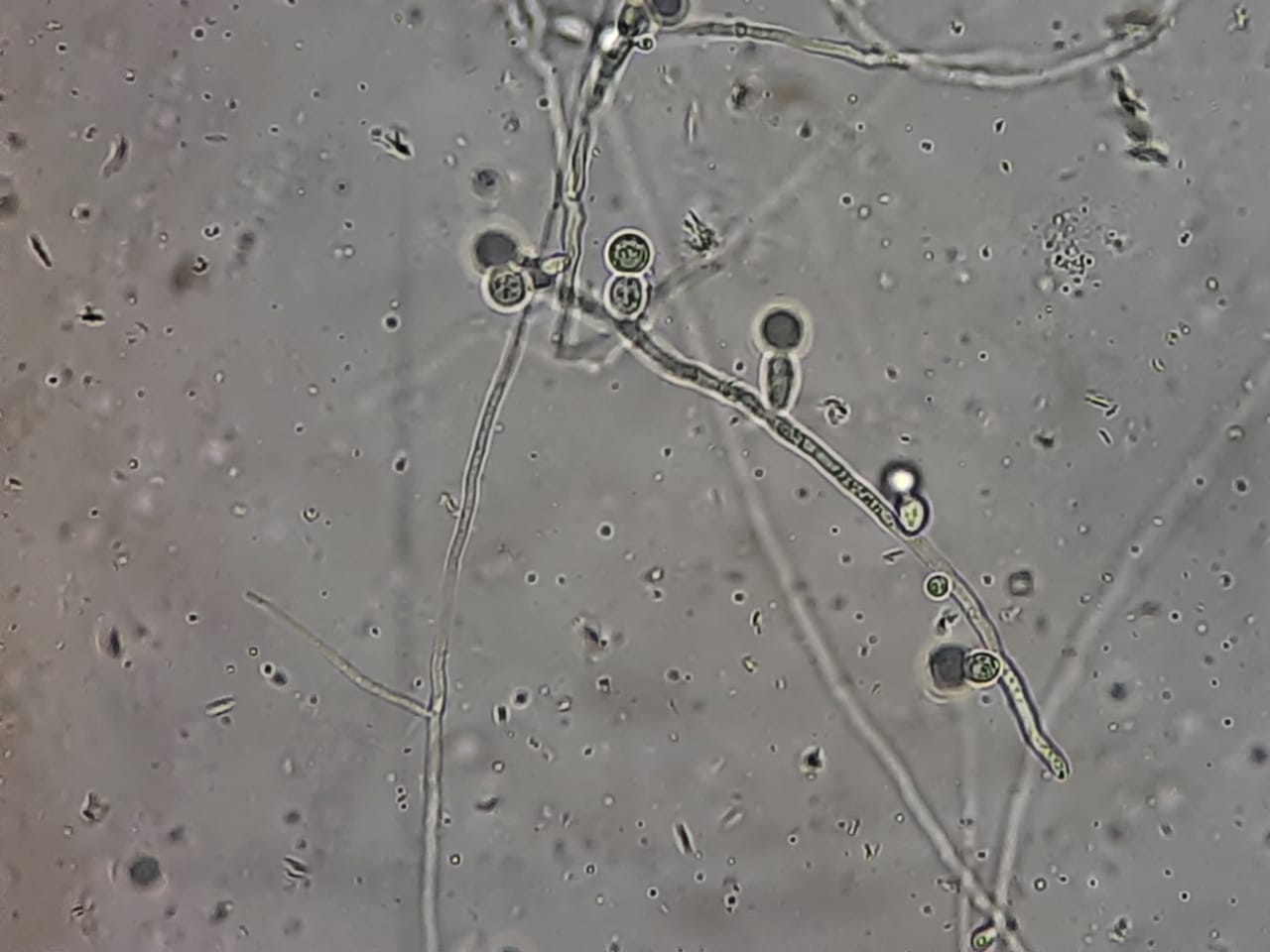
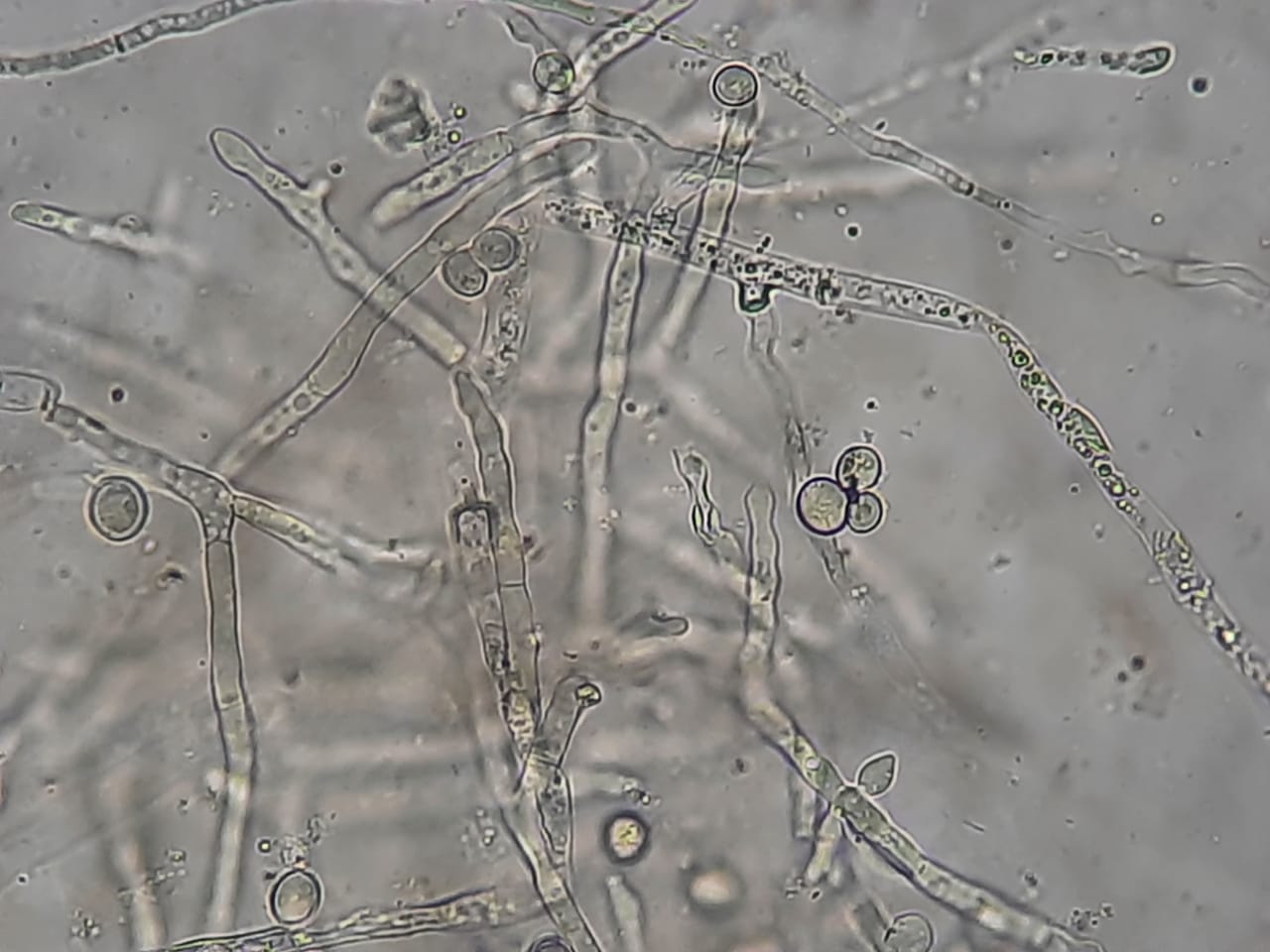
Fungal Elements in wet mount of culture of BAL specimen

Introduction KOH mount (Potassium Hydroxide preparation) is a rapid, simple, and cost-effective microscopic technique used to detect fungal elements directly in clinical specimens.When applied to Bronchoalveolar Lavage (BAL) samples, it is an essential diagnostic tool for identifying pulmonary fungal infections, especially in the ICU, oncology, …

Read more

Bio-Incubator: Introduction, Application, and Keynotes

This Bio-Incubator provides a stable environment for the growth and incubation of microbial cultures, enzymatic reactions, and biological assays. The display screen shows the process status as “FINISHED” with a temperature reading of 27.2°C, indicating the incubation cycle is complete. It is commonly used in clinical, molecular, and research laboratories for applications such as culture incubation, spore testing, and enzyme activation.

Introduction A Bio-Incubator is a laboratory device designed to provide a controlled environment of temperature, humidity, and time for the growth and maintenance of microbial cultures, cell lines, and biological reactions. It is an essential tool in microbiology, molecular biology, biotechnology, and clinical diagnostics.By maintaining …

Read more