Nitrate or Nitrite Reduction Test: Introduction, Composition of Medium, Principle, Test Requirements, Procedure, Result -Interpretation, and Limitations

Nitrate or Nitrite Reduction Test

Introduction of Nitrate or Nitrite Reduction Test The nitrate or nitrite reduction test uses to determine the ability of an organism to reduce nitrate to nitrite. Anaerobic metabolism requires an electron acceptor other than atmospheric oxygen. Many gram-negative bacteria use nitrate as the final electron acceptor. The …

Read more

DNase Test: Introduction, Composition, Principle, Test Requirements, Procedure, Result -Interpretations, and Limitations

Deoxyribonuclease (DNase) Test Positive and Negative Bacteria

Introduction of DNase Test for Bacteria DNase tests positive and negative bacteria as shown below image. This test is useful for the presumptive identification of Staphylococcus aureus which produces the enzyme deoxyribonuclease (DNase) from other Staphylococci which do not produce DNase. This test is also positive in the following …

Read more

ONPG Test: Introduction, Principle, Test Requirements, Procedure, Result -Interpretation, and Keynotes

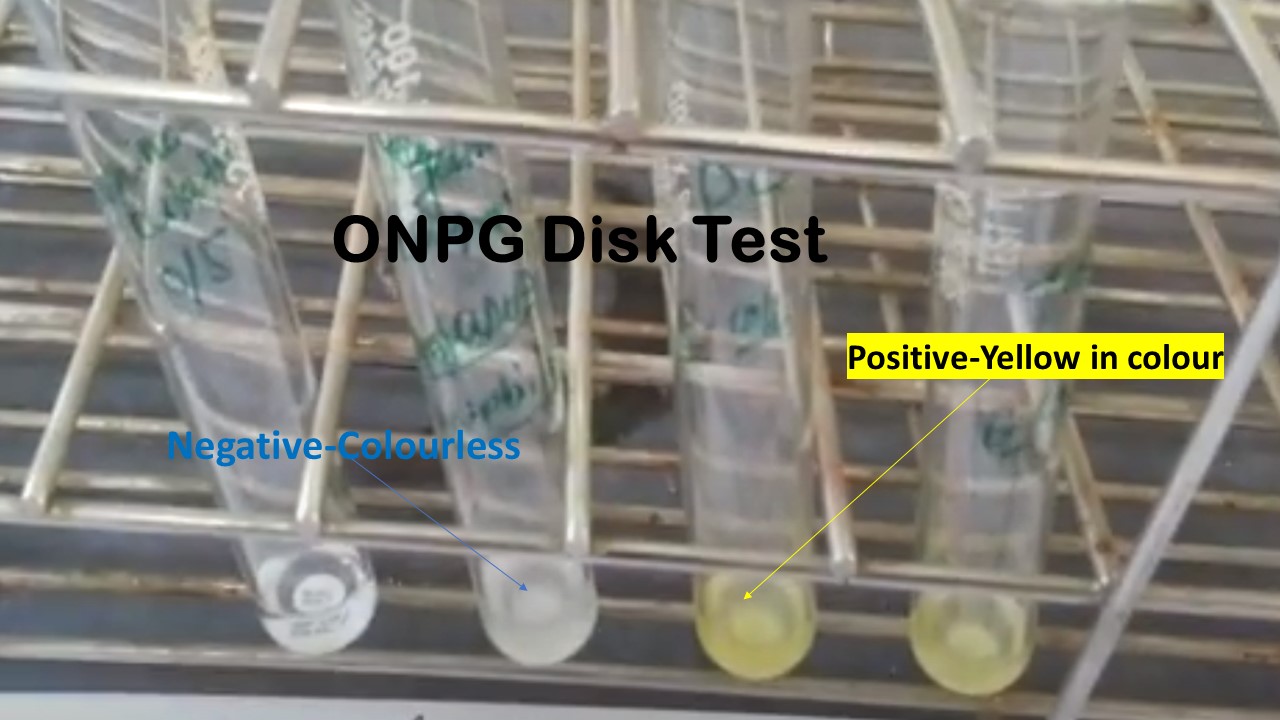
ONPG Test Negative (left) and Positive Bacteria (right)

Introduction of ONPG Test ONPG test is useful in differentiating members of the family  Enterobacteriaceae and genera Neisseria based on b-D-galactosidase activity. ONPG stands for o-Nitrophenyl-b-D-galactopyranoside. Here we discuss on ONPG Disk Test which is simple and easy to perform. Principle The ability of an organism to ferment lactose …

Read more

MIU Test: Introduction, Principle, Composition, MIU Agar Preparation, Test Procedure, Result-Interpretation, and Keynotes

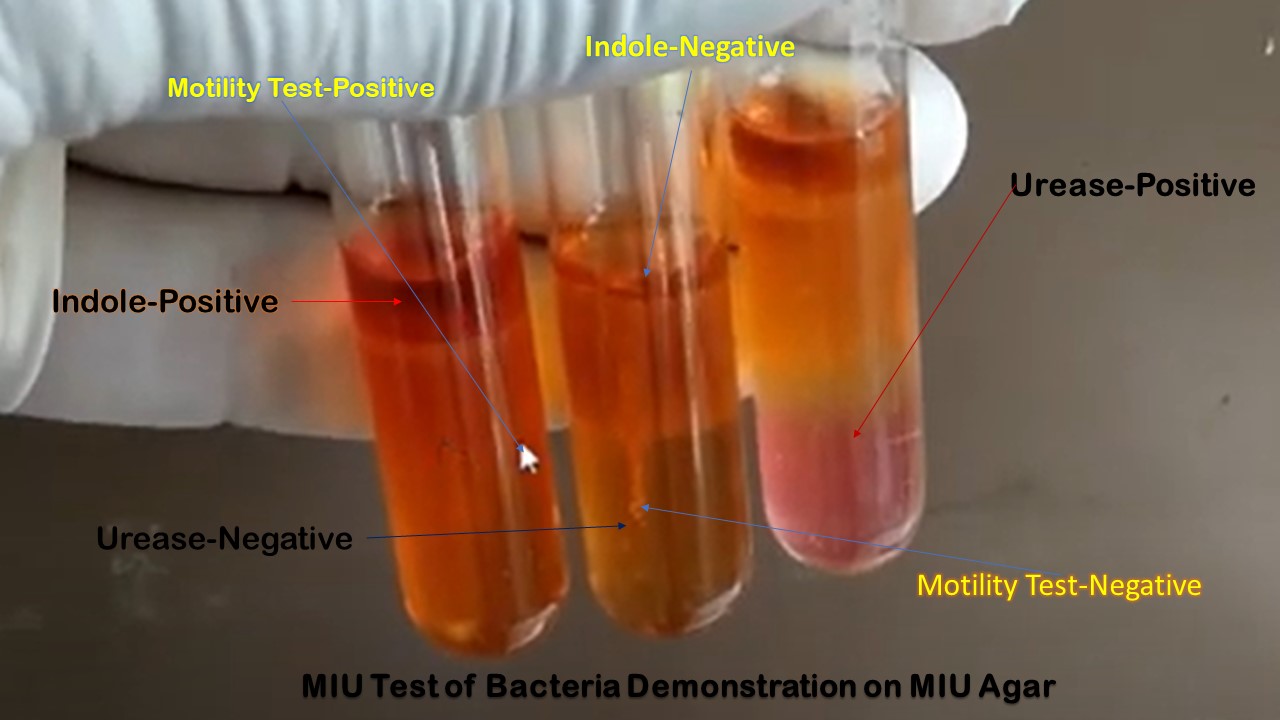
Motile and non-motile bacteria, indole positive and negative, urease positive and negative organisms on MIU agar demonstration

Introduction of MIU Test MIU test stands for motility indole urease test and it is used for three tests among them one for motility of bacteria, second for indole formation, and third for urea hydrolyzation test of bacteria. This assay is useful for the identification …

Read more

Laboratory Instruments and Equipment: Introduction, Name List, and Short Description

Laboratory Instruments and Equipment

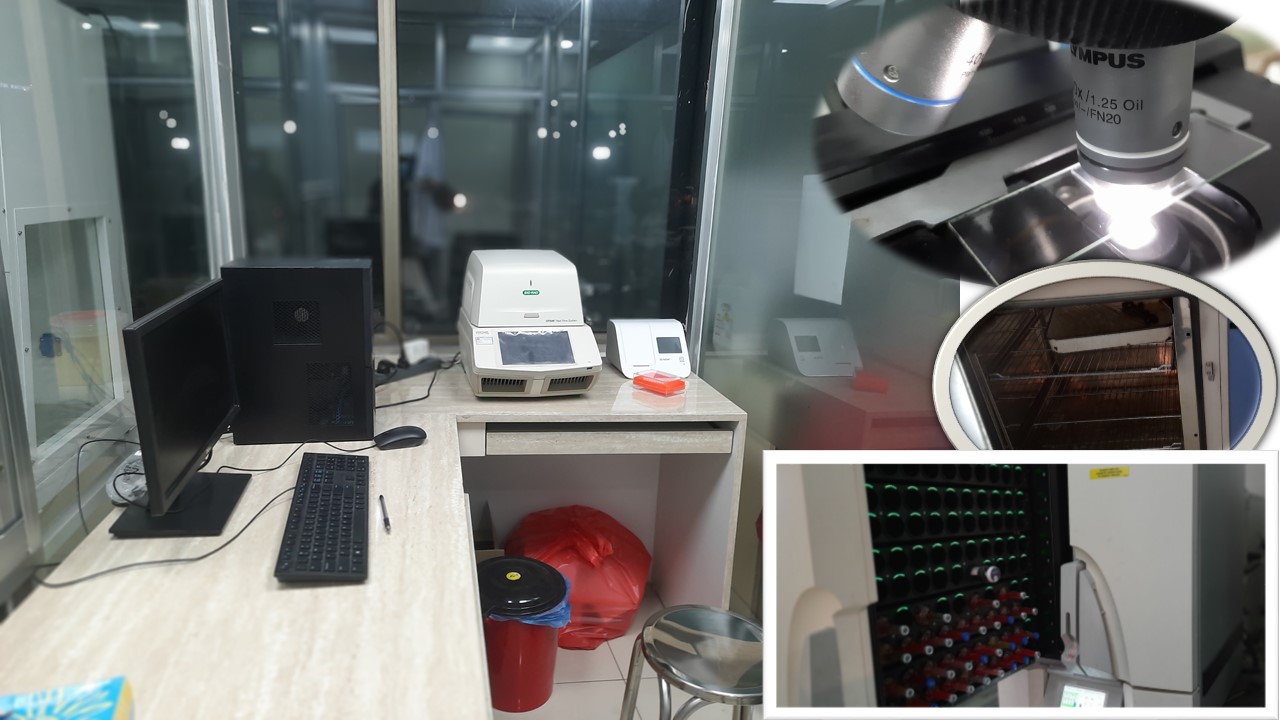
Introduction of Laboratory Instruments and Equipment Laboratory Instruments and Equipment make laboratory work easy and fast. Here we discuss the instruments and equipment of the Department of Pathology and Laboratory Medicine that includes Clinical Haematology, Clinical Biochemistry, Histopathology and Cytology, Clinical Microbiology and Immunology, Blood …

Read more

Culture Media: Introduction, Common Ingredients, Types, Preparation, and Use of Common Culture Medium, Keynotes, and Related Images

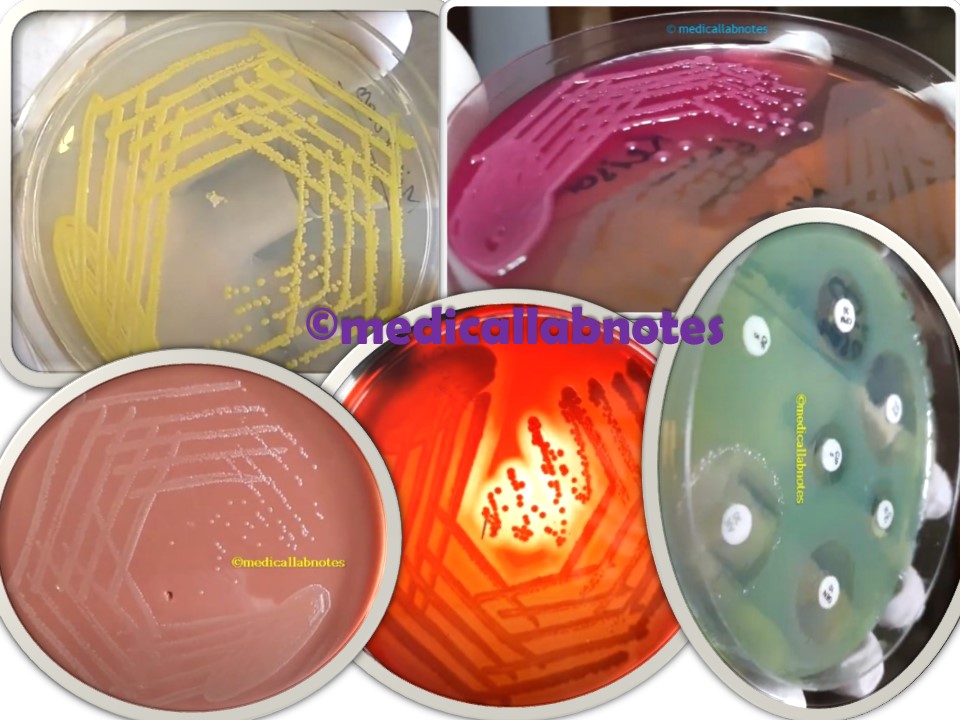
Culture media with variety of microbes-Micrococcus growth on nutrient agar (upper left), Lactose fermenting(Lf) and non-lactose fermenting (NLF) colonies of Gram negative bacteria colonies on MacConkey medium, Hameophilus influenzae colony morphology on chocolate agar(lower left), beta-hemolytic colonies of Staphylococcus aureus( middle), and Pseudomonas aeruginosa antibiogram pattern on Muller-Hinton agar(MHA)

Introduction of Culture Media Culture media are required to grow the organisms and they are generally from clinical specimens to identify the causative agent. Common Ingredients of Culture Media Common Ingredients of Culture Media and their basic constituents are as follows- Water: It is the …

Read more

Aeromonas hydrophila: Introduction, Identification Features, Keynotes, and Aeromonas Footages

Aeromonas hydrophila growth on MacConkey agar

Introduction of Aeromonas hydrophila Aeromonas hydrophila is a gram-negative, facultative anaerobe, rod-shaped motile(due to single polar flagellum) bacterium without capsule and spore having a size from 0.3-1.0 µm wide by 1.0-3.5 µm long. It is generally found in the aquatic environment. Its presence can not …

Read more

Enterobacter cloacae: Introduction, Identification Features, Keynotes, and Enterobacter Footages

Encapsulated strain of Enterobacter aerogenes on MacConkey medium

Introduction of Enterobacter cloacae Enterobacter cloacae is a facultative anaerobic Gram-negative bacterium of size 0.3-0.6 x 0.8-2.0 μm. It is lacking capsule and spore and it is motile due to flagella which is a member of the Enterobacteriaceae family. E. cloacae is the normal gut …

Read more