
Introduction
Table of Contents
Fungemia refers to the presence of fungi in the bloodstream, indicating systemic fungal infection. Candida species are most commonly responsible, but other yeasts and molds may also invade the bloodstream.

Fungemia is a medical emergency, especially in ICU patients, immunocompromised hosts, post-surgical cases, and neonates. Mortality rates can exceed 40% if diagnosis and treatment are delayed.
Common Fungi Causing Fungemia
| Fungus | Features |
|---|---|
| Candida albicans | Most common; forms pseudohyphae |
| Candida glabrata | Less susceptible to azoles |
| Candida tropicalis | Common in neutropenic cancer patients |
| Candida parapsilosis | Catheter-associated infections |
| Candida auris | Emerging multidrug-resistant yeast |
| Cryptococcus neoformans | Seen in AIDS and transplant patients |
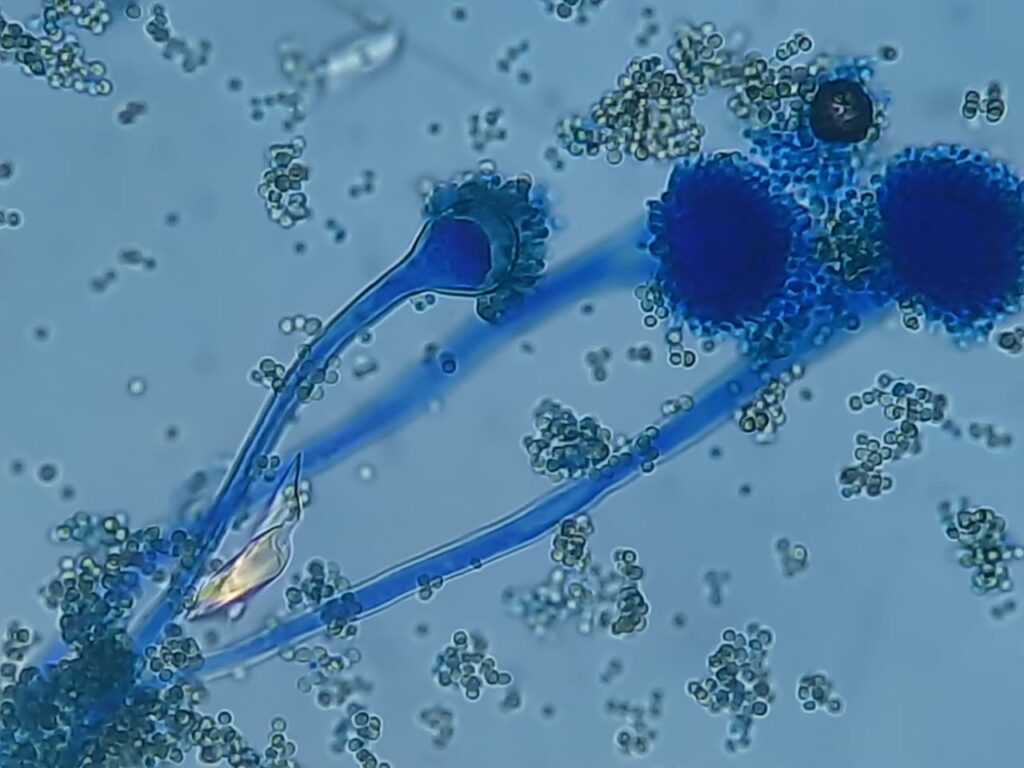
| Aspergillus spp. | Rare in blood cultures; usually seen in tissue |
| Fusarium spp. | May show true fungemia, especially in leukemia |
| Histoplasma capsulatum | Disseminates in AIDS, endemic areas |

Clinical Features
- Fever not responding to antibiotics
- Chills, hypotension, tachycardia
- Signs of sepsis or septic shock
- Organ-specific signs: liver, kidney, CNS, retina, heart
- Skin lesions (e.g., Candida tropicalis fungemia)
- Dissemination in immunocompromised hosts
Laboratory Diagnosis
| Test | Role |
|---|---|
| Blood culture (BACTEC, BacT/Alert) | Gold standard, but sensitivity is limited (~50%) |
| Fungal culture on SDA | Species identification from blood or catheter |
| Beta-D-glucan assay | Pan-fungal marker; elevated in many fungal infections |
| T2 Candida panel | Rapid, species-level detection directly from blood |
| MALDI-TOF MS | Rapid ID from positive culture |
| PCR-based panels | Detects fungal DNA; useful in early diagnosis |
| Antifungal susceptibility testing (AFST) | Guides targeted therapy |


Treatment
| Situation | Treatment |
|---|---|
| Stable, non-neutropenic | Fluconazole, if susceptible |
| Severely ill or neutropenic | Echinocandins (e.g., caspofungin, micafungin) |
| C. auris / resistant strains | Liposomal Amphotericin B, Echinocandins |
| Cryptococcal fungemia | Amphotericin B + Flucytosine, then Fluconazole |
| Aspergillus or Fusarium | Voriconazole or Amphotericin B |
Duration: Continue antifungals for 14 days after the last positive blood culture and resolution of signs/symptoms.
Prevention
- Strict catheter care and early removal of unnecessary lines
- Judicious use of broad-spectrum antibiotics
- Limit parenteral nutrition duration when possible
- Use antifungal prophylaxis in high-risk ICU or neutropenic patients
- Maintain good hand hygiene and hospital disinfection
- Screen and isolate C. auris carriers to prevent outbreaks
Keynotes
- Fungemia is a life-threatening condition, especially in critically ill patients.
- Candida spp. are the leading cause; C. auris is an emerging global threat.
- Early diagnosis, removal of the source, and prompt antifungal therapy are essential.
- Culture and non-culture-based methods (T2, BDG) improve detection.
- Prevention includes infection control, antifungal stewardship, and risk stratification.
Further Readings
- https://www.sciencedirect.com/topics/medicine-and-dentistry/fungemia
- https://www.ncbi.nlm.nih.gov/sites/entrez?Db=mesh&Cmd=DetailsSearch&Term=%22Fungemia%22%5BMeSH+Terms%5D
- https://www.amjmed.com/article/0002-9343(79)90073-1/fulltext
- https://www.mdpi.com/2309-608X/9/4/400
- https://www.frontiersin.org/journals/epidemiology/articles/10.3389/fepid.2023.1180331/full
- https://www.scielo.br/j/ramb/a/8WWxwXftPCJ7XZLp7N48MhB/
- https://jamanetwork.com/journals/jamasurgery/fullarticle/588862
- https://www.amjmed.com/article/0002-9343(79)90073-1/fulltext
- https://pubmed.ncbi.nlm.nih.gov/3125578/
- https://www.scielo.br/j/ramb/a/8WWxwXftPCJ7XZLp7N48MhB/
- https://www.numberanalytics.com/blog/managing-fungemia-in-clinical-practice
- https://www.medicoverhospitals.in/diseases/fungemia/