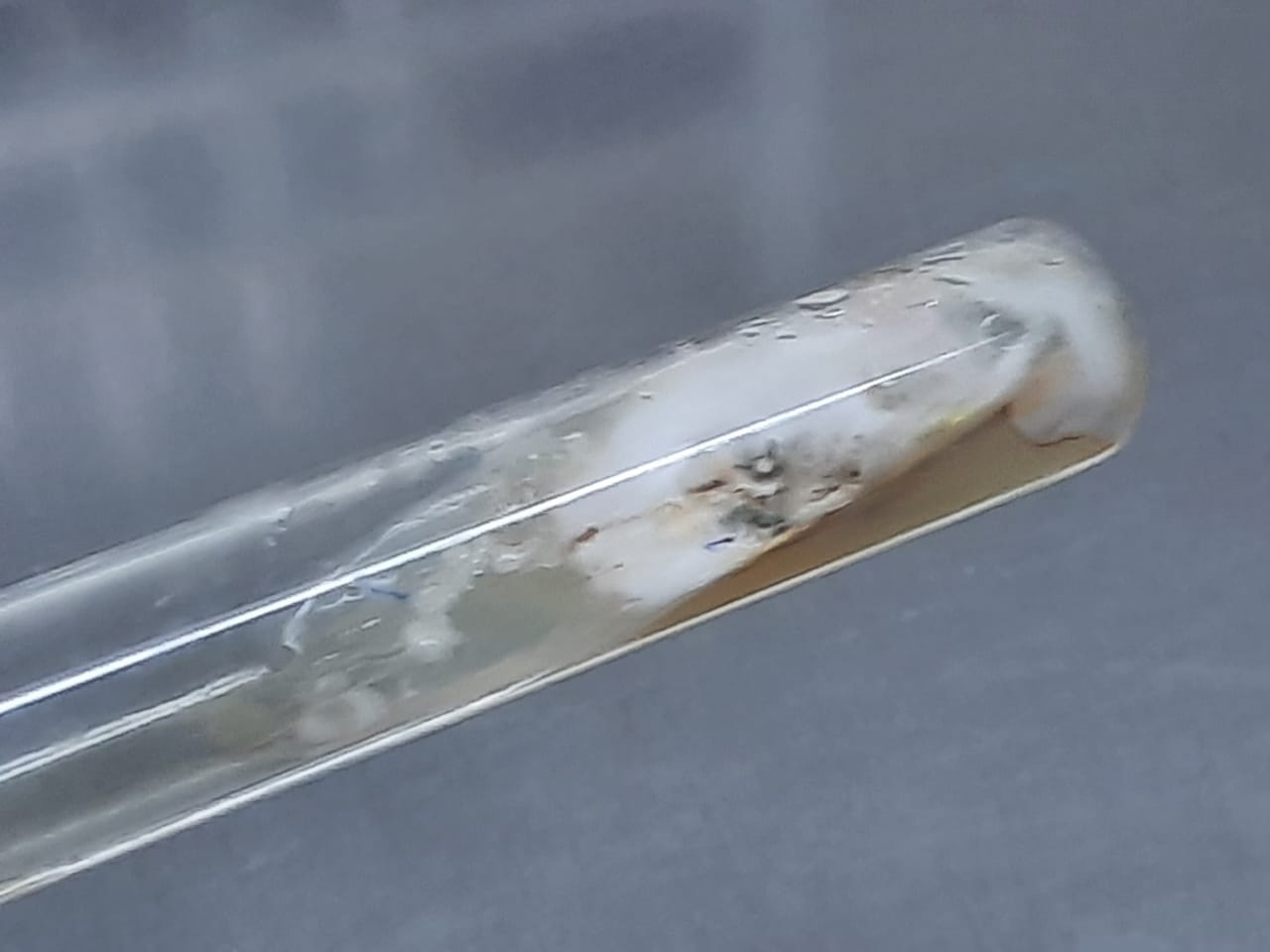
Dalmau Plate Technique: Introduction, Principle, Test Requirements, Procedure, Application, and Keynotes

Dalmau Plate Microscopy at high power field (40X objective)

Introduction The Dalmau plate technique is a classic mycological method used to identify and differentiate yeast species, specifically Candida species, by observing their unique morphological features.  The technique is a specialized culture method that uses a “starvation medium” to induce the formation of characteristic structures like pseudohyphae, blastoconidia, and chlamydospores. It remains …

Read more

Comparative Microscopy of Candida Species: Introduction, Table, and Keynotes

Chlamydospores of Candida albicans found in direct clinical sample(sputum) KOH mount Microscopy (Mag.1600X)

Introduction The genus Candida comprises a diverse group of opportunistic yeasts frequently isolated from human clinical specimens. Among them, Candida albicans remains the most common cause of infections; however, non-albicans Candida species, such as C. tropicalis, C. glabrata, and C. krusei, are increasingly recognized as important pathogens in immunocompromised patients, …

Read more

Yeasts vs Molds: Detailed Comparison, Mixed Growth Isolation, Approach to Mixed Growth Handling, and Mixed Growth Interpretation

Yeast and mold mixed growth on SDA

Yeasts vs Molds: Detailed Comparison Feature Yeasts Molds Definition Unicellular fungi Multicellular filamentous fungi Structure Oval/round, single cells Hyphae form mycelium; septate or aseptate Reproduction Asexual (budding or fission); some sexual forms Asexual (spores like conidia/sporangia); sexual spores Hyphae Absent, but pseudohyphae may be present …

Read more